Skip to content
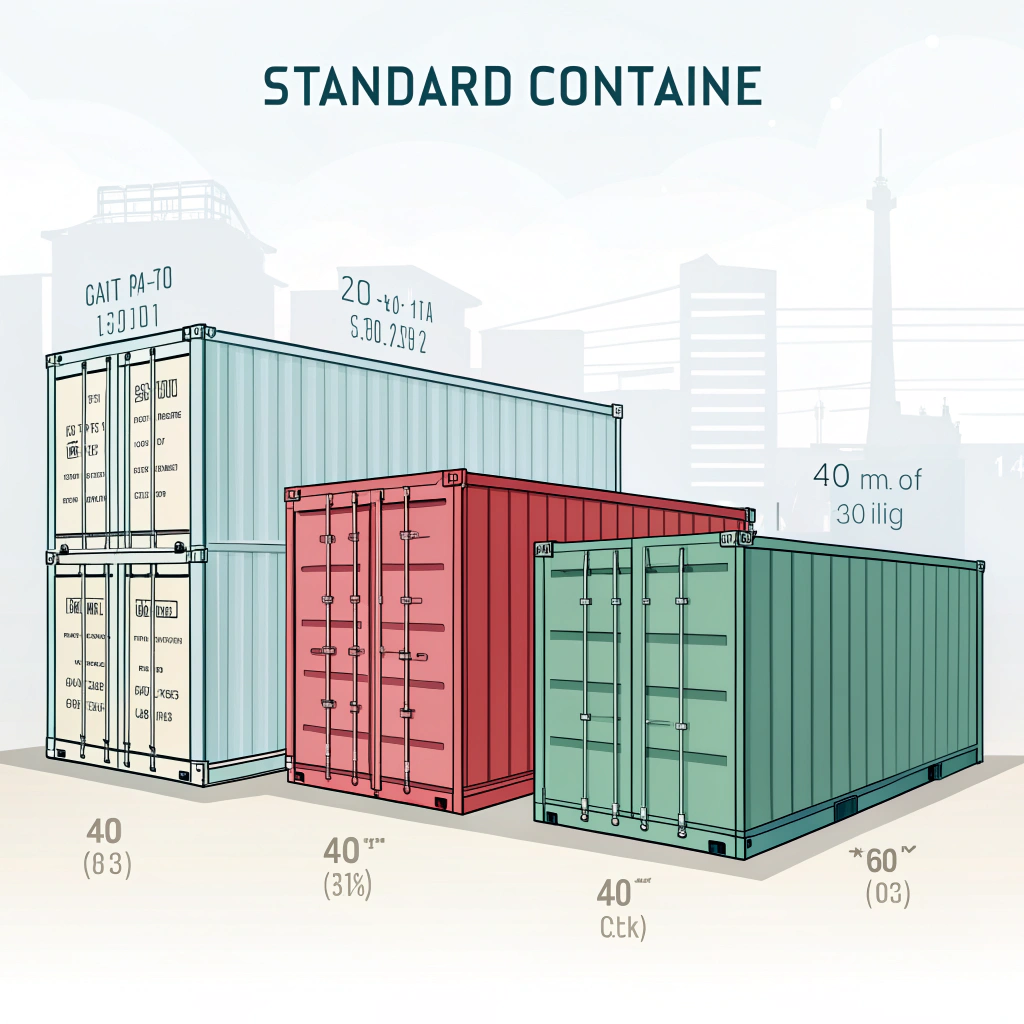
When importing goods from China, choosing the right container size is crucial to optimize shipping costs, improve cargo handling efficiency, and meet delivery timelines. Common container sizes—20ft1,40ft standard2,and 40ft high cube3—serve different shipment volumes and types. Understanding their dimensional specifications, cost implications, and suitability for varied cargo can help logistics managers and procurement specialists make informed decisions in 2025.
Containers are the backbone of ocean freight, providing standardized units that simplify international shipping. The three most commonly used container sizes for shipments from China are:
| Container Type | External Dimensions (L×W×H) | Internal Dimensions (L×W×H) | Volume (CBM) | Max Payload (kg) | Tare Weight (kg) |
|---|---|---|---|---|---|
| 20ft Standard | 6.06m × 2.44m × 2.59m | 5.90m × 2.35m × 2.39m | 33.2 | 28,200 | 2,200 |
| 40ft Standard | 12.19m × 2.44m × 2.59m | 12.03m × 2.35m × 2.39m | 67.7 | 26,680 | 3,700 |
| 40ft High Cube | 12.19m × 2.44m × 2.90m | 12.03m × 2.35m × 2.69m | 76.3 | 26,680 | 3,900 |
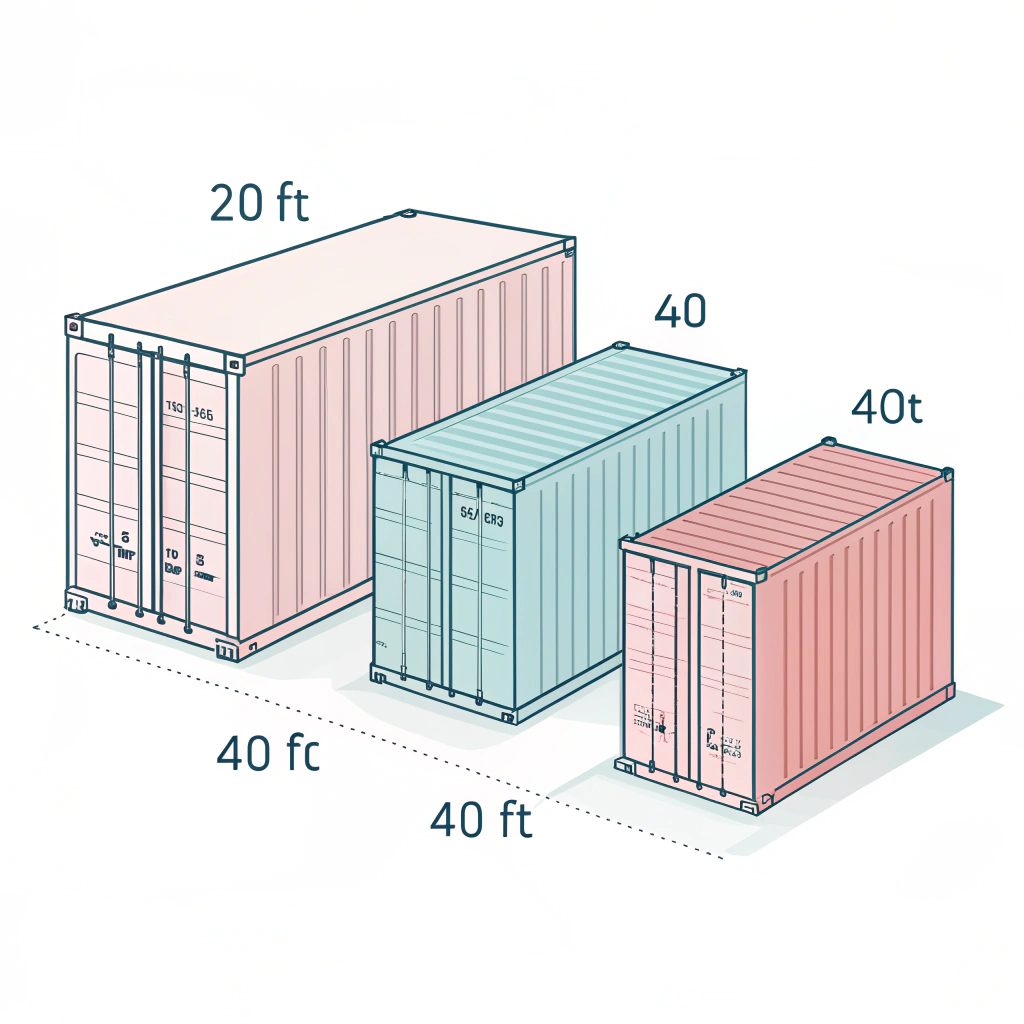
- 20ft Containers are ideal for smaller shipments or heavier goods because they have a higher payload capacity.
- 40ft Standard Containers double the length of 20ft but carry slightly less payload.
- 40ft High Cube Containers add an extra 30 cm in height, allowing for more volume, suitable for lighter but bulkier cargo.
- Volume: For shipments close to or exceeding 33 cubic meters but less than 68 cubic meters, the 40ft container is often the cost-effective choice.
- Weight: Heavy goods such as metals should lean towards the 20ft container due to higher payload capacity and packing density.
- Bulky but light goods (textiles, furniture) benefit from 40ft high cube containers for increased height.
- Dense goods (machinery parts, hardware) suit 20ft containers to avoid overweight charges.
Ocean freight charges are generally higher per container rather than per cubic meter, so consolidating cargo to fill a 40ft container fully often reduces cost per unit.
| Container Size | Approximate Cost Shanghai to USA (2025) | Best For |
|---|---|---|
| 20ft | $2,800–$4,500 | Heavy or compact shipments |
| 40ft Standard | $3,500–$6,000 | Medium to large volume shipments |
| 40ft High Cube | $3,700–$6,300 (estimated) | Bulky, lightweight products |
Shipping costs fluctuate by routes and seasons; reaching out to forwarders4 for real-time quotes is advisable.
- FCL (Full Container Load) implies exclusive container use, suitable for large shipments.
- LCL (Less than Container Load) involves consolidation of multiple shipments; this option is for small volumes but can increase handling time.
- Larger containers may have longer loading/unloading times.
- Door-to-door services combining ocean, trucking, and customs brokerage can streamline processes.
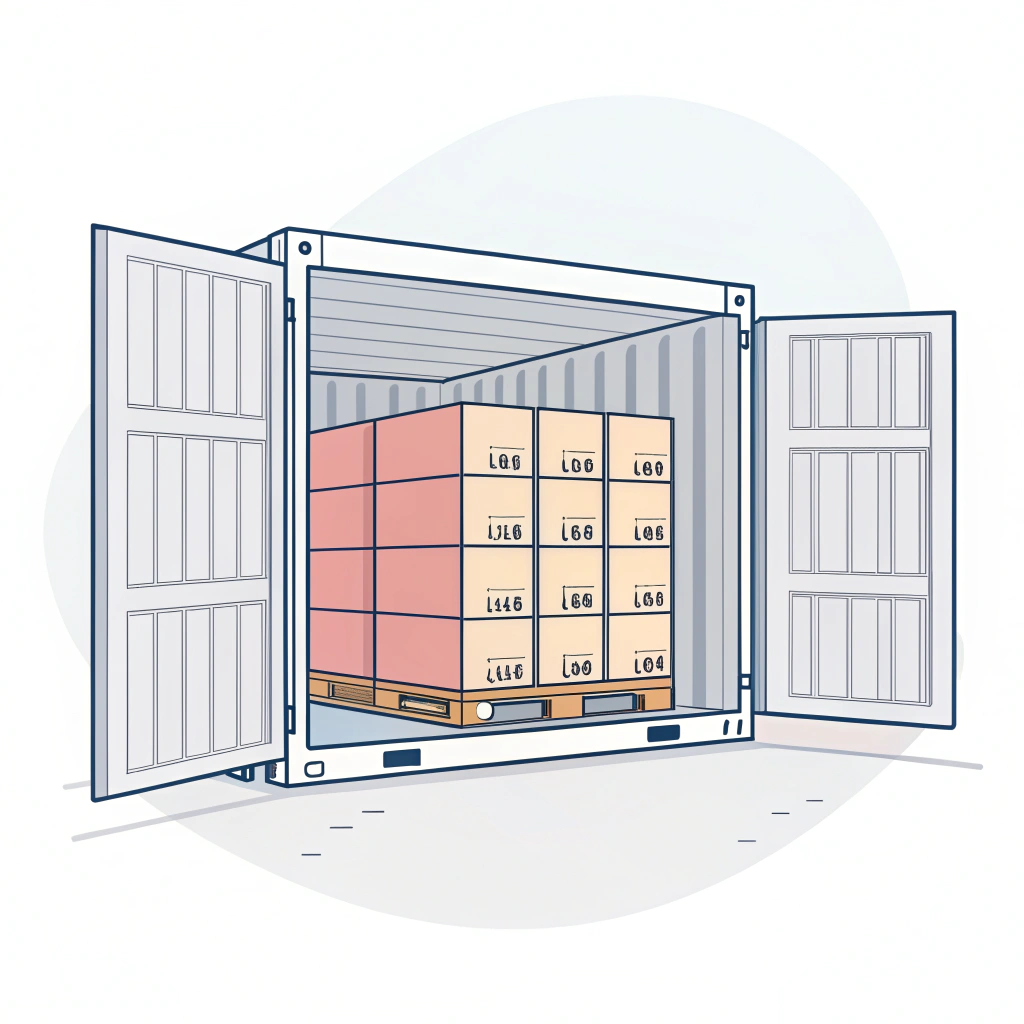
- Efficient packing: Use pallets and stack goods correctly to maximize space without risking damage.
- Cargo type compatibility: Group non-conflicting products to avoid issues during customs inspection.
- Weight distribution: Ensure even spread to prevent container damage and meet transport safety regulations.
| Challenge | Solution |
|---|---|
| Container weight limits | Confirm payload limits; reduce cargo weight or choose 20ft size |
| Underutilized container space | Opt for consolidation or partial container options |
| Shipping cost surges | Negotiate contracts or schedule flexible shipment dates |
| Custom clearance delays | Use experienced customs brokerage services |
| Cargo damage during transit | Employ professional packing and secure cargo stowage |
A US retailer plans to import summer apparel collections weighing 14,000 kg with a volume of 55 CBM from Shanghai. The options were:
- Two 20ft containers: Higher freight rates and handling twice the customs fees.
- One 40ft high cube container: Fits cargo volume well with space for airflow, reduces cost and time.
Outcome: Chose 40ft high cube container with door-to-door service; achieved 15% cost savings and on-time delivery for seasonal launch.
Choosing the right container size depends primarily on the shipment’s volume, weight, cargo type, and budget constraints:
- Use 20ft containers for heavy, compact cargo under 33 CBM.
- Opt for 40ft standard containers for larger volume shipments below 27,000 kg.
- Choose 40ft high cube containers for bulky, lightweight cargo needing extra height.
Always balance container utilization with cost per shipment. Work closely with freight forwarders to get updated freight rates, book containers early, and ensure customs readiness.
Next Steps: Assess your cargo dimensions, calculate shipped volume, and consult with your logistic partner to select a container that ensures best cost-efficiency and delivery reliability in 2025.
How much does it cost to ship a 40 ft container from China to the USA?
The cost varies between $3,500 and $6,000 depending on the route, season, and service provider. For example, shipping from Shanghai to Los Angeles typically falls within this range. Actual costs can fluctuate due to demand and fuel prices, so obtaining real-time quotes is recommended.
What's the cheapest way to ship from China?
The most affordable shipping method from China to the US for small packages is through EMS (Express Mail Service), which is a postal express mail service ideal for documents and lightweight goods requiring timely delivery. For larger shipments, ocean freight with Less than Container Load (LCL) consolidation can reduce costs.
-
20ft: Learn about the dimensions, payload limits, and typical uses of 20ft containers to optimize shipping options for heavy or compact cargo. back ↩
-
40ft standard: Understand how 40ft standard containers accommodate larger shipment volumes but with slightly different payload capacities and cost implications. back ↩
-
40ft high cube: Explore the benefits of 40ft high cube containers' extra height, suitable for bulky but lighter products, enhancing space utilization. back ↩
-
forwarders: Discover how freight forwarders manage shipment logistics, negotiate costs, and provide real-time updates to streamline global shipping processes. back ↩
-
FCL: Full Container Load (FCL) shipping means renting an entire container, which benefits large shipments with faster handling and lower per-unit costs compared to LCL. back ↩