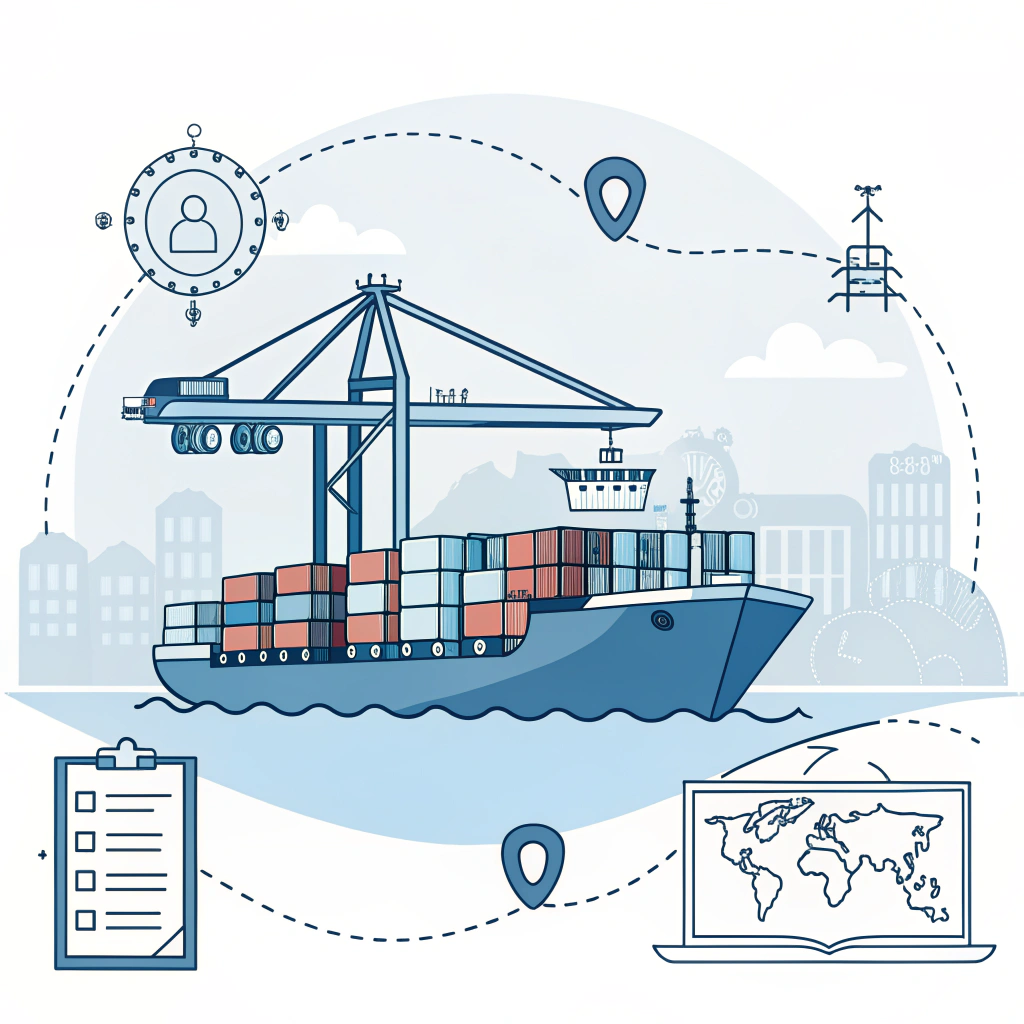
Free on Board (FOB1) is a widely used international shipping term, specifying that the seller fulfills their delivery obligation once goods are loaded onto the vessel at the named port of shipment. At that point, the risk and cost responsibility transfers to the buyer. For global importers, understanding FOB terms is essential for managing freight costs2, risks, and coordination with freight forwarders3 to optimize their supply chain.
Free on Board (FOB) is an Incoterm4 that defines who pays for freight, insurance, and risk during international shipment. Under FOB, the seller’s responsibility ends once the goods are loaded onto the vessel nominated by the buyer at the agreed port of shipment. From that moment, the buyer takes on all costs and risks associated with the transportation.
This means:
- The seller handles export clearance, delivery to the port, and loading onto the ship.
- The buyer arranges the main sea freight, import customs clearance, inland transportation at destination, and related costs.
- Risk passes from seller to buyer once the goods cross the ship’s rail at the port of shipment.
This setup suits importers who want control over the main carriage and freight forwarding arrangements after the port of origin.
Understanding FOB is critical for importers because it defines:
- Cost allocation: Importers know precisely which shipping legs and fees are their responsibility.
- Risk management: Knowing when liability shifts helps buyers ensure their cargo insurance covers the right parts of transit.
- Freight forwarding coordination: Buyers must plan and contract freight forwarders from the FOB point onward.
- Customs and documentation: Clarifies export clearance is on seller, and import clearance on buyer.
For freight forwarders like us at Shenzhen King-Hor, FOB terms influence how we manage cargo consolidation, booking, and client communications.
| Aspect | FOB | EXW (Ex Works) | CIF (Cost, Insurance, Freight) |
|---|---|---|---|
| Seller’s delivery | Delivery & loading on vessel | Seller delivers at factory only | Delivery, cost + insurance + freight to destination port |
| Buyer’s responsibility | Main freight, insurance, import clearance | Entire freight and clearance | Import clearance and onward delivery |
| Risk transfer | When goods cross ship’s rail | When goods leave seller’s premises | When goods arrive at destination port |
| Freight forwarding | Buyer arranges, often freight forwarder | Buyer arranges | Seller arranges, buyer manages import onward |
For importers seeking control over shipping after loading at origin, FOB is the optimal balance of seller-side responsibility and buyer-side control.
When shipping on FOB terms, the importer typically contracts the freight forwarder to:
- Book main ocean or air cargo space
- Arrange consolidated shipments if needed
- Manage inland trucking at both origin and destination
- Coordinate customs brokerage for import clearance
- Prepare and verify documents like Bill of Lading (BL)5, Commercial Invoice, Packing List, and Insurance Docs
Under FOB terms:
- The seller pays for preparing export documentation and providing the Bill of Lading, including any fees related to export clearance.
- Buyer pays for freight from the FOB point onwards.
- Importers should ensure bill of lading details match contract terms for smooth customs clearance.
| Cost / Responsibility | Seller | Buyer |
|---|---|---|
| Export packing & documentation | Yes | No |
| Inland delivery to export port | Yes | No |
| Loading to vessel | Yes | No |
| Main freight ocean/air | No | Yes |
| Import customs clearance | No | Yes |
| Inland delivery at destination | No | Yes |
| Cargo insurance after loading | Optional (buyer) | Recommended |
Important: Buyers should consider purchasing cargo insurance beginning when goods are loaded on board, as risk shifts at this point.
-
Misunderstanding the point of risk transfer
Risk moves to buyer when goods cross the ship’s rail, not on vessel arrival. Arrange insurance accordingly. -
Assuming seller covers main freight
FOB mandates buyer covers freight and freight forwarder coordination from port of origin onward. -
Incorrect or incomplete documentation
Bill of Lading must show correct FOB port and buyer information to avoid delays. -
Lack of coordination in freight forwarding
Buyers should clearly communicate required pickup, shipping timelines, and freight instructions to their forwarders. -
Ignoring import clearance obligations
Buyers must prepare for import duties, custom fees, and storage to avoid cargo release delays.
A US-based importer sourcing electronics from Shenzhen chose FOB terms to gain control over shipping costs and transit plans. They contracted Shenzhen King-Hor Supply Chain Co., Ltd to:
- Consolidate multiple suppliers' shipments at Shenzhen warehouse
- Coordinate container booking and loading
- Manage export clearance on seller side
- Arrange ocean freight to Los Angeles port
- Provide import customs brokerage and inland trucking
This approach enabled precise cost tracking and reduced unexpected fees upon arrival in the US. Cargo risk was insured from the port of loading, reducing disputes about damage claims.
FOB shipping terms are ideal for importers who want control beginning at the shipment port. Firm grasp of FOB responsibilities helps optimize cost structure, mitigate freight risks, and streamline freight forwarder operations. Global importers should:
- Ensure FOB terms are clearly documented in sales contracts
- Choose reliable freight forwarders experienced with FOB shipments
- Verify all export documentation and Bill of Lading details
- Arrange cargo insurance starting at loading onto vessel
- Coordinate tightly with forwarders for customs clearance and inland delivery
At Shenzhen King-Hor, we specialize in managing FOB shipping for global importers, offering seamless door-to-door solutions from China to worldwide destinations.
-
FOB (Free on Board): Reading about FOB helps you understand when ownership and liability transfer between seller and buyer during international shipping, which is critical for managing shipping costs and risks. ↩ ↩
-
Freight Costs: Learn how freight costs are allocated and managed, enabling better budgeting and negotiation in shipping contracts. ↩ ↩
-
Freight Forwarders: Discover the role of freight forwarders in streamlining shipping logistics, documentation, and coordination between sellers and buyers. ↩ ↩
-
Incoterms: Explore the set of international trade rules — Incoterms — that define responsibilities between buyers and sellers, which govern contracts and shipping logistics. ↩ ↩
-
Bill of Lading (BL): Find out about the Bill of Lading, a critical shipping document that serves as receipt, title, and contract of carriage essential for customs and cargo claims. ↩ ↩