Skip to content
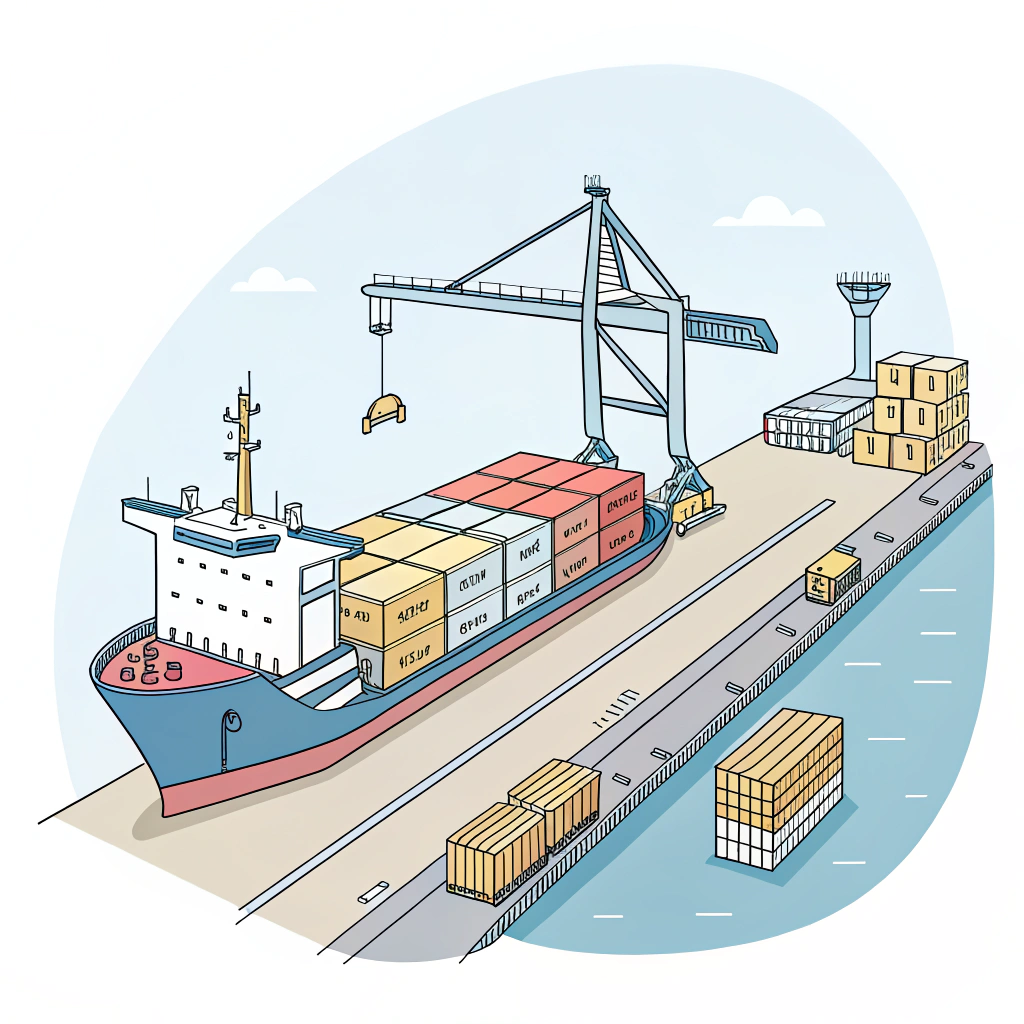
Free Alongside Ship (FAS) in one minute: Under Incoterms 2020, FAS means the seller delivers the goods “alongside” the buyer’s nominated vessel at the named port of shipment and clears export customs. Risk and cost transfer to the buyer at that point; the buyer pays for loading onto the ship, ocean freight, insurance, and everything after. FAS is suited to bulk and breakbulk1 cargo, not containerized shipments.
Why importers consider FAS (and when you shouldn’t)
- Choice dilemma: You want control of the main carriage and freight rates from China, but you need clarity on where risk and cost start. FAS is often offered by factories for steel, timber, project cargo, and other breakbulk moves.
- Key watch-out: FAS is not recommended for containerized cargo. For containers, use FCA (preferred by ICC) or FOB (common practice, though less precise) instead.

FAS vs FOB vs EXW — the core differences at a glance
- Risk transfer point:
- FAS: when goods are placed alongside the vessel at the named port.
- FOB: when goods are loaded on board the vessel.
- EXW: at seller’s premises when goods are made available.
- Export customs:
- FAS and FOB: seller clears export (in China this is standard).
- EXW: buyer is responsible (often impractical in China without seller’s cooperation).
- Loading charges:
- FAS: buyer pays loading onto vessel.
- FOB: seller pays loading onto vessel.
- EXW: buyer pays all handling from the seller’s door onward.
- Best fit:
- FAS: bulk/breakbulk at a conventional terminal.
- FOB: bulk/breakbulk, sometimes used for containers in practice.
- EXW: only when you fully control pickup and export formalities.
Detailed comparison table (Incoterms 2020 alignment)
| Topic | FAS (Free Alongside Ship) | FOB (Free On Board) | EXW (Ex Works) |
|---|---|---|---|
| Delivery point | Alongside the vessel at named port | On board the vessel at named port | At seller’s premises |
| Risk transfers | When alongside | When on board | When goods are available to pick up |
| Export customs (China) | Seller | Seller | Buyer (often needs seller’s help) |
| Origin port loading | Buyer | Seller | Buyer |
| Main carriage | Buyer | Buyer | Buyer |
| Insurance obligation | None required; buyer advised | None required; buyer advised | None required; buyer advised |
| Documentation from seller | Invoice, packing list, export clearance proof, delivery note/dock receipt | Invoice, packing list, export clearance proof, On Board evidence | Invoice, packing list (export docs often still provided by seller in practice) |
| Cargo type suitability | Bulk/Breakbulk | Bulk/Breakbulk (container use common but not ideal) | Any, but operationally harder in China |
| Control of freight | Buyer | Buyer | Buyer |
| Cost predictability for buyer | Medium (buyer pays loading + ocean) | Medium (buyer pays ocean only) | Low (buyer pays all from origin) |
What “alongside the ship” actually means
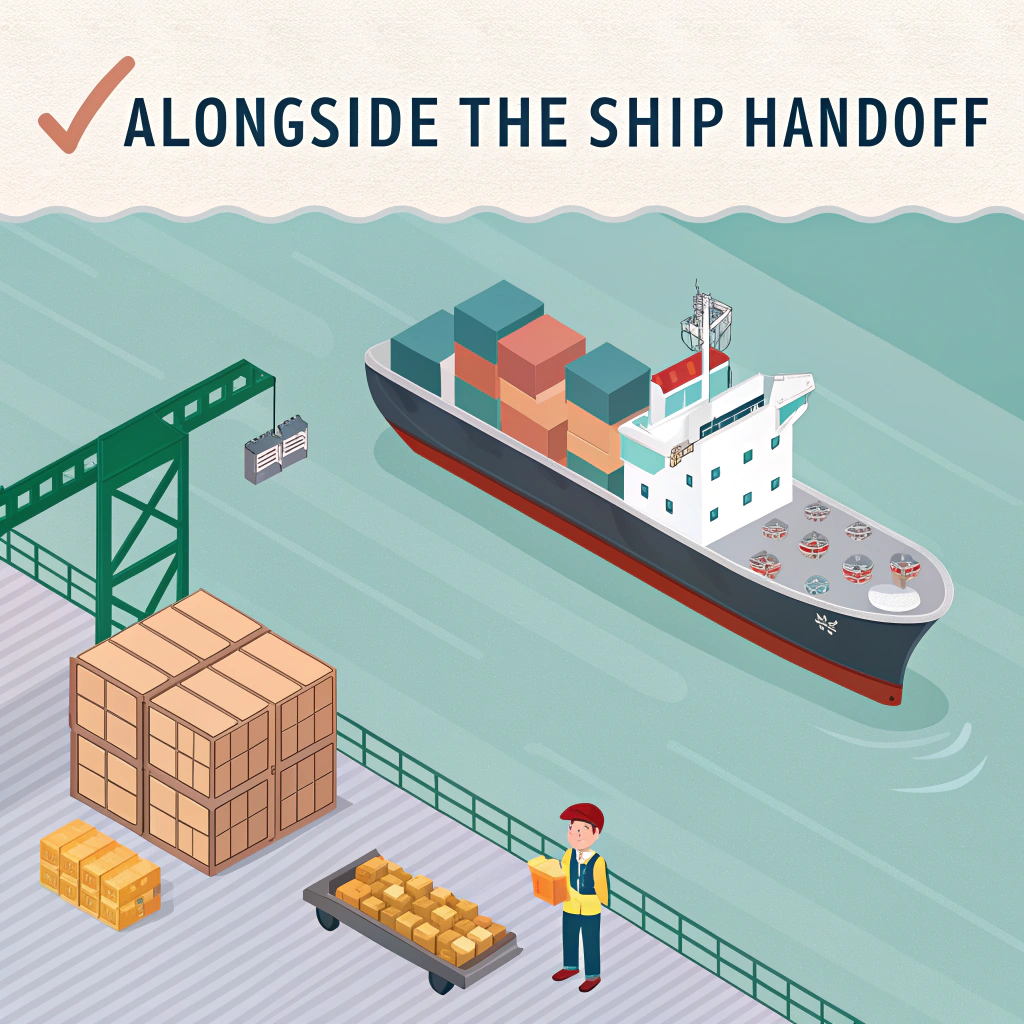
- Physical position: Cargo placed on the quay next to the vessel or delivered by barge (for lightering) within the carrier’s accepted receiving area. It is not a container terminal stack position.
- Evidence of delivery: Dock receipt, terminal gate-in record, or carrier’s received-for-shipment note for breakbulk. Under FAS, you typically won’t have an “On Board” notation until loading is completed.
- Control: The buyer (or buyer’s forwarder/NVOCC2) controls the stow plan, lifting gear coordination, and ocean booking.
Operational workflow for FAS from China (step-by-step)
- Contract and naming
- Use “FAS, [Port, Terminal], Incoterms 2020” in the contract (example: “FAS, Shanghai Waigaoqiao Phase 3, Incoterms 2020”).
- Agree the required laydays/ship window and the receiving terminal’s gate and lifting requirements.
- Export clearance (seller)
- Seller handles Chinese export customs declaration, including commodity HS codes, export license (if required), and any inspection (CIQ/CCC where applicable).
- Seller provides commercial invoice and packing list consistent with HS classification.
- Buyer’s ocean booking (buyer/forwarder)
- Book the main carriage with a breakbulk carrier or NVOCC. Provide stowage plan, lifting points, and cargo dimensions/weight to the carrier.
- Reserve quay time and lifting gear (shore crane, mobile crane, or ship’s gear), and ensure port authority permits are arranged.
- Pre-carriage to port (seller)
- Seller arranges inland trucking or barge to the named terminal.
- Confirm port gate appointments and deliver during the agreed receiving window to avoid storage and demurrage.
- Delivery alongside and risk transfer (handoff)
- Cargo is positioned alongside within the terminal’s receiving area. From this moment, risk and subsequent costs move to the buyer.
- Terminal issues a dock receipt/warehouse receipt. Take photos and tally sheets for condition records.
- Loading operations (buyer/forwarder/carrier)
- Buyer pays origin load charges, stevedoring, wharfage, and lashing/securing as required by the carrier.
- Once loaded, the carrier issues a Bill of Lading (MBL), typically “On Board.” If using an NVOCC, you’ll receive an HBL mirroring the MBL.
- Documentation wrap-up
- Seller delivers: commercial invoice, packing list, export declaration proof, certificate of origin (if required), and any inspection certificate.
- Buyer/forwarder obtains: MBL/HBL, mate’s receipt3 (for breakbulk), and insurance policy or certificate if coverage purchased.
Cost and liability map under FAS (who pays what)
| Cost item | Seller under FAS | Buyer under FAS |
|---|---|---|
| Export packing and marking | Yes | — |
| Inland haulage to named port/terminal | Yes | — |
| Export customs clearance (China) | Yes | — |
| Port gate fee up to delivery alongside | Yes | — |
| Terminal storage after delivery | — | Yes |
| Origin terminal handling (lifting/loading) | — | Yes |
| Stevedoring, lashing, dunnage4 | — | Yes |
| Ocean freight and bunker surcharges | — | Yes |
| Origin/port wharfage after handoff | — | Yes |
| Insurance from handoff point | — | Yes |
| Destination port charges, customs, delivery | — | Yes |
Notes:
- Terminal Handling Charges (THC) vary by port and by whether they include stevedoring. At conventional terminals, THC often excludes lifting by mobile crane or ship’s gear. Confirm inclusions.
- “Alongside” storage costs can begin quickly if a vessel is delayed. Build buffer time or standby clauses in the contract.
Documentation checklist for importers using FAS
Seller-supplied:
- Commercial invoice with accurate HS codes
- Packing list with dimensions/weights per piece
- Export customs declaration and release in China
- Certificate of origin (e.g., Form A, RCEP, depending on your market)
- Product-specific certificates (e.g., fumigation for timber, mill test certs for steel)
- Delivery note/dock receipt showing date/time of handoff
Buyer/forwarder-supplied:
- Ocean booking confirmation with laycan5
- Stow plan and lifting method statement (for heavy/project cargo)
- Insurance policy or certificate effective from handoff time/place
- VGM (Verified Gross Mass) if required by the terminal/carrier
- Dangerous goods declarations (if DG), plus MSDS and UN packaging proof
- MBL/HBL issuance instructions (consignee, notify party, freight terms “Freight Collect”)
Compliance and practical notes specific to China
- Export customs clearance: Under FAS, the seller must clear export in China. Ensure the exporter has a valid exporter registration and can obtain any license or CCC certification where needed.
- HS code accuracy: Misclassification can delay export release. Align technical descriptions with the HS code on both invoice and export declaration.
- Port selection: Choose a terminal equipped for your cargo. For example, steel coils and machinery are handled at conventional terminals; not at container yards.
- Barge vs truck: River ports may require barge delivery to the seagoing vessel. Confirm the receiving area and timing to count as “alongside.”
- VGM responsibility: The carrier may require VGM prior to loading. Although the buyer controls the booking, the seller is best positioned to weigh cargo. Agree VGM provision in the contract.
- On Board evidence: Banks often require an “On Board” B/L for payment. Under FAS, you won’t get this until loading is done (which is under buyer’s cost/control). Plan your letter of credit terms accordingly.
When to choose FAS vs FOB vs EXW
Choose FAS when:
- Your cargo is bulk or breakbulk, and you want control over vessel charter/booking and stowage.
- Your supplier can reliably deliver to the named port and clear export.
- You are comfortable taking risk the moment cargo is placed alongside, and you can manage loading logistics and insurance.
Prefer FOB when:
- You want the seller to bear loading risk and cost at origin, but you still control the main carriage.
- The terminal requires the party delivering cargo to manage the lift onto the vessel and you prefer that to be the seller.
Avoid FAS (use FCA/FOB) when:
- You ship containers. ICC recommends FCA for containerized cargo, though FOB remains common in practice.
- You cannot coordinate loading windows or arrange stevedoring at origin.
- You require the seller to obtain an “On Board” Bill of Lading for payment timing; FOB better aligns with that.
Avoid EXW unless:
- You have a local team/forwarder who can pick up at the factory and legally manage export clearance in China with the seller’s support. Otherwise, EXW can create delays and hidden costs.
Common pitfalls we help importers avoid under FAS
- Missing the receiving window: Leads to storage and standby crane charges. Solution: lock firm laycan and set “no-earlier-than” gate-in time.
- Unclear terminal handoff point: “Alongside” must be precisely defined in the contract (berth/yard coordinates). Solution: name terminal and include a site plan in the SOP.
- Insurance gaps: Cargo is uninsured between handoff and loading if the buyer forgets to bind cover from the exact handoff time/place. Solution: bind All-Risk coverage with clear attachment point.
- VGM and lifting plan omissions: Carriers can refuse loading. Solution: prepare method statements, rigging plans, and weight tickets early.
- L/C terms mismatched to FAS: Banks may demand On Board B/L while the seller’s responsibility ends earlier. Solution: align trade terms and banking documents with FAS realities.
How to brief your freight forwarder for a smooth FAS move
Provide upfront:
- Incoterms: “FAS, [Port & Terminal], Incoterms 2020”
- Cargo data: HS code, dimensions/weights per piece, center of gravity, lifting points, packaging type, stackability
- Photos and drawings; any hazardous or sensitive handling notes
- Desired vessel window, charter party (if any), or target sailing
- Insurance requirements and coverage start point
- Export documents contact at the seller for coordination
- Required delivery evidence (dock receipt format, timestamping, inspection photos)
Ask your forwarder to confirm:
- Terminal acceptance for your cargo type and lifting gear availability
- All origin charges for loading, lashing, dunnage, and wharfage under your account
- VGM process and cutoff
- Documentation timeline for MBL/HBL issuance and originals vs telex release
- Contingency plan for weather delays and berth congestion
Summary
FAS (Free Alongside Ship) under Incoterms 2020 gives importers control of the main carriage for bulk/breakbulk cargo, with risk transferring at the point the goods are placed alongside the nominated vessel at the named port. The seller clears export in China and handles pre-carriage to that point; the buyer pays for loading, ocean freight, and everything after. For containers, use FCA (or FOB by market practice), not FAS. With the right terminal choice, clear handoff definition, and tight coordination on stowage, VGM, and documentation, FAS can reduce landed cost variance and improve schedule control.
People Also Ask
What is FAS in international trade?
FAS (Free Alongside Ship) is an Incoterms 2020 rule where the seller delivers goods alongside the buyer’s nominated vessel at the named port and clears export. From that point, the buyer assumes all risks and costs, including loading onto the ship, ocean freight, and insurance. FAS is designed for bulk and breakbulk cargo, not container shipments.
Who pays freight in FAS?
Under FAS, the buyer pays for loading charges at origin, the ocean freight, and all downstream costs. The seller’s cost and risk end once the goods are placed alongside the vessel and export-cleared at the named port.
What is a FAS charge in shipping?
“FAS charges” typically refer to the buyer-side origin costs that start after delivery alongside, such as stevedoring, lifting, lashing, terminal handling after handoff, and wharfage, plus the ocean freight. These are distinct from the seller’s pre-carriage and export clearance costs before the handoff.
-
breakbulk: Read to understand when cargo should move as breakbulk vs container or bulk, how terminals handle it, and the impact on cost, risk, and documentation. ↩
-
NVOCC: Learn what a Non-Vessel-Operating Common Carrier does, how HBL/MBL issuance works, and when using an NVOCC can improve routing, liability management, and schedule control. ↩
-
mate’s receipt: See how this receipt is issued by the ship’s officer during loading, how it supports B/L issuance, and what to check for discrepancies that could affect L/C compliance. ↩
-
dunnage: Understand materials and methods used to secure cargo, who pays under different terms, and how proper dunnage prevents damage claims and reduces insurance disputes. ↩
-
laycan: Get clear on laydays and cancelling date in chartering/booking, how laycan aligns with terminal windows, and how to avoid storage, standby, and demurrage exposure. ↩