Skip to content
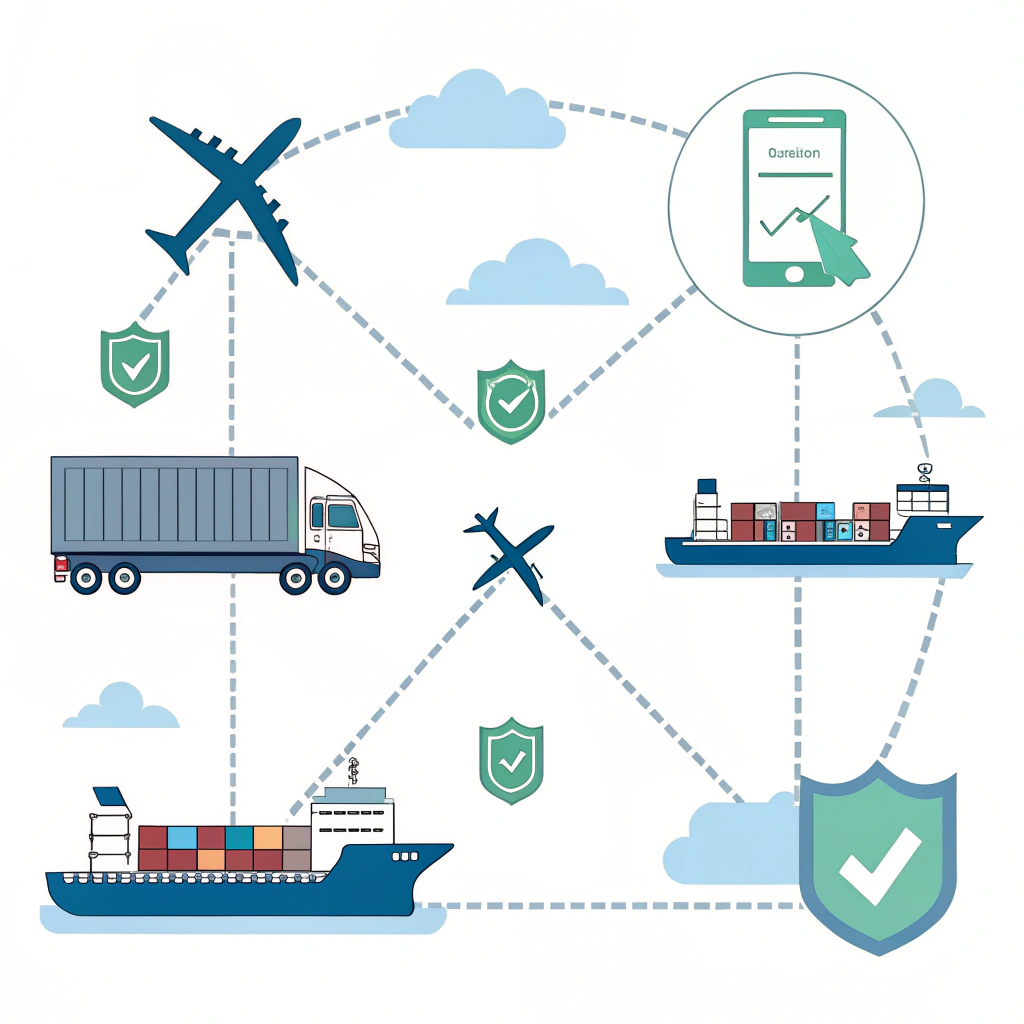
Using more than one freight forwarder reduces delivery risk, stabilizes costs, and improves performance. A practical approach is to dual‑source critical lanes, split volumes across 2–3 vetted partners, standardize a single SOP and SLA/KPI set, and integrate tracking to one view. This creates backup capacity during peak seasons, gives you rate benchmarks, and provides specialist coverage (e.g., NVOCC1 for ocean FCL, 3PL for door‑to‑door and value‑added warehousing), without creating chaos.
a. Problem you’re trying to solve
Relying on a single forwarder seems simpler—one contact, one invoice, fewer emails. The hidden cost is fragility. When the market tightens or something breaks, you have no alternative. Typical single‑vendor pain points include:
- Capacity risk: space cuts, rolled bookings, blank sailings, and airline cancellations
- Cost risk: sudden rate hikes, peak season surcharges, GRI, and fuel/BSC volatility
- Compliance risk: documentation errors, misclassifications, delayed clearances
- Performance drift: slow response times and missed SLAs with no leverage to improve
- Geographic mismatch: one forwarder rarely excels on every China origin, mode, and destination
- Innovation gap: limited options for consolidation, deconsolidation, transloading2, or merge‑in‑transit
If you run SMEs or mid‑market imports from China, your cargo mix and lanes vary. Nobody is “best” everywhere. A multi‑forwarder strategy builds resilience and gives you negotiating leverage without ballooning complexity—if you implement it with structure.

b. Why single‑sourcing breaks in real logistics
- Volatile demand and supply: When factories catch up post‑holiday or during promotions, volumes spike. Airlines and carriers ration space to bigger accounts. Without backup capacity, you pay expedite premiums or miss cut‑offs.
- Asymmetric strengths: Some partners are strong on South China to US West Coast fast services; others win on North China to Europe FCL or LCL3 consolidation. Customs brokerage expertise can also vary by commodity.
- Process bottlenecks: One forwarder’s origin team might be overloaded, causing pre‑carriage delays (truck bookings, export docs, VGM). With no alternative, your dwell time rises.
- Compliance variance: Different brokerage teams have different error rates. A second broker reduces clearance delays and chargebacks if a primary team stumbles.
c. The solution: a structured, low‑complexity multi‑forwarder setup
Start with an operational model, then standardize how you work across all partners.
Multi‑forwarder operating models (choose one or combine)
| Model | How it works | When to use | Pros | Cons |
|---|---|---|---|---|
| Primary + Backup | Allocate 70–90% to one forwarder; 10–30% to a second | Simple start; critical lanes | Minimal complexity; fast failover | Backup may deprioritize you if volume too small |
| Lane‑based Split | Assign lanes by origin/destination or mode (e.g., South China→US to A; North China→EU to B) | Multi‑origin/multi‑destination networks | Leverages strengths; clear ownership | Harder to compare rates across lanes |
| Capacity Pool | Allocate dynamically by space availability and rates, weekly or monthly | Volatile seasons; promo spikes | Maximizes fill rates; rate discipline | Requires tight SOP and data integration |
| Specialist + Generalist | Use a specialist for FCL/LCL, transloading, or e‑commerce DDP; keep a generalist for door‑to‑door | Mixed cargo types | Best practice depth + breadth | Contract and SOP coordination needed |
| Mini‑Bid Cycle | Quarterly tenders per lane; winners get allocation until next cycle | Price transparency focus | Keeps rates honest; performance reviewed often | More tender work; avoid whipsawing vendors |
Implementation steps (keep it simple)
- Map demand: by lane, mode, Incoterm, product class, weight/volume, and seasonality.
- Choose two partners first: one primary, one backup, with complementary strengths (e.g., one strong on fast US services, one strong on EU compliance).
- Publish a single SOP: Plan → Book → Execute → Clear → Deliver. Same milestones across partners.
- Define SLA and KPI: agree on thresholds and how you measure them (see table below).
- Allocate volumes: start 80/20 for 90 days; move toward 70/30 or lane splits after review.
- Integrate data: one tracking view via TMS/API/EDI; standardized milestone codes.
- Forecast weekly: share rolling 8‑week volume forecasts; lock allocations pre‑cut‑off.
- Run quarterly mini‑bids: benchmark rates, transit times, free‑time, and surcharge policies.
- Escalation ladder: define a 2‑hour response SLA for rollovers or holds; empower duty managers.
- Review performance monthly: adjust allocations based on KPIs, not anecdotes.
Core SLAs and KPIs to set across all forwarders
| Category | Metric | Target | Why it matters |
|---|---|---|---|
| Booking | Booking confirmation time | ≤ 6 hours (working) | Faster firming reduces rollover risk |
| Origin | Gate‑in to vessel departure (FCL) | ≤ 5 days average | Controls dwell and storage |
| Documentation | Commercial docs accuracy (no amendments) | ≥ 99% | Fewer delays and penalties |
| Clearance | Customs release time (from arrival) | ≤ 24–48 hours | Cuts demurrage and stockouts |
| Visibility | Milestone completeness | 100% of key events | One truth across partners |
| Exceptions | Dispute resolution time | ≤ 3 business days | Keeps cargo moving; limits cash leaks |
| Quality | Damage/shortage rate | ≤ 0.2% | Protects margin and OTIF |
| Cost | Rate variance vs tender | ≤ ±3% | Prevents surprise invoices |
| On‑Time | Vessel/flight departure vs planned | ≥ 92–95% | Predictable delivery to DC |
Cost vs resilience: what changes when you diversify
| Item | Single forwarder | Two forwarders | Notes |
|---|---|---|---|
| Base ocean FCL rate (example) | $2,050/FEU | $2,050–$2,150/FEU | Small variance; mini‑bids keep honest |
| Peak surcharge exposure | High | Medium | Backup capacity avoids last‑minute premiums |
| Expedite spend (air upgrades) | Frequent | Rare | Better allocation and planning reduces upgrades |
| Demurrage/Detention4 | Higher | Lower | Faster clearance due to redundancy and benchmarks |
| Admin overhead | Low | Moderate | Minimized via single SOP + integrated tracking |
| Lead time predictability | Medium | High | Two paths when one lane slows |
d. Attention points and limits (avoid common traps)
- Don’t over‑fragment: Two or three partners is usually enough. More will hurt consolidation gains and dilute leverage.
- Maintain minimum volumes: Some carriers via NVOCC require MQC5. Check your forwarders’ carrier commitments to avoid space cuts.
- Keep one broker of record per country for standard flows: You can maintain redundancy by pre‑approved alternate broker, but avoid swapping brokers mid‑arrival except during exceptions.
- Standardize documents: Use consistent templates (CI, PL, HS codes, COO, VGM). Reduce rework across partners.
- Align Incoterms: Under EXW and FCA, origin control varies. Make sure suppliers know booking windows and routing instructions for each forwarder.
- Rate governance: Lock a rate sheet with validity windows, surcharge triggers, and a cap on ad‑hoc fees. Require pre‑approval for any out‑of‑scope costs.
- Insurance and liability: Clarify cargo insurance responsibility and excluded risks in contracts. Set thresholds for automatic claims filing.
- Data and visibility: Enforce one set of milestone codes and an API/EDI feed. If tools are not ready, use a shared tracking spreadsheet as a stopgap.
- Credit terms: Don’t split volumes so thin that you lose favorable payment terms. Negotiate parallel terms to avoid cash‑flow stress.
e. Case examples and capacity planning tips
Case 1: Peak season capacity squeeze on South China → USWC fast service
A mid‑market importer running a single forwarder faced two consecutive rollovers during a promotion. Expedited air uplift added 15% to landed cost. After adopting a primary + backup model with shared forecasts, on‑time departures improved from 76% to 93% in peak weeks, and expedite spend dropped by ~60% over the quarter.
Case 2: Customs documentation accuracy for mixed HS codes
A buyer shipping electronics and home goods saw repeated amendments for classification errors. They kept one primary broker but implemented a pre‑arrival document audit with their second forwarder’s compliance team. Amendment rate fell below 1% and average clearance time improved by 36 hours.
What made the difference?
- Weekly demand signals: Rolling 8‑week forecast shared with both partners
- Clear allocation rules: Priority capacity assigned to time‑sensitive SKUs
- Exception SLAs: 2‑hour escalation on rollovers; duty managers empowered to rebook
- Compliance pre‑checks: HS code library maintained centrally; forwarders audit docs 48 hours pre‑departure
Peak season playbook (capacity shortage strategies)
- Pre‑book windows: Lock bookings 2–3 weeks ahead; use dual‑sourcing to keep space flexible.
- Stagger ETDs: Spread departures within the week to reduce gate congestion.
- Mix modes: Reserve an air‑freight tranche (5–10%) for critical SKUs; keep tight rules for upgrades.
- Exploit transloading: Land on USWC, transload to domestic trucking for faster DC delivery.
- Use consolidation and deconsolidation smartly: LCL for steady low‑volume SKUs; FCL for high‑volume to cut cost per unit.
- Door‑to‑door contingency: Keep two door‑to‑door routings ready (e.g., different ports of discharge) to circumvent local disruptions.
f. Contracts, SLAs, and governance that make multi‑forwarder work
Key contract clauses to include
- Performance credits: Service recovery credits if SLA breaches cause downstream costs
- Peak season allocation: Minimum weekly TEU/CBM space or alternative routing options
- Exceptions handling: Defined escalation ladder, on‑call duty manager, and rebooking authority
- Rate validity and change control: Quarterly validity with surcharge change protocol and pre‑notice
- Data sharing and EDI/API: Required milestones, status update cadence, and outage handling
- Non‑solicitation & confidentiality: Protect supplier relationships and pricing data
- Audit rights: Ability to audit invoices, surcharges, and detention/demurrage records
KPI governance
- Monthly scorecards: Compare partners; reallocate volume based on performance
- Root‑cause reviews: For rollovers, clearance delays, damages—document corrective actions
- Continuous improvement: Quarterly optimization of routing, consolidation, and warehouse flows
- Supplier enablement: Train suppliers on booking SOP and carton/pallet specs to reduce origin issues
g. Step‑by‑step rollout: 30/60/90 plan
-
Day 0–30 (Pilot)
- Select two forwarders with complementary strengths (e.g., one strong in China to US air/ocean fast lanes; one strong in EU FCL and brokerage)
- Publish SOP and KPI/SLA pack; set 80/20 allocation
- Integrate tracking to one view (TMS or shared dashboard)
- Run document audit across first 10 shipments; fix common errors
-
Day 31–60 (Stabilize)
- Move to 70/30 allocation or lane splits based on scorecard
- Start mini‑bid for next quarter rates on 3–5 priority lanes
- Add contingency port pairs (alternate POD/POL combinations)
- Train suppliers on booking windows, label/pallet standards, and escalation process
-
Day 61–90 (Scale)
- Expand to more lanes and add specialist services (e.g., merge‑in‑transit, transshipment options)
- Negotiate performance credits and peak season allocations
- Formalize quarterly exec reviews; lock data quality SLA at 98–100% milestone coverage
h. When to keep it simple (one forwarder is fine)
- Very small volumes on one lane with stable demand
- Projects where consolidation benefits outweigh diversification
- Temporary campaigns with narrow timelines
Even then, prepare a “warm backup” forwarder: pre‑approved, rate‑sheeted, and tested with at least one shipment per quarter to ensure readiness.
i. What to expect in outcomes
- Fewer stockouts and rush fees thanks to backup capacity and better planning
- Lower landed cost variance over time, even if base rates occasionally trend higher
- Better compliance and fewer documentation‑related delays
- Increased leverage and service quality due to transparent performance comparisons
- More flexible routing during disruptions with door‑to‑door contingency
If your imports originate in China, a well‑run dual‑source model using complementary partners (e.g., an NVOCC with strong FCL capacity plus a 3PL offering value‑added warehousing and domestic distribution) will deliver resilience without losing control or predictability.
People Also Ask
Why is freight forwarding important in international trade?
Freight forwarding streamlines cross‑border shipping by coordinating carriers, documentation, and customs so goods move compliantly and on time. A qualified forwarder manages booking, export formalities, transit, clearance, and final delivery, reducing delays and cost surprises while letting businesses focus on their core operations.
Which country is best for freight forwarding?
There isn’t a single “best” country—it depends on your trade lanes. China is a major origin for global exports and offers broad capacity and consolidation options, the US is strong in distribution and domestic trucking, and Germany anchors European logistics. Choose forwarders with proven performance on your specific origins and destinations rather than ranking countries in general.
What is a major challenge faced by freight forwarders?
Forwarders handle high transaction volumes with volatile rates and complex invoices. The biggest operational challenges are securing capacity during peak seasons, maintaining documentation accuracy for customs, and controlling surcharge‑driven costs. Buyers can mitigate these risks by setting clear SLAs/KPIs, sharing forecasts, and using a multi‑forwarder model for backup capacity.
-
NVOCC: Read to understand how NVOCCs contract space, issue house bills of lading, and leverage carrier relationships—so you can tap steadier FCL capacity, negotiate better rates, and manage service reliability during tight markets. ↩
-
Transloading: Read to learn when shifting cargo from ocean containers to domestic trucks/rail cuts dwell, bypasses port congestion, and speeds DC delivery while optimizing cost and cycle time. ↩
-
LCL: Read to grasp when less‑than‑container‑load makes sense versus FCL—cost break‑evens, sailing frequency, consolidation schedules, and how to minimize risk of delays and damage. ↩
-
Demurrage/Detention: Read to see how these fees accrue, what “free time” really covers, and tactics to avoid charges through planning, clearance timing, and contract terms. ↩
-
MQC: Read to understand minimum quantity commitments—how they impact space guarantees, penalties, and planning—so you can align allocations with carrier/forwarder contracts. ↩