Skip to content
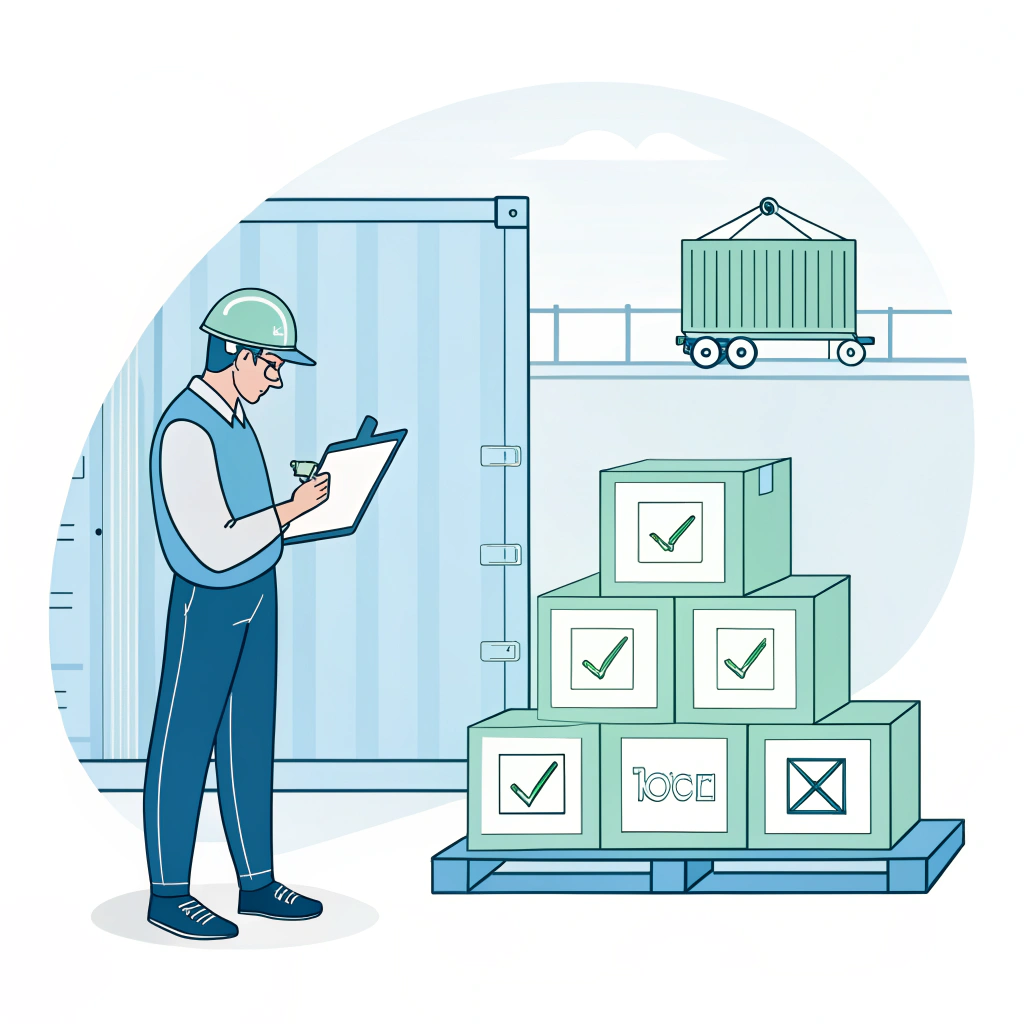
Pre-shipment QC inspections protect importers by catching defects, mislabeling, and compliance gaps before cargo leaves the factory. Using structured sampling (AQL1), final random inspection (FRI), and container loading checks, importers can avoid rework after sailing, claim disputes, hold-for-inspection delays, and extra logistics costs. Coordinated with INCOTERMS, a pre-shipment program reduces defect rates, stabilizes lead times, and improves ROI by preventing expensive shipping risks at the source.
Problem: shipping risks that cost you money and time
Even when a factory has internal QA, late-stage surprises can derail your shipment and budget:
- Undetected defects: functional failures, cosmetic flaws, missing accessories
- Mislabeling and compliance issues: wrong barcodes, carton marks, country-of-origin, regulatory marks (e.g., CE, FCC), or lab test gaps
- Packing errors: poor palletization, wrong inner pack quantities, fragile items without adequate protection
- Quantity discrepancies: short shipment or wrong SKU mix after consolidation
- Container loading mistakes: water ingress risk, insufficient bracing, mixed pallets, load shift damage
- Documentation lapses: missing NCR2 evidence, incorrect master carton data, mismatch between PI and packing list
- Hold-for-inspection or customs flags: authorities in destination country request inspection or documentation, causing delays
- Cargo claims and insurance complications: hard-to-defend claims due to lack of pre-shipment evidence
These issues translate into chargebacks, returns, air rework, re-labeling fees, detention/demurrage, and missed retail windows. Most are avoidable with structured pre-shipment QC.
Why risks slip through factory QA
- Late changes: sub-supplier switches materials, last-minute spec tweaks, or alternate packaging due to cost pressure
- Time pressure: shipment booked before thorough line checks, especially during peak seasons
- Misaligned standards: factory interprets “acceptable quality” differently than buyer’s market expectations
- Weak sampling: spot checks on a handful of units miss systemic defects
- Documentation gaps: quality discussions happen verbally; no formal non-conformity report (NCR) or pass/fail criteria
- INCOTERMS blind spots: under certain terms (e.g., FOB), importer assumes quality risk once goods are loaded; if issues surface later, leverage is low
Solution suite: build a pre-shipment QC program
Use a layered approach combining inspection types so each stage addresses specific risks.
Inspection types and what they catch
| Inspection Type | What It Checks | Shipping Risk Mitigated | When to Use |
|---|---|---|---|
| Final Random Inspection (FRI) | Random sample across finished lot per AQL; workmanship, function, appearance, accessories, basic packaging | Post-shipment returns, product rework, customer complaints | When ≥80–100% of goods are packed (ideally 100%) |
| Container Loading Check (CLC) | Quantity by SKU/carton, palletization, carton condition, bracing, moisture control, seal number, container cleanliness | Transit damage, short-ship, wrong mix, claim disputes | During container loading, before seal is closed |
| Carton & Labeling Inspection | Outer carton marks, inner pack, barcodes/UPC/EAN, CO/O labels, compliance icons | Retail chargebacks, customs issues, mis-scan at DC | With FRI or as a separate check |
| Consolidation & Packing Verification | Mix across multiple factories, count consistency, packing list accuracy | Partial shipment missing SKUs, wrong assortment | Prior to export booking or during warehouse consolidation |
| In-Process (DUPRO3) | Early-stage process checks and WIP sampling | Late discovery of systemic defects | Mid-production for complex SKUs |
| Factory Audit | Systems, process capability, traceability, compliance | Persistent quality variability | Before awarding production |
| Lab/Compliance Testing | RSL, safety, EMC, regulatory marks (CE/FCC/UKCA/CPSIA), performance | Customs holds, legal exposure | Before mass production; verify certificates |
| Documentation & NCR | Formal defect logging, photos, counts, acceptance metrics | Ambiguous disputes, slow decisions | With every inspection |
How AQL sampling prevents costly misses
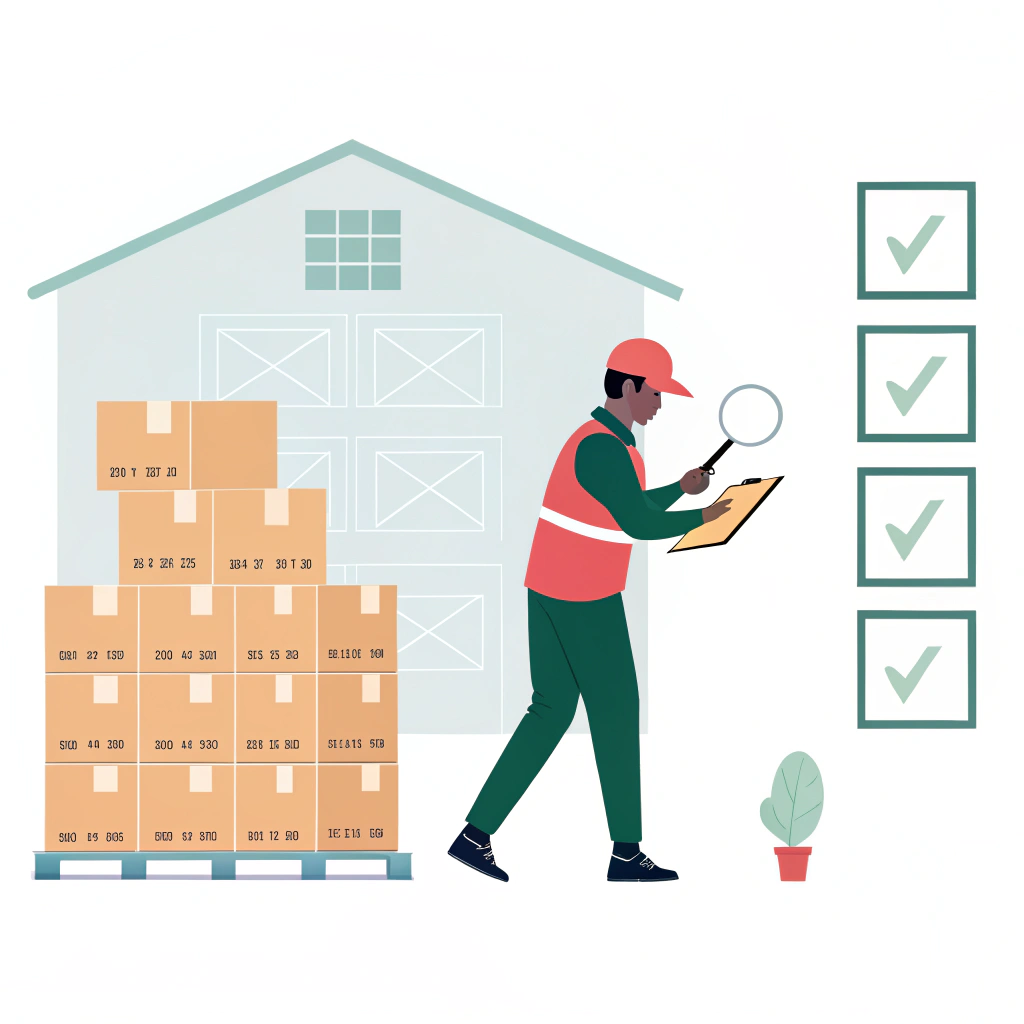
- Acceptable Quality Limit (AQL) defines the maximum number of defects considered acceptable in a sample, triggering accept or reject.
- Use ANSI/ASQ Z1.44 or ISO 2859-1 tables. Common practice for consumer goods:
- Critical: 0.0 (no critical defects allowed)
- Major: 2.5 (or 1.5 for higher-risk products)
- Minor: 4.0
- Example: Lot size 5,000 units; General Inspection Level II → Code letter L → sample size 200.
- At AQL 2.5 (major): Accept up to 7, reject at 8 major defects.
- At AQL 4.0 (minor): Accept up to 10, reject at 11 minor defects.
- Sampling discipline matters more than sample size alone: randomization across cartons, production days, and sub-suppliers reduces bias and catches localized issues.
Quick sample size guide (single-sampling illustration)
| Lot Size | Level (General II) | Approx. Sample Size |
|---|---|---|
| 501–1,200 | II | 80 |
| 1,201–3,200 | II | 125 |
| 3,201–10,000 | II | 200 |
| 10,001–35,000 | II | 315 |
Note: Use the latest standard tables for exact code letters and acceptance numbers.
Calculating inspection ROI: a practical example
Assume:
- Unit cost: $12; gross margin per unit: $5
- Lot size: 5,000 units
- Baseline defect rate without PSI: 6% (300 units)
- Post-shipment rework and return handling: $18 per unit (reverse logistics, inspection, repack, replacements)
- Additional delay cost (detention/demurrage, air-lift replacement for critical SKUs): $3,600
- Inspection cost (FRI + CLC, 2 man-days total): $600
Estimate outcomes:
| Scenario | Defects Reaching Market | Direct Rework Cost | Delay/Claims | Inspection Cost | Total Cost |
|---|---|---|---|---|---|
| No PSI | 300 units | 300 × $18 = $5,400 | $3,600 | $0 | $9,000 |
| PSI (FRI catches 70% of defects; factory reworks before shipping) | 90 units | 90 × $18 = $1,620 | $0–$600 (minor) | $600 | $2,220–$2,820 |
Savings: ~$6,180–$6,780 on a $600 inspection spend. This excludes intangible benefits like improved retail relationships, fewer chargebacks, and more predictable lead times. In many categories, one avoided claim or detainment offsets a full year of inspection fees.
Coordinating PSI with INCOTERMS and logistics
INCOTERMS affect who controls timing and who bears risk. Align inspections accordingly.
| INCOTERM | Who Controls Physical Handover | Recommended PSI Focus | Key Documents |
|---|---|---|---|
| EXW | Buyer | FRI, CLC at buyer’s appointed facility | NCR, packing list, photo evidence |
| FCA/FOB | Seller until carrier takes charge | FRI before warehouse release; CLC at factory or consolidation point | NCR, loading photos, seal number |
| CFR/CIF | Seller arranges carriage/insurance | Strong CLC for quantity and load security | Insurance certificate, CLC report |
| DAP/DDP | Seller | FRI + CLC; ensure compliance marks to avoid destination holds | Compliance certificates, test reports |
Best practice:
- Add a hold-for-inspection clause in shipping instructions: cargo will not be released to carrier until the inspection “PASS” is issued or NCR is dispositioned.
- Book vessel space with flexible cut-off to allow 24–48 hours buffer for rework.
- Ensure the inspector sends the NCR and full report on the same day; your team decides: PASS, rework, or ship under concession with documented corrective plan.

Inspection checklist essentials
Build a product-specific checklist to standardize inspections and reporting:
- Product function: core operations, safety features, firmware versions (if electronics)
- Workmanship: surface finish, stitching, seams, fasteners, paint consistency
- Dimensions and fit: tolerance checks on critical parts
- Accessories and manuals: count and language compliance
- Compliance marks: CE/FCC/UKCA, warning labels, age grading, battery symbols
- Barcodes and labeling: UPC/EAN scannability, carton marks, model numbers, batch/lot codes
- Packaging and protection: inner/outer pack, polybags, foam, fragile item supports; ISTA drop test5 standard referenced where relevant
- Quantity and assortment: SKU mix, per-carton quantities, total count vs PO
- Photos: representative defects, packaging, palletization, container loading sequence
- Documentation: NCR with defect categories (critical/major/minor), acceptance numbers, inspector name/time, seal number if CLC
Choosing a third-party inspection agency
Criteria to evaluate:
- Coverage and responsiveness: can they reach your factory with 24–48 hours’ notice?
- Method discipline: proven use of AQL/ISO standards, randomization protocol, tamper-evident sampling
- Reporting quality: same-day Non-Conformity Report (NCR), clear photos, defect categorization, acceptance results
- Category experience: softlines vs electronics vs toys require different skill sets
- Independence: no conflict of interest with the factory; transparent pricing (typical USD $250–$300 per man-day in China, varies by region)
- Add-on capabilities: lab/compliance testing coordination, re-inspection, and CLC
- Digital transparency: dashboard to track pass rates, common defect trends, and factory scorecards
Ask for:
- Sample reports from similar products
- Calibration records for measurement tools (calipers, torque testers, barcode scanners)
- SLAs on report timing and dispute resolution
Hold-for-inspection procedures that actually work
- Pre-schedule: align production finish, inspection window, and booking cut-offs
- Authorization: empower inspector to open cartons and sample randomly (documented in PO terms)
- Real-time escalation: inspector shares preliminary findings and photos; buyer decides within hours
- Disposition rules: pre-agree thresholds for rework vs concession ship vs 100% sort
- Evidence capture: NCR includes before/after photos of rework; seal number recorded in the CLC report
- Release: forwarder receives “PASS” notice or buyer’s concession decision before issuing SI to the carrier
What FRI catches vs what CLC controls
- FRI: defects intrinsic to the product (function, finish, counts, accessories), mislabeling on unit packs, and minor packaging protection errors.
- CLC: systemic shipment risks—carton damage, incorrect pallet layout, insufficient bracing, mold/mildew risks, seal integrity, and final quantity by SKU.
Together, they reduce the probability of cargo claims and insurance disputes by supplying contemporaneous evidence of product quality and loading conditions.

Limits and how to mitigate them
- PSI is sampling, not 100% inspection. High-risk or high-liability products may need 100% sort or tighter AQL (e.g., Major 1.5).
- Lab tests take time. Plan compliance testing (RSL, EMC, safety) before production; PSI cannot replace lab certification.
- Multi-SKU complexity. Increase sample sizes or stratify sampling per SKU if assortments are diverse.
- Factory pushback. Address via contract terms and shared metrics; offer a re-inspection path.
- Seasonal capacity constraints. Book inspectors early and consider DUPRO for peak seasons to avoid last-minute surprises.
Data-backed outcomes
- A blended PSI program (FRI + CLC + labeling checks) typically reduces shipped defect rates by 50–80% relative to factory-only QA for general consumer goods.
- Retail chargebacks due to labeling and barcodes drop significantly when carton and labeling checks are enforced.
- Claim resolution times shorten when NCRs and loading photos are part of the documentation; insurers accept evidence faster, lowering dispute costs.
Action plan: implement PSI in 10 steps
- Define defect categories and target AQL levels (Critical 0.0, Major 2.5/1.5, Minor 4.0).
- Build a product-specific inspection checklist covering function, labeling, compliance, and packaging.
- Insert hold-for-inspection language in PO and shipping instructions.
- Select a third-party inspection agency; agree SLAs and NCR format.
- Schedule FRI when ≥80–100% of goods are packed; avoid inspections too early.
- Add a Container Loading Check for quantity verification, palletization, and seal control.
- For complex products, schedule a DUPRO (in-process) mid-production.
- Plan lab/compliance testing before mass production; attach certificates to shipment files.
- Use NCR data to drive supplier corrective actions and adjust AQL for future lots.
- Monitor pass/fail trends per factory to inform sourcing decisions.
People Also Ask
Q: Why is pre-shipment inspection important?
A: Pre-shipment inspection verifies product quality, labeling, quantity, and packaging before cargo leaves the factory. By catching defects and compliance gaps via AQL sampling and final random checks, importers avoid rework after sailing, reduce returns and chargebacks, and prevent delays from hold-for-inspection or customs issues.
Q: What is the purpose of the pre-shipment inspection of export goods?
A: The purpose is to confirm the right quantity and SKU mix, ensure the goods meet the buyer’s specifications and compliance requirements, and validate packaging so products arrive sale-ready. It provides evidence through reports and photos (including an NCR when needed) to support release decisions and minimize shipping and claim risks.
-
AQL: Learn how Acceptable Quality Limit sampling works, how to choose levels by risk class, and how it translates to accept/reject decisions that cut post-shipment defects. ↩
-
NCR: Understand what a Non-Conformity Report includes (defect taxonomy, evidence, acceptance criteria) and how to use it to speed decisions and strengthen claim defense. ↩
-
DUPRO: See how during-production inspections catch process drift early, set containment actions, and prevent systemic defects before final pack-out. ↩
-
ANSI/ASQ Z1.4: Review the widely used attribute sampling standard, code letters, inspection levels, and acceptance numbers so you can right-size sample plans and align with suppliers. ↩
-
ISTA drop test: Explore packaging test protocols, drop/heavy-handling sequences, and pass/fail criteria to design protective packaging that reduces transit damage and chargebacks. ↩