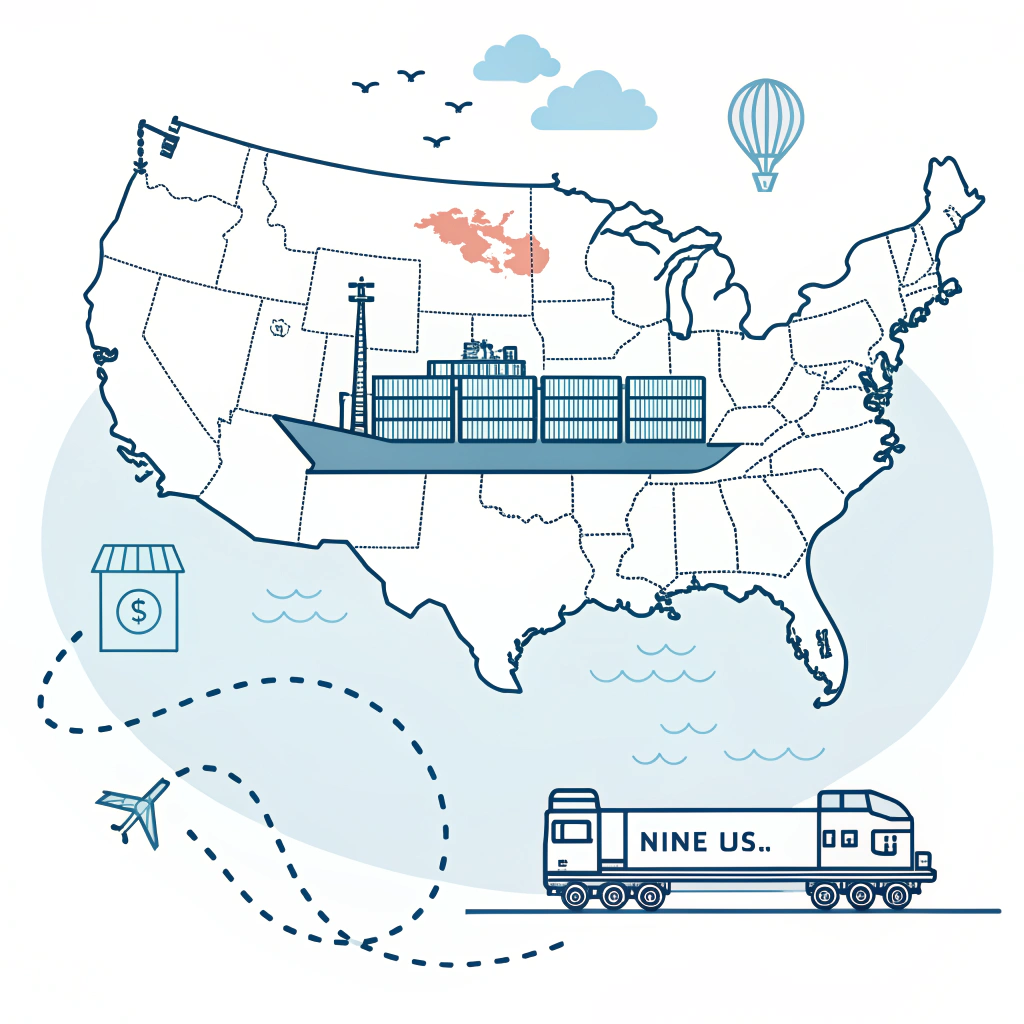
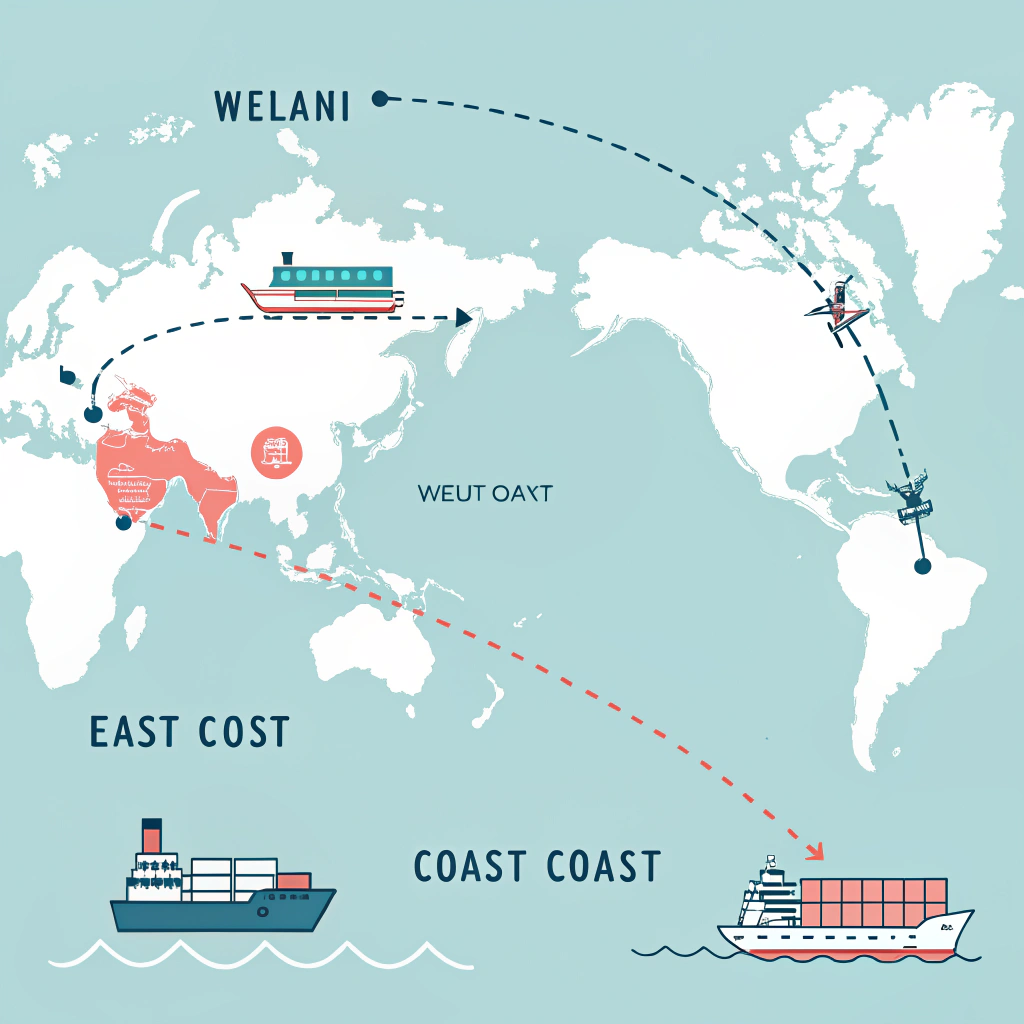
To deliver from China to the US East Coast in 30 days door-to-door, the most reliable model is expedited ocean to the US West Coast plus intermodal1 rail or transload (often 24–29 days when pre-cleared). All-water services via the Panama or Suez canals typically run 32–40 days door-to-door and only sometimes hit 30 with premium strings and minimal dwell. Air freight meets 3–6 days door-to-door if cost allows, and hybrids (ocean to LA + domestic air to the East Coast) can land in 10–14 days.
Why 30 days matters and what “door-to-door” includes
Hitting a 30‑day target is about controlling every hand-off, not just sailing time. In your plan, “30 days” should mean the entire door-to-door window:
- Origin handling: booking lead time, factory pickup, export customs, terminal in-gate, and cut-off compliance
- Main transit: ocean (all-water or via West Coast) or air freight
- Transfer leg: intermodal rail, transload, or domestic air
- Destination handling: customs clearance (pre-clear if possible), terminal dwell, drayage, and final delivery
Key drivers of your clock:
- Schedule reliability and blank sailings
- Panama/Suez constraints and weather
- Port and rail congestion cycles
- FCL vs LCL handling and CFS2 dwell
- Customs exams and documentation accuracy
Route options at a glance (time, cost, and reliability)
Below is a planner’s view comparing viable routes for China-to-USEC deliveries.
| Route model | Typical door-to-door days | Can it meet 30 days reliably? | Reliability | Cost tier | Best for | Watch-outs |
|---|---|---|---|---|---|---|
| West Coast entry + intermodal rail/transload (LA/LB, OAK, SEA/TAC → EWR/SAV/ATL) | 24–29 (with pre-clear and fast turns); 26–34 in normal markets | Yes (most reliable sub‑30) | High (varies with port/rail congestion) | $$ | General merchandise needing speed without air rates | Rail dwell, appointment capacity, chassis |
| All-water via Panama (South China/Ningbo/Shanghai → Savannah/NY-NJ/Norfolk/Charleston) | 32–40 typical; premium strings 30–34 | Rarely; only with premium strings, short dwell | Medium | $ | Heavy freight, cost-sensitive SKUs | Canal constraints, blank sailings, weather |
| All-water via Suez (North Asia → USEC) | 35–45 typical | Unlikely | Medium–Low | $ | When Panama capacity is constrained | Longer route, geopolitical disruptions |
| Air freight direct to USEC | 3–6 | Always | Very High | $$$$ | New launches, high-margin, urgent spares | Unit cost, airport handling windows |
| Ocean to LA + domestic air to USEC (hybrid) | 10–14 | Yes | High | $$$ | Splits: partial urgent volume + ocean balance | Two hand-offs, air capacity |
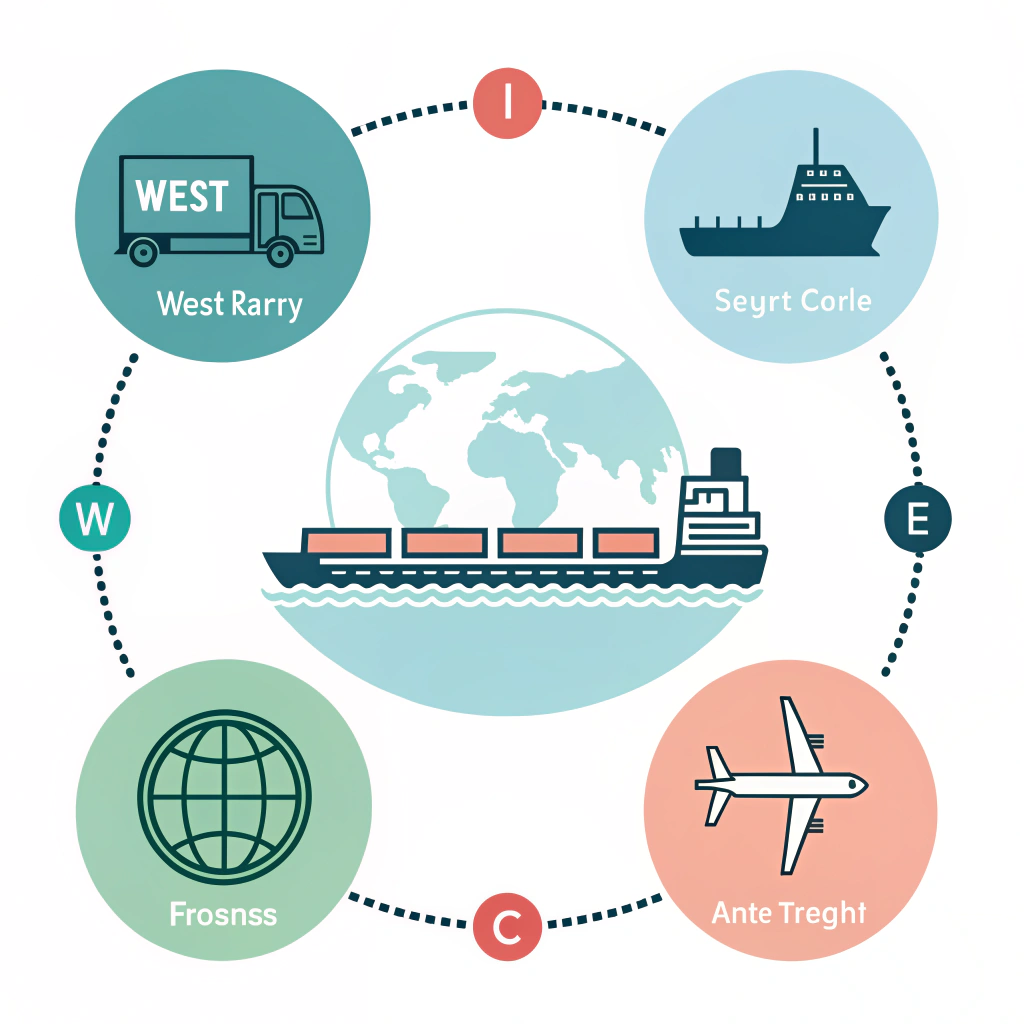
Option 1: West Coast entry + rail/transload (the dependable sub‑30 workhorse)
Why it works
- Shorter Asia–US ocean leg (South China to LA/LB often 12–16 days) cuts risk.
- You control hand-offs: peel-pile dray, transload into domestic trailers, priority intermodal to East Coast ramps.
- Works well with pre-clearance3; freight can move inland immediately after availability.
How the clock adds up (representative, South China → NY/NJ door)
- Factory to origin port: 1–3 days (same province), 3–5 days cross-province
- Export docs and CY gate-in: 1–2 days if booked 7–10 days before cut-off
- Ocean to LA/LB: 12–16 days (premium strings can be 11–13)
- Terminal availability + dray to transload facility: 0.5–1.5 days with appointment
- Transload + rail ramp in-gate: 0.5–1 day (pre-booked)
- Rail LA → EWR: 6–8 days line-haul; 1 day ramp availability; 0.5–1 day dray final
- Total: 22.5–29.5 days (plan 24–29 with buffers)
Port and rail choices
- Entry ports: LA/LB (most services and capacity), Oakland (fits North China), Seattle/Tacoma (fast sailing from North Asia; rail to Midwest/East can be competitive).
- Rail ramps: EWR (NY/NJ), Harrisburg, Pittsburgh, Savannah/Charleston via inland connections, Atlanta, Charlotte, Jacksonville.
- Domestic line-haul: Use premium intermodal services; book allocations for peak season.
Risk controls
- Pre-allocate rail capacity; avoid spot booking during surges.
- Use guaranteed truck appointments; pre-pull containers to avoid last-minute rollovers.
- Monitor terminal dwell; use live feeds/port alerts.
When to choose it
- You need consistent <30‑day door-to-door without paying for air.
- You ship FCL or high-cube SKUs that benefit from quick transload to 53" trailers.
- You can pre-clear and keep docs pristine to avoid holds.
Option 2: All-water via Panama (cost-led, may hit 30 only in ideal conditions)
What to expect
- South China/Ningbo/Shanghai to Savannah/Charleston/NY-NJ typically posts 28–36 days port-to-port; door-to-door is 32–40 with dray and clearance.
- Premium strings sometimes post 27–30 port-to-port from South China to Savannah, but any canal delay, weather, or port dwell pushes it beyond 30 door-to-door.
Pros
- Lower landed cost per CBM/Ton compared to transload/rail.
- Simpler chain (fewer hand-offs), good for fragile or overweight cargo.
Constraints and tips
- Canal slot restrictions and draft limits can ripple schedules. Build 3–5 days buffer.
- Inland trucking on the East Coast is shorter than from the West Coast but still plan 1–3 days for dray/appointment.
- For 30‑day targets, use only with:
- Earliest possible sailing (avoid rollovers with priority space)
- FCL (skip CFS time)
- Pre-clearance and delivery appointments in hand
- Proximity to Savannah/Charleston (often quicker turn vs NY/NJ)
Option 3: All-water via Suez (rarely sub‑30)
- Typical door-to-door 35–45 days from North Asia to USEC; beneficial when Panama is constrained or services are re-routed.
- Use this only if cost is paramount and inventory buffers can absorb extra time.
Option 4: Air and hybrid models (the speed levers)
- Pure air freight to JFK/EWR, ATL, BOS, PHL: 1–2 days flight time; 1–2 days origin handling; 1 day customs/handling; 0.5–1 day final mile. Plan 3–6 days door-to-door.
- Ocean to LA + domestic air to East Coast (split strategy): 10–14 days for the air-split tranche, while balance rides ocean+rail. Useful for launch dates and promotions.
- Express small-parcel (UPS/DHL/FEDEX/TNT): 2–5 days door-to-door for cartons; best for high-margin, low-weight items.
Hitting 30 days with FCL vs LCL
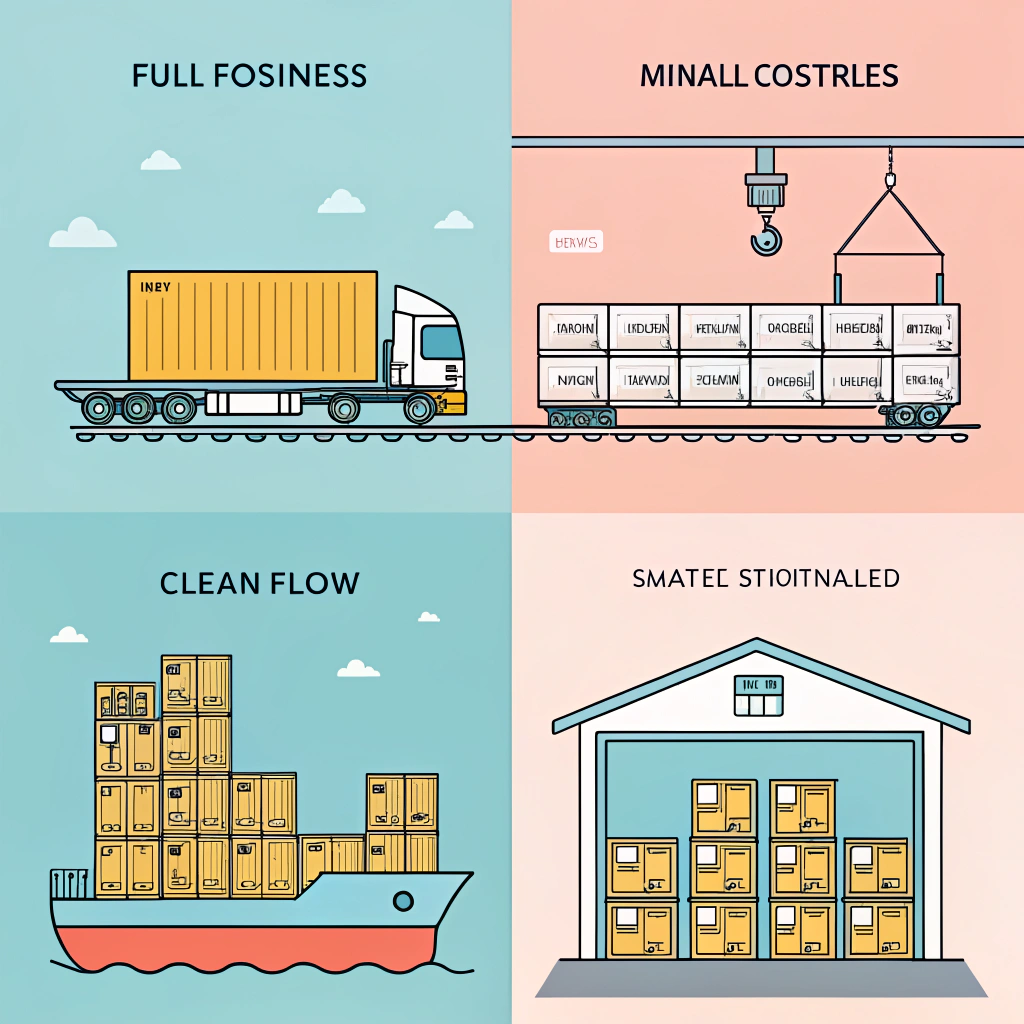
- FCL (Full Container Load): Fastest through terminals, eligible for pre-pull and direct rail. Best for 30‑day targets.
- LCL (Less than Container Load): Adds 3–7 days total due to CFS consolidation/deconsolidation and earlier cut-offs. For 30‑day goals, favor buyer’s consolidation or multi-supplier consolidation into an FCL whenever possible.
Time impact by load type
| Factor | FCL impact | LCL impact |
|---|---|---|
| Origin cut-off timing | Close to vessel CY cut-off | 2–4 days earlier CFS cut-off |
| Origin handling | 0.5–1 day | 1–3 days (CFS build) |
| Destination deconsolidation | Not applicable | 1–3 days (CFS strip/availability) |
| Exam risk surface | Lower (fewer touch points) | Higher (CFS + multiple consignments) |
| Likelihood to meet 30 days | High with WC+rail | Moderate/Low unless premium all-water + perfect CFS ops |
Choosing your East Coast port: tradeoffs that affect your clock
- Port of New York/New Jersey: Largest gateway; deep intermodal connectivity. Plan for variable terminal dwell and appointment availability. Typical drayage 0.5–1 day metro, 1–2 days regional.
- Savannah: Highly efficient terminals and strong inland rail to the Southeast. Often the fastest all-water discharge/turn on the USEC.
- Charleston: Consistently strong productivity; attractive for Carolinas and inland Southeast.
- Norfolk (Hampton Roads): Good rail access inland; useful for Mid‑Atlantic and Midwest IPI moves.
- Baltimore and Jacksonville: Consider for specific DC networks; mind vessel calls and service frequency.
For 30‑day plans, prioritize:
- Terminal productivity and weekend gates
- Proximity to your DC network
- Rail ramp options and appointment systems
Customs and compliance steps that protect the 30‑day window
- ISF (10+2) filing4: Submit at least 24 hours before vessel loading; earlier is better to reduce holds.
- Pre-clearance with Remote Location Filing: Push entry data before arrival; align your bond coverage, HTS, and valuation.
- Docs perfection: Commercial invoice, packing list, bill of lading, arrival notice. Avoid discrepancies that trigger exams (X-ray/tailgate/Intensive).
- PGA agencies (FDA, EPA, etc.): Pre-register and ensure product codes (e.g., FDA PNC) are valid before arrival.
- CTPAT/AEO considerations: If your program applies, it can reduce inspection risk and speed throughput.
A sample 30‑day door-to-door timeline (China → NY/NJ)
- Day 0–2: Booking confirmed; ISF filed; origin pickup arranged; docs validated.
- Day 3–4: In-gate before CY cut-off; export cleared.
- Day 5–18: Ocean to LA/LB (premium string 11–13 days; standard 13–16).
- Day 19: Container available; dray to transload facility; pre-cleared by CBP.
- Day 20: Transload complete; in-gate at rail ramp.
- Day 21–27: Rail LA → EWR (6–8 days including ramp dwell).
- Day 28–29: Final dray + delivery appointment.
- Day 30+: Buffer for exceptions (weather, rollover, chassis).
For Savannah delivery using all-water, plan:
- Day 0–2: Booking + docs; ISF filed
- Day 3–4: Export clearance + in-gate
- Day 5–34: All-water via Panama (28–32 port-to-port typical)
- Day 35–37: Customs, dray, delivery
- Conclusion: Use only if you can tolerate 32–40 days or accept risk to the 30‑day target.
Seasonality, buffers, and booking strategy
- Peak season (June–October) and pre‑CNY surges: Add 3–7 days buffer or buy premium space.
- Carrier schedule reliability: Expect blank sailings around Golden Week and CNY; lock in allocations 2–3 weeks prior.
- Weather and disruptions: Typhoons (South China), winter storms (Northeast), canal constraints; model “plan B” lanes in your SOPs.
- Box and booking lead time: Secure equipment and space 10–21 days ahead; confirm VGM5 and SI early to avoid rollovers.
Cost vs speed: which lane for which product?
- High-margin, time-critical (fashion drops, electronics, spares): Air or hybrid split (ocean + domestic air).
- Stable sellers with tight but manageable windows: West Coast + rail/transload.
- Heavy, low-margin, replenishment cycles: All-water via Panama with a 2–3 week inventory buffer.
- New product launches: Hybrid—air for launch stock, West Coast + rail for replenishment.
How we execute 30‑day plans consistently
- Origin network: Major China port coverage (Shenzhen/Yantian, Guangzhou, Xiamen, Ningbo, Shanghai, Qingdao) with multi-supplier consolidation options to build FCL quickly.
- Space and speed: Access to expedited ocean strings and guaranteed West Coast dray/transload appointments; buyer’s consol to eliminate LCL delays.
- Warehousing and transload: Our own facilities in South China and Los Angeles enable same-day strip and 53" build for intermodal.
- Customs brokerage: Pre-clearance, trade compliance checks, and exam mitigation to reduce dwell.
- Domestic delivery: Rail and trucking partners across the East Coast for reliable final-mile windows.
- Control tower: Milestone visibility (cut-off, ATD, ATA, rail EDI, ramp availability) and proactive exception management.
Actionable next steps for your 30‑day East Coast delivery
- If you need sub‑30 days reliably: Choose West Coast entry + transload + premium rail; budget for guaranteed appointments.
- If cost is king and time is flexible: Use all-water via Panama to Savannah/Charleston; plan a 2–3 week buffer.
- If you face launch or stockout risk: Split—air for immediate needs and WC+rail for balance.
- Tighten the chain: File ISF early, pre-clear entries, avoid LCL where possible, and secure allocations 2–3 weeks ahead.
People Also Ask
What is transit time for shipping?
Transit time is the duration from when a shipment is picked up at origin until it is delivered to the final destination. It includes origin handling, main carriage (ocean, air, rail), and destination delivery, plus any dwell at ports, terminals, or customs.
What is the fastest shipping across the US?
The fastest options are overnight air services offered by major carriers. Examples include FedEx First Overnight and UPS Next Day Air Early, which target early‑morning delivery to many ZIP codes on the next business day.
What is the transit time period?
The transit time period is the total elapsed time between Point A and Point B, measured in days or hours. In logistics planning it covers the entire move, including pick‑up, line‑haul, transfers, customs clearance, and final delivery—not just the main transport leg.
-
intermodal: Read to understand how containerized freight moves seamlessly across truck, rail, and ocean, including service tiers, ramp networks, and how to minimize dwell and hand-off risks for faster end-to-end delivery. ↩
-
CFS: Read to learn what a Container Freight Station does in LCL flows, where time is lost (build/strip), and tactics to reduce dwell and exams, improving odds of hitting tight delivery windows. ↩
-
pre-clearance: Read to see how submitting customs entries before arrival (e.g., via RLF) cuts terminal dwell, what data must be accurate, and how brokers coordinate release to keep cargo moving inland immediately. ↩
-
ISF (10+2) filing: Read to grasp the U.S. importer security filing requirements, deadlines, penalties, and automation best practices that lower hold/exam risk and protect your transit-time targets. ↩
-
VGM: Read to understand Verified Gross Mass under SOLAS, acceptable weighing methods, who files it, and how timely, accurate VGM submissions prevent rollovers and terminal delays. ↩