Skip to content

Short answer: Pushing a factory to rush often increases total lead time. It raises defect rates, creates rework, and causes you to miss carrier cut‑offs—turning a planned “2–3 days faster” into a 1–3 week delay. If you want faster delivery to market, combine disciplined lead time management with smart logistics: front‑load QC, lock bookings early, and use split shipments (small urgent lots by air/express, the balance by ocean) while maintaining buffers and clear supplier communication.
The common belief: “If I push the factory harder, I’ll ship sooner.” The reality: many importers who rush production end up shipping later and paying more. As a freight forwarder working daily with Chinese factories and overseas importers, we see this pattern repeatedly. The win comes not from pushing harder, but from coordinating production, quality, and transport so the critical path stays stable and predictable.
Why rushing your factory slows you down
- Higher defects and rework erase any time saved
- When operators compress cycle time, shortcuts happen: insufficient curing/drying, reduced in‑process checks, rushed packaging, or skipped aging tests. The result is more quality defects and rework.
- Even a small increase in defects can wipe out your speed. Example:
- Normal defect rate: 1.5% on 10,000 units = 150 units rework (0–1 day).
- Rushed defect rate: 6% = 600 units rework (3–5 days), plus possible failed pre-shipment inspection1.
- If PSI fails, you add re-inspection time or pay for emergency rework, and often miss your cut-off times and booking windows.
- Missed logistics windows roll shipments by a week or more
- Factories that rush tend to slide by a day—often enough to lose a confirmed space. Carriers and co-loaders run strict cut-offs for SI/VGM2, CY gate-in, and airport acceptance. Miss those and you get rolled to the next sailing or flight.
- One “short” day late at origin can translate into:
- Ocean: 7–10 days roll (or longer on premium lanes).
- Air: space lost in peak week, shifting to a higher rate tier or next departure.
- Documentation errors spike under time pressure. Wrong HS code, missing MSDS, or packing list mistakes can cause export holds, adding days while you correct papers.
- Process jams multiply WIP and queue time
- Rushing forces last‑minute changeovers, tiny batches, and out‑of‑sequence work. This creates more WIP, more stops/starts, and longer average cycle time—even when operators move faster.
- Key factory capacity planning3 rules break: materials arrive just‑in‑time but QC is not ready; packaging and labels are not printed; external tests or certifications aren’t scheduled. The “rush” pushes the line, but the upstream and downstream steps are not aligned.
- Partial packing and last‑minute carton marking lead to compliance mistakes that delay pick-up and customs clearance.
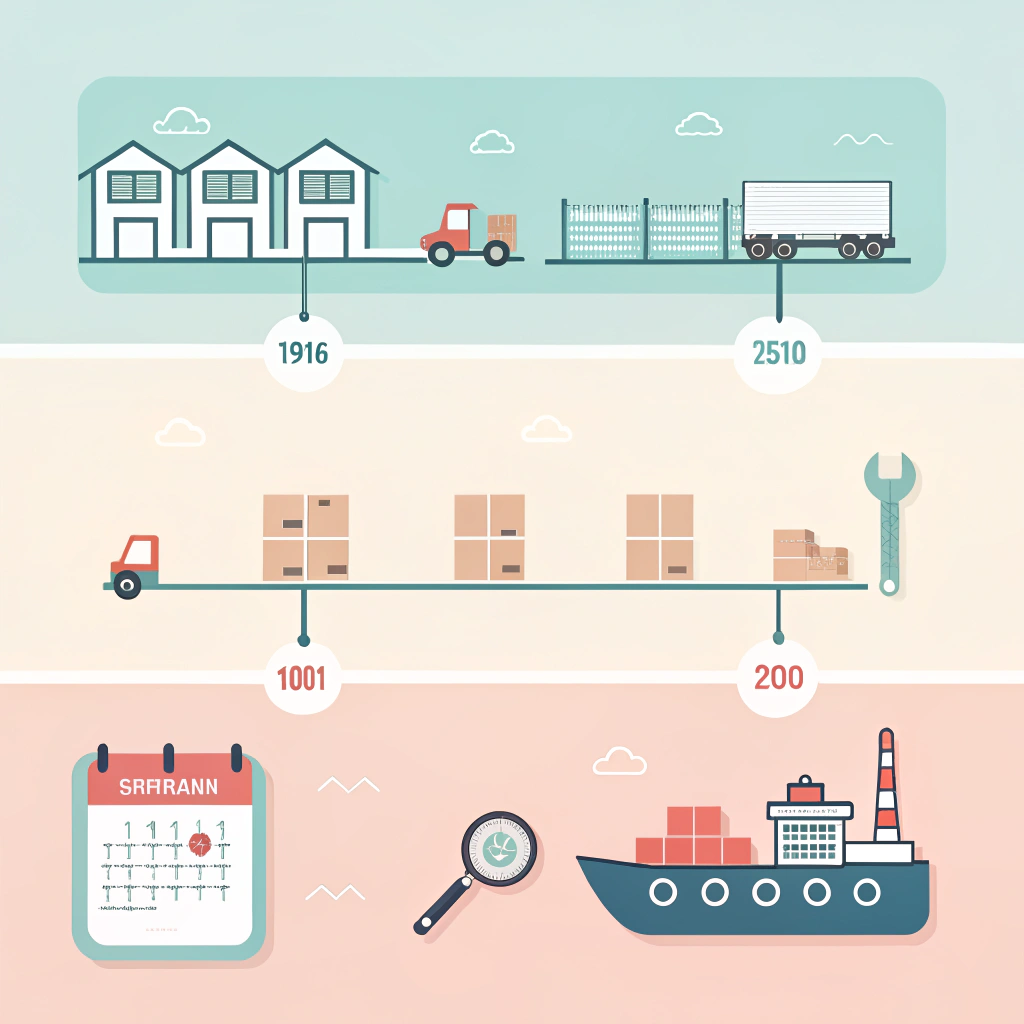
A quick timeline example
- Plan: Ship Friday to make a weekly fast boat; ETA +16 days.
- Rush: Thursday PSI finds 5.5% defects; rework Friday–Monday; missed vessel; next fast boat the following Friday. Net effect: +7–9 days, plus overtime and inspection fees.
The economics of speed: when to pay, when to plan
Speed costs money; the trick is to pay only where it actually protects margin or launch dates. A simple framework:
- Step 1: Estimate the revenue impact of days saved (lost sales, stockout penalties, campaign windows).
- Step 2: Compare with the premium for faster transport (air/express) or factory overtime.
- Step 3: Choose the cheapest lever that reliably saves the needed days, with the lowest risk of failure.
Typical time and cost trade-offs
| Option | Typical time saved | Cost impact | Risk level | Best for |
|---|---|---|---|---|
| Rushing production | 0–3 days (often negative) | Overtime + higher scrap | High (QC failure, missed cut-offs) | Rarely recommended |
| Move first 10–30% by air/express | 5–15 days to market for the first units | Medium–High expedited shipping costs | Medium (space management) | Launch, samples, replenishment |
| Switch LCL to FCL on fast service | 2–5 days | Low–Medium | Low | Medium volumes with tight timing |
| Pre-book space 7–14 days earlier | Avoids 7–10 day rolls | Low (planning time) | Low | Peak season, fixed launch |
| Consolidation & transloading4 | 1–4 days (port to DC) | Low–Medium | Low | Multi-supplier flows to one market |
| Buffer inventory (safety stock) | 7–21 days (absorbs variability) | Inventory carrying cost | Low | Predictable sellers, seasonal demand |
Rule of thumb: Pay for transport speed (air/express) when the daily gross margin protected exceeds the per‑day cost of the premium. Avoid paying for “production speed” when it increases defect risk or misses logistics windows.
A faster, safer playbook (without rushing production)
- Align orders and capacity with your suppliers
- 90/60/30 commit windows: freeze critical specs 30 days before line start; confirm materials readiness at D‑21; lock production slots at D‑14.
- Share a 12–16 week rolling forecast; reserve capacity during peak season.
- Use PO sequencing to run prioritized SKUs first (launch colors, top sellers).
- Right-size MOQ and batch sizes to match line capacity and packing throughput.
- Pre‑buy or vendor‑manage long‑lead components (chips, fabrics, specialized packaging).
- Front-load quality to prevent rework delays
- Golden sample sign‑off at D‑30 and packaging artwork freeze at D‑21.
- In‑line QC checkpoints (not just final). Small defects caught early save days.
- Book pre-shipment inspection (PSI) at 80–90% packed; set AQL and failure response (re-inspection window).
- Document checklist: labeling, carton specs, barcodes, regulatory marks.
- Engineer logistics to protect the critical path
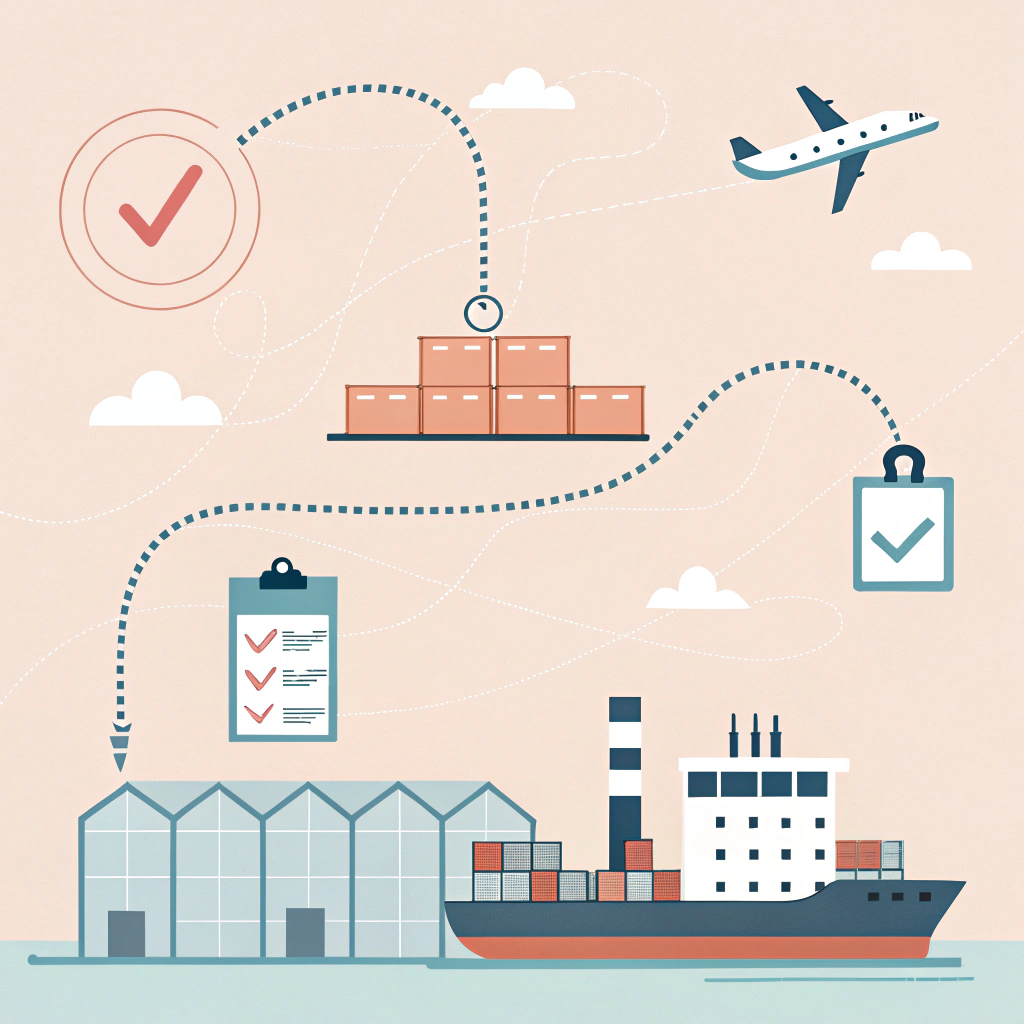
- Split shipments: fly the first tranche (10–30%) and ocean the balance. This gives sales a start while keeping unit cost controlled.
- Choose the right mode:
- Air freight vs ocean freight: use air for high-margin, low-cube SKUs or when days saved materially impact revenue.
- LCL vs FCL: once you cross ~18–22 CBM, FCL often reduces dwell and damage risk and can be faster on door-to-door.
- Consolidate at origin for multi‑PO loads, then use consolidation and transloading at destination to speed cross-dock to final DCs.
- Lock booking windows early and maintain a cut-off calendar:
- SI/VGM cut-off: D‑3 to D‑2
- CY gate‑in: D‑1 morning
- Airport acceptance: often 6–12 hours before flight
- Avoid demurrage and detention5 risk: schedule warehouse appointments, pre‑pull containers when feasible, and plan drayage early.
- Build strategic buffers where they matter
- Maintain safety stock for top 20% SKUs to absorb 7–14 days of variability. It’s cheaper than permanent rush premiums.
- Keep a buffer day between PSI and gate‑in to correct minor issues without missing the vessel.
- For promotions or seasonal launches, stage inventory in a nearby hub (e.g., West Coast warehouse) to cut final mile lead time.
- Clean, complete documentation every time
- Confirm HS codes and compliance docs (COO, MSDS for batteries/liquids, product test reports) by D‑10.
- Align invoice/packing list quantities to booked pieces; confirm dimensions and weight to avoid last-minute rate changes.
- Export docs ready before cut-offs: SI, VGM, booking confirmation, labels, and carrier references.
- Tight supplier communication protocol
- Weekly S&OP cadence; daily stand-ups in the final 7–10 days.
- One shared milestone tracker: materials in‑house, line start, in‑line QC, PSI date, packing completion, truck pick‑up, cut-offs, on board.
- Early escalation rules: if any milestone slips by >12 hours, trigger alternate: move partial by air or adjust gate‑in.
A quick decision matrix for faster delivery
| Scenario | Recommended tactic | Why it works |
|---|---|---|
| Fixed launch date in 3 weeks, product not yet packed | Expedite first 20% by air, rest by fast ocean; add in-line QC | Air protects launch; QC prevents rework delays |
| Factory signals 1–2 day slip | Hold production pace, pre-book next sailing, keep PSI date; move 5–10 cartons by express if needed | Avoids roll risk; tiny express covers urgent samples |
| Volume grows from 12 to 20 CBM | Switch LCL to FCL on faster service; consolidate POs | FCL reduces handoffs, damage, and dwell |
| Peak season with tight space | Lock space 14 days out; consider block space; avoid last‑minute mode changes | Preserves certainty at lower cost |
| High defect history | Increase in‑line QC, enforce golden samples, add buffer day before gate‑in | Prevents last-minute PSI failures |
Mini-case: faster in market with less stress
A mid-sized US importer needed to hit a retail reset date in 5 weeks. The factory proposed overtime to rush—promising to shave two days. The buyer pushed. Result: final packing slipped, PSI failure at 5.8%, and the vessel was missed, rolling departure by 7 days.
Our alternative plan:
- Freeze specs and packaging at D‑21; add in‑line QC at critical steps.
- Book PSI at 85% packed with a buffer day before CY gate‑in.
- Pre-book a fast FCL service and a fallback sailing one week later.
- Move 25% of units (launch styles only) by air; ocean the remaining 75%.
- At destination, transload into zone‑skipped line‑haul for faster DC arrival.
Outcome:
- First units arrived by air in 6 days; shelves stocked on launch day.
- Ocean balance arrived 17 days later at a competitive landed cost per unit.
- Total premium spend was lower than the cost of a one‑week stockout.

A practical checklist you can use next week
-
Before placing the PO:
- Share 90/60/30 forecasts and reserve line time.
- Confirm materials readiness dates and packaging artwork deadlines.
- Decide your split-shipment ratio for launch SKUs.
-
Two weeks before production:
- Golden sample and packaging freeze; book PSI and inspection scope.
- Pre-book sailings or air allocations; confirm SI/VGM cut-offs in one calendar.
-
In production:
- Run in-line QC; update milestone tracker daily.
- Keep documentation in sync with packed quantities and weights.
-
Final week:
- PSI at 80–90% packed; leave one buffer day.
- Gate-in on schedule; verify SI/VGM acceptance and booking status.
- Move urgent cartons by express only if they protect critical revenue.
-
After departure:
- Track vessel/flight; pre‑alert destination DC; set drayage appointments.
- Watch free time to avoid detention/demurrage.
- Post-mortem: update lead‑time assumptions and supplier scorecards.
Why this approach is faster (and cheaper) than “rush the factory”
- It reduces variance at the bottlenecks (quality, cut-offs, carrier capacity), which are the true determinants of total lead time.
- It spends money where it has high ROI (limited air/express, fast but reliable services) instead of paying twice (overtime + rework + rolled bookings).
- It protects operational relationships by focusing on supplier communication protocol and capacity planning—sustainable speed beats short-term pressure.
People Also Ask
Is paying for faster shipping worth it?
- It’s worth it when the daily revenue or penalty avoided exceeds the premium. Use air/express for the first 10–30% of units to hit a launch or prevent stockouts, and ocean the rest to control cost. If speeding transport doesn’t change an important date (like shelf reset or campaign start), the premium usually isn’t justified.
How to avoid shipping delays?
- Map your end-to-end milestones and book carrier space early. Lock cut-off times, keep documents complete (SI, VGM, invoices, packing list), and run pre-shipment inspections to avoid rework. Maintain buffer days and, when needed, split shipments so urgent units move by air while the balance sails. Proactive communication with suppliers and forwarders prevents last-minute rolls.
Why is timely delivery important?
- On-time deliveries protect sales windows, prevent stockouts, and build customer trust. Hitting expected dates reduces expedite spend, avoids penalties, and keeps inventory flows stable—leading to better margins and repeat business.
-
pre-shipment inspection: Read to understand what PSI covers, how AQL sampling works, and how to schedule inspections to prevent last‑minute rework and vessel misses—saving days and avoiding extra costs. ↩︎ ↩
-
SI/VGM: Learn what Shipping Instructions and Verified Gross Mass are, how to submit them correctly, and how meeting these cut‑offs prevents rolled bookings and export holds. ↩︎ ↩
-
factory capacity planning: Explore methods to align materials, labor, and line time; right‑size batches; and sequence SKUs to minimize changeovers and WIP—shortening true cycle time. ↩︎ ↩
-
transloading: See how unloading and reloading freight at destination can reduce port dwell, speed cross‑dock to DCs, and lower total lead time versus moving intact containers inland. ↩︎ ↩
-
demurrage and detention: Understand how these fees accrue, how free time works, and the planning tactics (pre‑pulls, appointments, documentation) that avoid unexpected charges and delays. ↩︎ ↩