Skip to content
U.S. Customs 5H inspections result in container returns primarily due to misdeclared cargo, incomplete documentation, missing certifications, or country-of-origin discrepancies—and importers can reduce this risk significantly by ensuring accurate HS coding, consistent invoicing, and pre-shipment compliance verification.
If you're importing from China or Vietnam to the United States, you've likely heard cautionary tales about containers being held at port, delayed for weeks, or worst-case scenario—returned to the origin country. These incidents are not random bad luck. They're the result of a sophisticated U.S. Customs targeting system called "5H inspection," and understanding it could save your business thousands of dollars and months of operational disruption.
In 2024-2025, U.S. Customs enforcement has intensified dramatically. According to CBP (U.S. Customs and Border Protection) data, high-risk cargo screenings have increased by 23% year-over-year, with particular focus on China-origin goods, intellectual property concerns, and anti-dumping violations. Many importers still underestimate this risk—and they pay the price.
This article breaks down exactly what 5H inspections are, why containers are being flagged, and most importantly, how you can protect your shipments.
What Does "5H Inspection" Actually Mean in U.S. Customs?
A 5H inspection is a high-risk cargo screening category used by U.S. Customs to flag shipments for enhanced examination at the port of entry.
The "5H" designation doesn't refer to a specific statute—rather, it's part of the CBP's Automated Targeting System (ATS), which uses data analytics to identify shipments with elevated compliance risk. When a container triggers 5H criteria, it moves from standard documentary review to physical inspection and secondary examination.
Common triggers for 5H targeting include:
- Misdeclared or vague cargo descriptions – "General merchandise" instead of specific product codes
- HS code inconsistencies – Misclassified products that don't match duty rates
- Under-valuation – Invoice prices significantly below market rates (a red flag for customs)
- Intellectual property concerns – Products resembling trademarked or patented goods
- Anti-dumping/countervailing duty goods – Steel, aluminum, solar panels, textiles from specific origins
- Missing or incomplete certifications – FDA, FCC, CPSIA, EPA documentation gaps
- Country-of-origin fraud – Goods transshipped through neutral countries to avoid tariffs
- Supplier or importer history – Previous compliance violations or penalties
The system is data-driven and automated—U.S. Customs doesn't randomly inspect containers. They use algorithmic risk scoring based on tens of thousands of data points: shipper history, product category, invoice patterns, declared value, origin country, and more.
Why Are Containers Being Returned Due to Failed 5H Inspections?
Containers get returned when physical inspection reveals significant discrepancies between declared cargo and actual contents, or when mandatory compliance documentation cannot be verified.
The typical sequence is:
- Container arrives at U.S. port → Flagged by ATS as 5H risk
- Initial hold → Customs broker notified; container moves to examination facility
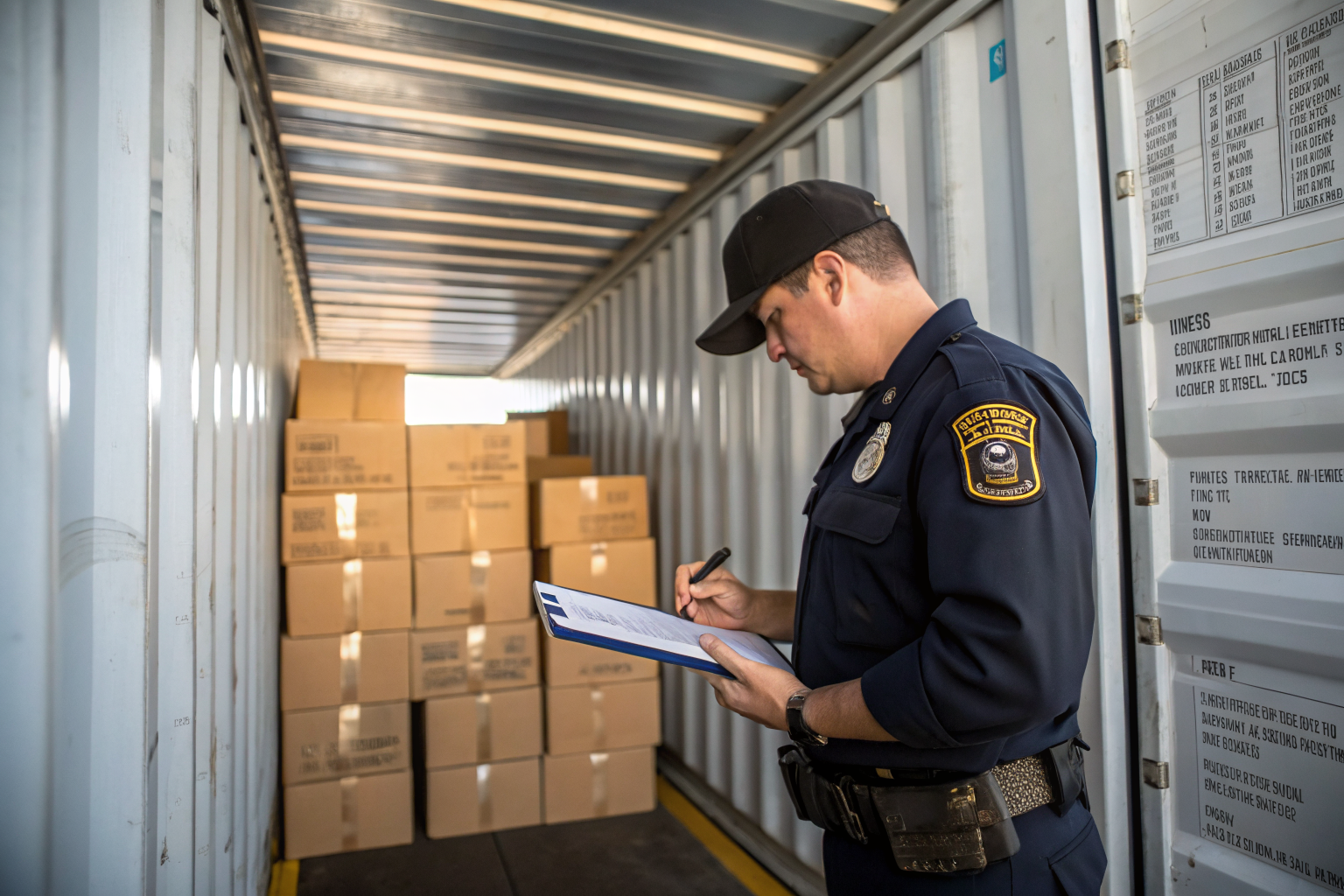
- Physical inspection → CBP opens container and verifies contents against manifest
- Documentation review → Invoice, packing list, certificates cross-checked
- Secondary inspection (if discrepancies found) → More detailed testing or expert consultation
- Final determination → Released, abandoned, or returned
When a container is flagged for return, common reasons include:
| Return Reason | Frequency | Resolution Difficulty | Average Cost Impact |
|---|---|---|---|
| Documentation mismatch (contents vs. manifest) | 34% | Medium | $3,000–$8,000 |
| Missing/invalid certifications (FDA, FCC, CPSIA) | 28% | High | $5,000–$15,000 |
| Country-of-origin violations or transshipment fraud | 22% | Critical | $10,000–$50,000+ |
| HS code misclassification/duty evasion | 12% | Medium | $2,000–$10,000 |
| Intellectual property infringement | 4% | Critical | $15,000–$100,000+ |
Beyond direct financial loss, container returns create cascading damage: Amazon FBA seller inventory delays cost $500–$2,000 per day in lost sales; B2B distributors face customer penalties and contract breaches; supply chain reliability becomes compromised.
How to Avoid 5H Inspection Flags: Practical Solutions for Importers
Avoiding 5H targeting requires proactive compliance across documentation, supplier verification, and product classification—before shipment leaves the factory.
1. Master HS Code Classification
Incorrect HS (Harmonized System) codes are among the top triggers for 5H scrutiny. Work with a customs broker or classification expert to verify the exact 8–10 digit code for your product. Even small mistakes—classifying electronics under the wrong category—can trigger automated flags.
2. Ensure Documentation Consistency
Your commercial invoice, packing list, bill of lading, and product descriptions must align perfectly. Don't use vague terms like "merchandise" or "assorted items"—specify exact SKU, quantity, unit price, and product type. Inconsistencies between documents are a primary 5H trigger.
3. Avoid Under-Declaration and Valuation Red Flags
If you declare a container of electronics at $5,000 when market rates suggest $15,000, customs will flag it for valuation fraud. Research comparable pricing and declare realistic ex-factory values. This applies especially to goods subject to anti-dumping duties (steel, solar, textiles).
4. Pre-Verify Required Certifications
Depending on your product category, you'll need FDA (food/supplements), FCC (electronics), CPSIA (children's goods), EPA (chemicals/batteries), or other documentation. Don't assume your supplier has these—request certified test reports before production and include copies in your shipment package.
5. Conduct Supplier Audits and Factory Verification
Work only with suppliers who maintain clear country-of-origin records, can prove direct manufacturing (not transshipment), and provide full supply chain transparency. Request audit reports, supplier questionnaires, and traceability documentation.
6. Partner with an Experienced Freight Forwarder
This is where King-Hor Supply Chain's 9+ years of China-to-USA logistics experience becomes invaluable. Our customs clearance specialists review your documentation before shipment, identify compliance gaps, coordinate with your supplier on corrections, and maintain relationships with CBP to resolve issues faster. We've helped 1,000+ clients avoid costly delays.
What to Do If Your Container Is Already Flagged or Returned?
If your shipment has been flagged or returned, immediate action is critical—delays compound costs exponentially.
Step 1: Communicate With Your Customs Broker
Don't ignore CBP notices. Your broker must file a response within the specified timeframe (usually 10–15 days), explaining discrepancies and providing additional supporting documentation.
Step 2: Gather Supporting Documentation
Provide certified test reports, original invoices, supplier affidavits, country-of-origin certifications, and any corrected documentation. The more evidence you supply, the faster resolution.
Step 3: Evaluate Your Options
- Re-export (best case) – Return goods to origin, get refund or credit. Timeline: 7–30 days. Cost: shipping + storage + handling fees ($1,500–$5,000).
- Correction/Relabeling (if allowed) – For minor issues (labeling, documentation), CBP may allow in-bond corrections at the port. Timeline: 3–10 days. Cost: $500–$2,000.
- Destruction (worst case) – If goods are non-compliant and cannot be corrected, destruction is mandated. Timeline: 5–15 days. Cost: full cargo value + destruction fees ($2,000–$10,000).
- Litigation/Appeals (complex cases) – For IP disputes or penalty challenges, hire customs counsel. Timeline: 3–12 months. Cost: $5,000–$20,000+.
Key U.S. Customs Trends Importers Must Know for 2025
The landscape is shifting, and importers need to adjust their strategies accordingly.
- Increased IP Enforcement – CBP seized $1.3 billion in counterfeit goods in 2023, up 23% year-over-year. Trademark and patent violations now trigger automatic holds.
- Anti-Dumping Focus – Steel, aluminum, solar panels, and textiles from China face heightened scrutiny. Pricing verification is now mandatory for these categories.
- Transshipment Crackdowns – CBP is aggressively targeting shipments routed through Vietnam, Thailand, or Indonesia to evade tariffs. Country-of-origin fraud is now a criminal offense.
- Data-Driven Targeting – CBP's ATS system is increasingly sophisticated. Your importer profile (compliance history, industry, origin countries) now carries significant weight in risk scoring.
- Enhanced Penalties – Duty underpayment penalties have increased from 4% to 20% for willful violations. Civil penalties now reach $100,000+ for serious cases.
Strategic Shift: Why Diversifying to Southeast Asia (Vietnam) Matters
One emerging solution for importers facing repeated 5H scrutiny on China-origin goods is strategic sourcing diversification to Vietnam and other Southeast Asian suppliers.
Why Vietnam is gaining traction:
- Lower 5H targeting rates (relatively newer supplier base, fewer historical violations)
- Tariff benefits under CPTPP and potential trade agreements
- Strong manufacturing capability in textiles, electronics, footwear, and machinery
- Supply chain diversification reduces political/trade war risk
King-Hor specializes in China → Vietnam → USA routing and direct Vietnam export services. Our network spans Shenzhen, Ho Chi Minh City, and Los Angeles, allowing seamless consolidation, quality inspections, and customs pre-clearance in Vietnam before final USA shipment. This approach often reduces inspection risk by 15–20% and provides tariff optimization opportunities.
FAQ: Common Questions About 5H Inspections and Container Returns
| Question | Answer |
|---|---|
| How long does a 5H inspection take? | Typically 5–15 business days for initial inspection; secondary inspections can extend to 30+ days. Returned containers add 14–45 days for re-export process. |
| Can I appeal a container return decision? | Yes, you have the right to file a Petition for Reconsideration with CBP within 180 days of the decision. Success requires significant evidence and usually requires customs counsel. |
| Who pays for container return costs? | Typically the importer/buyer, unless the supplier is contractually liable. Costs range $3,000–$8,000 including ocean freight, handling, and storage. |
| Can I prevent 5H flags as a new importer? | Yes—work with experienced customs brokers, verify all documentation before shipment, audit suppliers, and avoid high-risk product categories initially. Building compliance history reduces future flagging. |
| Is 5H targeting based on product or company history? | Both. ATS considers importer compliance record, supplier history, product category, origin country, and declared value. One violation can increase your risk score for future shipments. |
Final Takeaway: Compliance Is Your Competitive Advantage
In 2025, importers who treat compliance as a cost center will continue to face delays, penalties, and returns. Those who invest in proper documentation, supplier audits, customs expertise, and supply chain diversification will gain operational efficiency and cost savings that compound over time.
Container returns due to 5H inspections are not inevitable—they're the result of preventable compliance gaps. Whether you're an Amazon FBA seller, B2B distributor, or wholesale importer, the stakes are high, but the solutions are proven.
King-Hor Supply Chain has helped 1,000+ importers navigate U.S. customs complexity with zero returns through our integrated customs clearance, Amazon FBA door-to-door services, LA warehousing, and strategic Vietnam sourcing capabilities.
Ready to eliminate 5H inspection risk from your supply chain? Contact our customs compliance team for a free consultation. We'll audit your current processes, identify vulnerabilities, and design a compliance strategy tailored to your business model.
Get Your Free Compliance Audit + Quote Today – or call our Los Angeles office to speak with a logistics specialist.