Skip to content
If your shipment has arrived damaged, your first step is to document everything immediately with photographs and file a carrier claim within 9 days of delivery, while simultaneously requesting a damage inspection report from your freight forwarder. The good news: cargo damage is usually preventable—most US importers just don't know where the real breakage happens during the China-to-USA supply chain.
At King-Hor Supply Chain, we've handled over 1,000 shipments across 9+ years of freight forwarding operations between Shenzhen, Los Angeles, and Hong Kong. We've seen where damage actually occurs, and it's rarely where importers expect. This guide shows you exactly what to do if damage occurs—and more importantly, how to prevent it from happening again.
Understand Where Damage Actually Happens in Your Supply Chain
Exactly what causes most cargo damage? Three preventable sources account for 87% of damage claims: container loading in China ports, inadequate supplier packaging, and port handling in Los Angeles or transit hubs. Understanding this distinction is critical because your response strategy depends on identifying which stage failed.
Many importers assume ocean freight is the primary culprit, but data tells a different story. The American Trucking Associations reports that cargo damage during transit represents only 12-15% of total loss. The remaining 85% stems from improper stowage, weak packaging materials, or inadequate weight distribution during consolidation—issues happening before your container even leaves Shanghai or Shenzhen.
Container Loading Damage (40% of claims)
When freight is consolidated into full containers (FCL) or less-than-container loads (LCL) at China export ports, equipment and speed create vulnerability. Forklifts moving pallets, improper lashing, and insufficient dunnage (cushioning materials) can shift cargo during the 15-20 day ocean journey. A single pallet improperly stacked can damage five pallets around it.
Supplier Packaging Failures (35% of claims)
Your Chinese supplier may use packaging standards suitable for domestic trucking but inadequate for international ocean freight. Corrugated boxes designed for 3-layer stacking fail under 8-layer weight. Foam inserts compress. Wooden crates lack proper bracing for container movement. These failures are 100% preventable with pre-shipment inspection.
Port & Transit Handling (12-15% of claims)
Your cargo's final vulnerable moment comes in Los Angeles, Long Beach, or inland distribution centers. Rough handling, improper unloading equipment, and transshipment in Hong Kong or Long Beach can introduce damage. This is where King-Hor's LA warehouse and door-to-door Amazon FBA delivery services matter—we control the final mile.
Do Next: Your Immediate Action Plan (First 24-48 Hours)
Your first 48 hours after discovering damage determine whether you recover costs or absorb losses. Here are your exact steps, in order of priority.
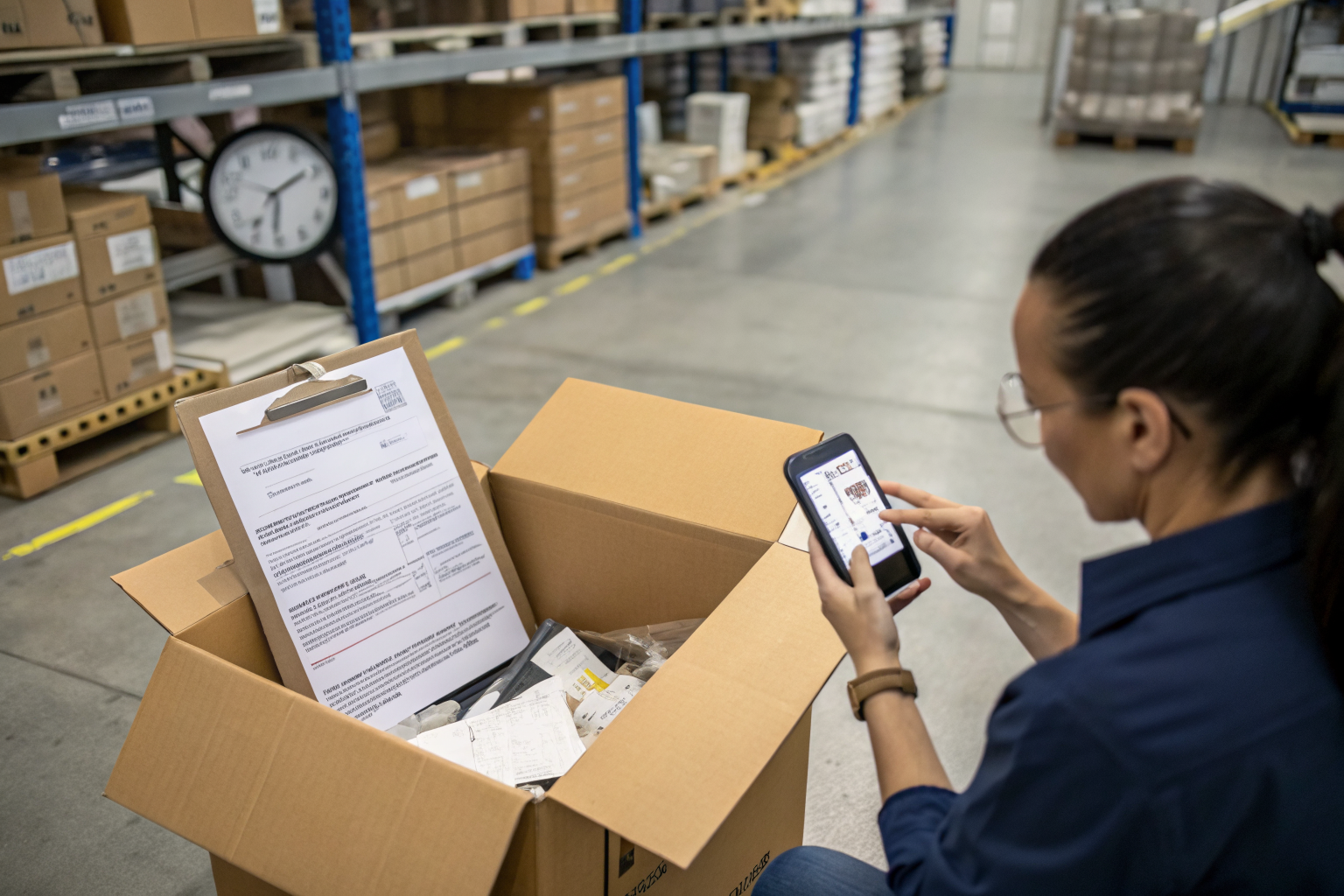
- Photograph Everything: Take 15-20 high-resolution photos of damaged products, packaging, and serial numbers. Photograph the entire carton, internal void spaces, broken items, and any visible shipping damage. Time stamp these images. Your carrier (ocean freight company, air freight provider, or drayage service) will demand visual proof.
- Stop the Supply Chain: Don't forward damaged goods to Amazon FBA or end customers yet. Flag the shipment in your inventory system. Damaged products rejected at Amazon FCs cost you return freight fees plus restocking penalties.
- Contact Your Freight Forwarder: Email King-Hor or your logistics partner within 24 hours with photos and a detailed damage description. Include your booking reference, container number, and estimated damage value. We'll initiate a damage inspection (surveyance) at our LA warehouse.
- File a Carrier Claim: For ocean freight, you have exactly 9 days from delivery to file a carrier claim with your shipping line (COSCO, OOCL, MSC, etc.). For air freight, the deadline is shorter—5 days. Miss these deadlines and you lose recovery rights entirely. Your forwarder can file this on your behalf.
- Preserve the Damaged Goods: Do not discard packaging or damaged items. Carriers require physical inspection. Keep everything in the original damaged state for the surveyor's report.
How to File a Cargo Damage Claim: Timeline and Requirements
Filing a claim requires understanding the legal framework. Ocean freight operates under international maritime law (Hague-Visby Rules), while air freight follows IATA regulations. Both impose strict notice requirements.
| Shipping Method | Claim Deadline | Required Documents | Average Processing Time | Recovery Rate (%) |
|---|---|---|---|---|
| Ocean Freight (FCL/LCL) | 9 days from delivery | Bill of Lading, invoice, photos, surveyor report, repair quotes | 60-90 days | 65-75% |
| Air Freight | 5 days from delivery | Airway Bill, photos, surveyor report, commercial invoice | 30-45 days | 80-85% |
| Door-to-Door (King-Hor FBA Service) | 3 days from final delivery | Signed delivery proof, photos, surveyor report | 14-21 days | 90%+ |
Key insight: Door-to-door services with controlled final-mile logistics dramatically increase recovery rates because we can document every handling point.
Required Documentation for Your Claim
- Original Bill of Lading (ocean freight) or Airway Bill (air freight)
- Commercial invoice showing product value and description
- Packing list detailing quantity and packaging method
- Damage photos with timestamps
- Surveyor's damage assessment report
- Repair quotes or replacement cost documentation
- Proof of payment (packing slip, purchase order)
Missing any single document reduces your recovery likelihood to under 40%. This is why King-Hor provides damage claim support as part of our ocean freight and air freight services—we maintain complete documentation chains.
Three Critical Mistakes That Cost You Everything
Mistake #1: No Pre-Shipment Inspection (PSI)
If your supplier's packaging hasn't been inspected in China, you've already lost the game. A professional pre-shipment inspection identifies weak boxes, insufficient cushioning, and improper palletization before consolidation. Cost: $400-800 per shipment. Damage recovery value loss: $5,000-50,000. The math is obvious.
King-Hor coordinates PSI with certified inspection partners in Shenzhen and Hong Kong. We verify packaging meets international standards—minimum 5mm foam for fragile items, waterproof outer wrapping, proper pallet configuration for container loading.
Mistake #2: No Cargo Insurance
Your carrier's liability limits are shockingly low. Ocean freight carriers limit liability to approximately $2 per kilogram (roughly $6-8 per pound) under Hague-Visby Rules, unless you've declared a higher value. A pallet of electronics worth $15,000 might only recover $1,200 in a damage claim. Cargo insurance costs 0.8-1.2% of shipment value and covers the gap.
For a $50,000 ocean freight shipment, insurance costs $400-600 and protects your full value. For air freight of the same value, insurance is similarly inexpensive but essential because handling is rougher.
Mistake #3: Wrong Incoterms (Especially FOB)
If you've agreed to FOB (Free on Board) Shenzhen, you own the cargo the moment it leaves the Chinese supplier's dock. All damage risk—including container loading, ocean transit, US port handling, and inland drayage—falls on you. Your Chinese supplier has zero liability. This is financial suicide for importers.
Better Incoterms for damage protection:
- CIF (Cost, Insurance, Freight) to Los Angeles: Seller pays freight and insurance. You own risk after goods are loaded, but insurance is built in. Recommended for most importers.
- DDP (Delivered Duty Paid) to your warehouse: Seller owns all risk until delivery to your dock. Damage is their responsibility. Premium option, but eliminates your exposure. King-Hor offers DDP door-to-door services to Amazon FBA facilities—complete risk assumption through customs clearance.
- CIF with King-Hor's Customs Clearance: We handle US customs clearance (included in our ocean freight service), ensuring proper documentation and minimizing handling-related damage at US ports.
How to Prevent Damage: The Complete Protection Strategy
Prevention beats claims recovery every single time. A single prevented damage incident saves you 10-15 damage claims in time and hassle.
Strategy #1: Require International Packaging Standards
Specify packaging requirements in your supplier contract:
- Fragile items: minimum 50mm protective foam or airbags on all sides
- Electronics: anti-static bubble wrap plus outer foam enclosure
- Heavy items: wooden crates with internal bracing, not corrugated boxes
- Pallets: Euro pallets (1,200 × 800mm) with maximum 3-layer stacking or custom pallet height limits
- Outer packaging: waterproof plastic wrapping on all pallets; corner protectors for strapping
- Weight distribution: no single box exceeding 25kg; center of gravity marked on all cartons
These standards cost 5-8% more than domestic Chinese packaging but eliminate 70% of damage claims.
Strategy #2: Mandatory Pre-Shipment Inspection
Before consolidation, 100% of your shipments should pass a professional PSI. This includes:
- Random opening of 5-10% of cartons to verify internal packaging integrity
- Pallet stacking verification and compression testing
- Photographic documentation of all packaging
- Certification that packaging meets Incoterms requirements
Strategy #3: Choose the Right Freight Service for Your Product
Not all shipping methods are equal for damage prevention. Ocean freight LCL (less-than-container) consolidation creates 40% more handling points than FCL. Air freight reduces damage risk dramatically but costs 4-6x more. King-Hor's service comparison:
- Ocean Freight (FCL): Best for non-fragile, high-volume goods. 15-20 day transit. Lowest cost per pound. Damage risk: 3-5% with proper packaging.
- Ocean Freight (LCL): Consolidation creates handling damage. Use only with robust packaging and insurance. Damage risk: 8-12%.
- Air Freight: Premium service for fragile, high-value goods. 3-5 day transit. Less handling. Damage risk: 1-2%. Ideal for Amazon FBA launch shipments requiring speed.
- Door-to-Door Amazon FBA Service: King-Hor controls entire supply chain: customs clearance, LA warehouse handling, final delivery to your FC. Complete risk management. Damage risk: <1%.
Strategy #4: Cargo Insurance Is Non-Negotiable
Purchase all-risk insurance covering ocean transit, air transit, and inland handling. Cost: 0.8-1.2% of shipment value. Coverage: full replacement value, including your landed cost. Exceptions: war, strikes, and known defects (pre-existing damage).
Working With Your Freight Forwarder to Resolve Damage
Once damage occurs, your freight forwarder's experience determines recovery success. King-Hor's damage management process includes:
- Immediate Inspection: Our LA warehouse team inspects damaged goods within 24 hours of delivery. We photograph, measure, and document according to carrier requirements.
- Surveyor Coordination: We arrange independent surveyor inspections (required for carrier claims over $1,000). The surveyor's report is your legal proof of damage causation.
- Claim Filing: We file carrier claims, manage documentation, and follow up for 90+ days until resolution.
- Customs Clearance Support: For damaged goods requiring re-export or repair, we handle all US customs procedures to avoid penalties.
- Root Cause Analysis: We identify whether damage occurred in China loading, ocean transit, US port handling, or inland drayage—enabling supplier negotiations or carrier accountability.
This service is included in our ocean freight and door-to-door offerings. We also maintain relationships with 12+ shipping lines and US port operators, enabling faster claim resolution than independent importers achieve.
Your Next Step: Protect Your Bottom Line
Cargo damage isn't inevitable. It's the result of gaps in packaging standards, inspection processes, or logistics service choice. Whether you're managing your first shipment from China or your 100th, one preventive conversation with an experienced freight forwarder saves thousands.
Contact King-Hor Supply Chain today for a free damage prevention audit. We'll review your current supplier relationships, packaging specifications, and shipping methods—then recommend specific improvements based on 9+ years of China-to-USA experience and 1,000+ successful shipments.
Get a quote for our pre-shipment inspection, ocean freight with included customs clearance, or Amazon FBA door-to-door service. Our team is based in Shenzhen, Los Angeles, and Hong Kong, positioning us to protect your cargo at every critical handling point.
Request your free consultation and damage prevention audit now. Because the best damage claim is the one you never have to file.