Skip to content
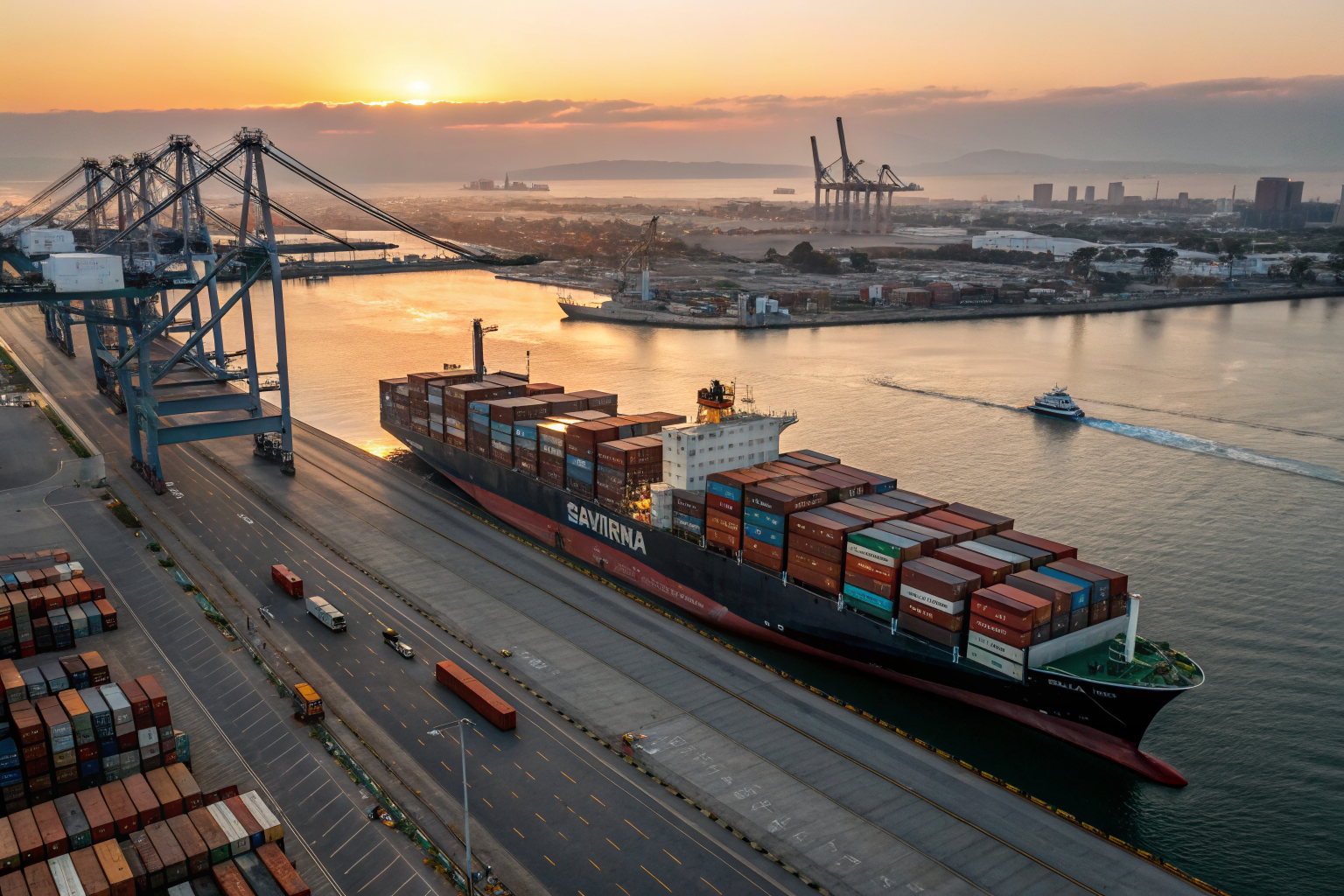
Yes, sea freight to Amazon FBA from China is worth the wait for most sellers—if your margins can absorb 25-35 day transit times in exchange for 60-80% shipping cost savings versus air freight. The key is matching your inventory velocity, cash flow, and IPI score to the right ocean strategy.
Since 2015, King-Hor Supply Chain has moved 10,000+ TEUs from Shenzhen to Los Angeles for Amazon sellers, and we've learned that profitability on FBA often hinges on freight choices, not just product selection. Here's how to determine if ocean freight fits your business model.
Can I Make $10K a Month Selling on Amazon?
Yes, $10K monthly profit is achievable with proper unit economics, but your shipping method directly impacts whether you keep those margins.
Most sellers targeting $10K profit operate on 20-30% net margins after all costs. At a $25 average selling price, you'd need roughly 1,300-2,000 monthly units. Here's where sea freight becomes critical:
- Air freight scenario: $4.50/kg × 500kg shipment = $2,250. Per-unit landed cost: $4.50
- Sea freight scenario: $1,200/40HQ container (≈8,000kg capacity) = $0.15/kg. Per-unit landed cost: $0.15
That $4.35/unit shipping savings translates to $5,655-$8,700 monthly at 1,300-2,000 units—often the difference between profit and loss. King-Hor's FBA door-to-door service includes drayage, customs clearance, and delivery to AMZN warehouses, so your true landed cost is transparent upfront.
However, sea freight requires 60-90 days of inventory in the pipeline. You'll need $15,000-$30,000 in floating inventory versus $5,000-$8,000 with air freight. The sellers hitting $10K profit consistently plan 90-day replenishment cycles with ocean as their baseline.
Is Amazon Cancelling Inventory Orders From China?
No, Amazon is not cancelling inventory orders from China, but they have tightened receiving windows, IPI score requirements, and partnered carrier compliance—making professional freight forwarding essential.
In 2023-2024, Amazon implemented stricter policies affecting China-origin shipments:
| Policy Change | Impact on Sea Freight | King-Hor Mitigation |
|---|---|---|
| Reduced receiving window flexibility | Containers arriving early/late face rejection fees ($0.50-$1.00/unit) | LA warehouse storage + appointment scheduling |
| IPI score threshold raised to 400 | Restock limits restrict slow-moving ocean inventory | Demand forecasting consultation pre-shipment |
| Partnered Carrier Program (PCP) requirements | Non-compliant carriers face delivery blocks | Amazon-approved carrier status since 2019 |
| Inventory placement service fees | Split shipments increase per-unit costs | Optimized container loading for distributed placement |
Amazon's 2024 policy updates focus on predictability, not origin discrimination. Chinese-manufactured goods still comprise 70%+ of third-party FBA inventory. The risk isn't cancellation—it's non-compliance penalties that erode your sea freight savings.
King-Hor's Los Angeles warehousing (50,000 sq ft) provides 30-day buffer storage, allowing precise appointment scheduling even when ocean vessels face 7-14 day port delays—a common occurrence at LA/Long Beach.
Sea Freight vs. Air Freight: The Real Numbers
Sea freight wins on cost per unit; air freight wins on speed to market. Your optimal mix depends on product lifecycle stage and capital availability.
| Factor | Sea Freight (FCL 40HQ) | Air Freight |
|---|---|---|
| Transit time (Shenzhen to LA) | 25-35 days port-to-port; 35-45 days door-to-AMZN | 5-7 days door-to-door |
| Cost per kg | $0.12-$0.25 (including destination) | $4.50-$8.00 |
| Cost per 1,000kg shipment | $1,200-$2,500 total | $4,500-$8,000 |
| Minimum viable shipment | 5-10 CBM (LCL) or 20 CBM (FCL) | 100kg |
| Best for | Replenishment stock, stable sellers, 90+ day inventory | Launches, stockouts, seasonal spikes |
| Cash flow impact | 60-90 day capital tie-up | 15-25 day capital tie-up |
Hybrid strategies dominate among King-Hor's 1,000+ active clients: 70% ocean for baseline inventory, 30% air for velocity adjustments. A typical $500K annual seller spends $45,000-$60,000 on all-sea freight versus $180,000-$240,000 all-air—capital that funds product expansion.
When Sea Freight Becomes Risky
Sea freight is not optimal when:
- Your IPI score is below 400: Restock limits may trap inventory in LA warehouses, incurring $0.75-$1.50/cubic foot monthly storage
- Product rank is volatile: 45-day ocean transit may miss demand windows
- You're testing new SKUs: Unproven products need air freight's flexibility
- Chinese New Year or Q4 approaches: Ocean rates spike 40-60% and space disappears 6-8 weeks pre-deadline
Step-by-Step: Optimizing Your Sea Freight to FBA
Follow this framework to capture sea freight's cost advantages without operational friction.
Step 1: Validate Your Velocity Data
Before booking ocean space, confirm 90-day sell-through rates. Amazon's restock tool often overestimates; use your own 30/60/90-day velocity averages. King-Hor provides free demand forecasting using your Seller Central data to right-size container bookings.
Step 2: Choose FCL vs. LCL Correctly
Full container load (FCL) costs 40-60% less per CBM than less-than-container load (LCL), but requires precise volume planning:
- FCL 20GP: 28 CBM capacity, optimal for 15-25 CBM actual cargo
- FCL 40HQ: 68 CBM capacity, optimal for 35-55 CBM actual cargo
- LCL: Pay per CBM ($80-$150/CBM), viable for 2-12 CBM shipments
Consolidation services—combining your goods with complementary sellers—can achieve FCL rates at LCL volumes. King-Hor operates weekly Shenzhen consolidations for 200+ regular clients.
Step 3: Lock In Annual Rate Contracts
Ocean spot rates fluctuate 30-50% seasonally. Annual contracts with carriers (negotiated through forwarders) stabilize your landed costs. King-Hor's 9-year volume relationships secure 15-20% below-market rates for committed clients.
Step 4: Pre-Position in Los Angeles
The final 100 miles to Amazon fulfillment centers often cost more than the ocean crossing. King-Hor's LA warehouse enables:
- Container devanning and palletization
- Quality inspection before Amazon delivery
- Appointment scheduling to avoid $250-$500 detention fees
- Split deliveries across multiple FCs without reloading fees
Step 5: Monitor and Adjust
Track container milestones through King-Hor's portal: departure, transshipment, arrival, customs release, and delivery appointment. Delays exceeding 7 days trigger automatic air freight contingency recommendations.
The Verdict: When Sea Freight Delivers ROI
Sea freight to Amazon FBA from China is worth the wait when you have predictable demand, adequate working capital, and professional logistics execution. The 60-80% cost savings compound annually—$50,000-$150,000 for typical scaling sellers—funding inventory depth that improves Buy Box percentage and organic ranking.
The risk isn't the transit time itself; it's unbuffered delays, non-compliant documentation, and poor appointment management. These are solvable with experienced partners.
King-Hor Supply Chain has specialized in China-to-USA Amazon logistics since 2015, with offices in Shenzhen, Los Angeles, and Hong Kong. Our 1,000+ clients range from single-container annual shippers to 500+ TEU/year enterprises, all accessing customs brokerage, warehousing, and carrier-direct contracts through a single point of contact.
Ready to reduce your landed costs by 60% or more? Get your free sea freight quote with detailed FBA delivery timelines, customs duty estimates, and warehouse storage options. Our Shenzhen and LA teams coordinate 24/7 to keep your inventory flowing.