Skip to content
If you're importing from China and selling to American customers, here's a question worth asking yourself: when your buyer clicks 'order,' is your product already sitting on US soil, or is it still waiting in a factory in Shenzhen? That single difference — between a 7-day delivery and a 30-day wait — is often what separates the businesses scaling fast from the ones losing customers to faster competitors. Yes, King-Hor offers warehousing services in the USA, with our facility in Los Angeles serving as a strategic transit hub for importers. But the real story isn't just about storage space — it's about how a US-based warehouse transforms your supply chain from a slow, reactive operation into a responsive engine that can meet modern consumer expectations. This article explains what a USA warehouse really does, why it's more than just a storage room, and how it can give your business a decisive edge.
What Does USA Warehousing Mean for a China-Based Importer?
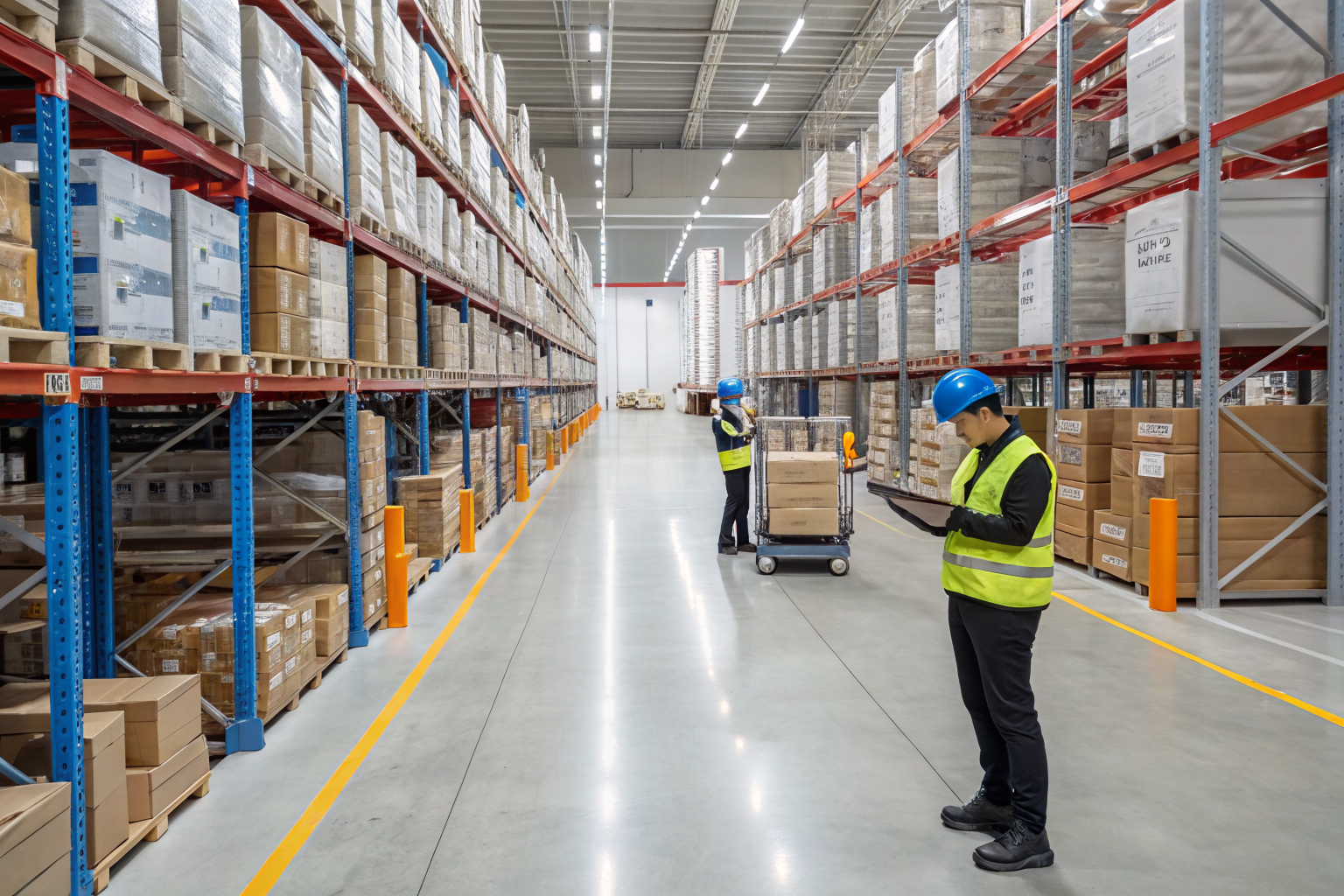
When most importers hear 'warehousing,' they picture a building where boxes sit on shelves. That's a narrow view. A USA warehouse operated by a freight forwarder is really a transit and fulfillment hub — a place where your goods land, get processed, get repaired or repackaged if needed, and then get dispatched to their final destination at speed. For an importer bringing goods from China to the USA, this means your inventory crosses the Pacific once, in bulk, on the most cost-effective ocean freight route. Once it arrives in Los Angeles, it sits ready for instant deployment to Amazon FBA centers, retail buyers, wholesale clients, or direct-to-consumer end customers. The warehouse isn't the destination — it's the launchpad. And the closer that launchpad is to your buyer, the faster you can serve them.
The Real Issue Isn't Storage — It's Timing
Here's the mindset shift most small importers need to make: in 2026, your customers don't just want a good product at a good price. They want it now. Amazon has trained American consumers to expect 2-day delivery as the baseline, and Shopify brands offering 7-day fulfillment are now considered slow by Gen Z buyers. If your product is still in China when an order comes in, the math doesn't work in your favor. Ocean freight from Shenzhen to Los Angeles takes 18-25 days. Add customs clearance, trucking, and last-mile delivery, and you're looking at 30-40 days from order to doorstep. Meanwhile, a competitor with the same product pre-stocked in a Los Angeles warehouse can ship the same item to a Texas buyer in 3-5 days. Same product. Same factory. Completely different customer experience. Speed is no longer a luxury — it's the new minimum.
Why Many Importers Get the Cost Calculation Wrong
A lot of small business owners resist pre-stocking inventory in the USA because they see warehouse fees as an unnecessary expense. The logic sounds reasonable: 'I'll only ship goods when they're sold, so I don't pay to store them.' But this approach quietly costs them more than they realize, and here's why:
- Lost sales from customers who won't wait 30 days and buy from a faster competitor
- Higher per-unit shipping costs when forced to use expensive air freight to meet deadlines
- Negative reviews and Amazon account health damage from late shipments
- Inability to run flash sales, holiday promotions, or react to viral demand
- Foreign exchange and supplier delays that compound when you're always shipping reactively
- Loss of repeat customers who tried a competitor during the wait and never came back
When you compare the monthly cost of warehousing a pallet in Los Angeles against the lifetime value of a customer you lose to a faster brand, the warehouse fee is one of the cheapest investments you can make. The businesses that win in the modern e-commerce era are the ones that treat overseas inventory as a strategic asset, not an overhead burden.
The Hidden Power of US Warehousing: Repackaging and Repair
This is the part of warehousing that most freight forwarders never tell you about, and it might be the most important. The reality of ocean freight is that no shipping chain is 100% perfect. Containers get rough handling at ports. Pallets shift in transit. Boxes get crushed under stacked weight. Labels peel off in humid conditions. By the time your goods reach the USA, a percentage of them will have cosmetic damage — even if the product inside is completely fine. If those damaged boxes go directly to an Amazon FBA center, Amazon will reject them, charge you return fees, or worse, mark your account for poor inbound quality. If they go directly to a retail buyer or end consumer, you get returns, refund requests, and one-star reviews. A USA warehouse changes this entire equation. Before goods are sent to their final destination, they can be inspected, repackaged, relabeled, and repaired. A crushed outer box gets replaced. A peeled label gets reprinted. A dented retail package gets swapped for a fresh one. The customer receives a flawless product — and you never lose the sale.
How King-Hor's Los Angeles Warehouse Works for SMB Importers
At King-Hor, our Los Angeles facility is designed specifically for small-to-medium importers who need flexibility without enterprise-level commitments. Whether you're consolidating shipments from multiple Chinese suppliers, splitting one large container into smaller deliveries for different US buyers, or building a buffer stock for Amazon FBA, the warehouse acts as your operational headquarters on US soil. Services include receiving and inventory checks, FBA prep (poly bagging, bundling, labeling), carton repair and repackaging, photo documentation of damaged goods for supplier claims, and onward shipping via UPS, FedEx, or LTL trucking to anywhere in the country. Because we also handle the ocean freight and customs clearance from China, your goods move through one continuous chain — no handoffs between three different vendors, no lost shipments, no finger-pointing when something goes wrong.
When Does USA Warehousing Make Sense for Your Business?
Pre-stocking inventory in the USA isn't right for every product or every stage of business, but it becomes a clear win once you hit certain thresholds. If you're consistently selling 50+ units per month of a SKU, if your customers are scattered across multiple US states, if you sell on Amazon FBA and want to avoid FBA storage fees by using a buffer warehouse, or if you run seasonal promotions where speed determines whether you capture demand — then a US warehouse pays for itself quickly. The same applies if you're selling to retail or wholesale buyers in the USA who expect short lead times, or if your brand competes on customer experience rather than rock-bottom price. For low-volume hobbyists or one-time imports, direct shipping from China still makes sense. But for any business serious about growth, having inventory on US soil is the operational backbone that makes everything else possible.
USA warehousing isn't just about renting space — it's about owning the timing advantage in a market where speed determines who wins the sale. When your inventory is already on American soil, you can deliver in days instead of weeks, repair damaged packaging before it reaches your customer, and react instantly to market opportunities your competitors will miss. The importers who treat overseas warehousing as a strategic asset, not a cost line, are the ones building durable brands in the China-to-USA trade lane. If you're ready to explore how a Los Angeles warehouse could fit into your supply chain — whether for FBA prep, multi-supplier consolidation, or simply faster delivery to your US customers — reach out to King-Hor's team. We'll walk you through the numbers honestly and help you decide whether US-based inventory makes sense for where your business is right now.