Skip to content

If you're importing goods from China, you've probably run into this scenario: your supplier is asking for the remaining 70% balance before releasing the goods, but you'd rather hold that payment until you've verified the shipment is actually moving. Or maybe cash flow is tight this month, and you want to know whether your freight forwarder can start the shipping process while you finalize payment terms with your supplier. The short answer is yes — in most cases, freight forwarders can arrange shipment regardless of your payment status with the supplier, because that transaction is between you and your factory. But there's a critical catch involving telex release, freight charges, and the risk of your cargo being held hostage at destination. This guide walks you through exactly how it works, what to watch out for, and how to structure your payments so nothing gets stuck at the port.
The Freight Forwarder's Role vs. Your Supplier Payment
Here's something many first-time importers don't realize: your freight forwarder has no direct involvement in the commercial transaction between you and your supplier. Whether you've paid your factory 30% deposit, 50%, 70%, or the full 100% is a matter negotiated privately between buyer and seller. As long as your supplier is willing to release the goods to the forwarder's warehouse or arrange pickup, the shipping process can begin. The forwarder's job is to move the cargo — not to police the invoice terms between you and your Chinese manufacturer. This means if you've worked out a T/T 30/70 arrangement where the balance is due upon receipt of the Bill of Lading (BL) copy, your forwarder can absolutely start booking space, arranging trucking, and preparing customs paperwork without waiting for you to complete the final wire transfer to your supplier.
Where Payment Timing Actually Matters: The Freight Bill
While your supplier payment is a separate issue, there's one payment that does directly affect whether your goods reach you: the freight charges owed to the forwarder and shipping line. In most standard arrangements, shipping companies issue the freight invoice after the vessel sails (post-departure billing), and payment is expected shortly after. This is because the physical control of the cargo shifts once the ship leaves port — and the shipping line uses that leverage to ensure they get paid. If your freight bill remains unpaid, the carrier can refuse to issue the telex release, meaning your Bill of Lading stays locked and your container cannot be picked up at the destination port. Even if your factory has been paid in full and your goods are physically sitting in Los Angeles, an unpaid freight bill can stop the entire process cold.
Understanding Telex Release and Why It Matters
Telex release (电放) is the electronic authorization that allows the destination office of the shipping line to release cargo without presenting the original paper Bill of Lading. For most FCL and LCL shipments from China to the USA, telex release is the standard practice because it's fast and eliminates the need to courier physical documents across the Pacific. However, the shipping line will only issue the telex release once all outstanding freight charges are paid. If you delay payment to your forwarder, expecting to sort it out after the goods arrive, you'll likely discover the cargo cannot be released. Worse, the container will accumulate demurrage (fees for keeping the container beyond the free period) and detention charges at the destination port — sometimes running $150–$300 per day per container. These fees compound quickly, and a week of delay can wipe out any margin you saved on the original shipment.
When Forwarders Can Ship First and Bill Later
There is one scenario where a freight forwarder will comfortably ship your goods before payment is fully settled: when you have an established monthly credit arrangement (月结). Freight forwarders extend these terms to trusted, repeat clients — typically importers who have shipped consistently for six months or more with a clean payment history. Under monthly credit terms, the forwarder handles booking, trucking, customs, and telex release throughout the month, then issues a consolidated invoice payable within 15, 30, or 45 days. This is genuinely game-changing for cash flow, because it means you can receive and sell your inventory before the freight bill comes due. First-time or occasional shippers, however, will almost always be required to pay freight charges before the telex release is issued — this is standard industry practice and protects the forwarder from bad debt on cargo they've already committed to move.
- T/T 30/70: Pay 30% deposit to start production, 70% balance before shipment (most common)
- T/T 30/70 against BL copy: Pay 30% deposit, balance due after seeing the Bill of Lading — safer for buyers
- L/C at sight: Letter of credit released upon presentation of shipping documents — best for large orders
- OA (Open Account) 30/60/90: Pay in full 30, 60, or 90 days after shipment — reserved for trusted long-term relationships
- Deposit + inspection payment: 30% deposit, 40% after third-party inspection passes, 30% after BL — strong buyer protection
How to Structure Payments to Reduce Risk on Both Sides
The smartest importers negotiate payment terms with their suppliers that align with the shipping timeline. A structure we frequently see work well is a 30/40/30 split: 30% deposit before production begins, 40% after third-party goods inspection is completed and passed, and the final 30% due against a scanned copy of the Bill of Lading. This gives you leverage at every stage — the factory is motivated to produce quality goods to earn the inspection payment, and you retain final payment authority until the cargo is verifiably on the water. At King-Hor, we often coordinate this by scheduling the goods inspection at our Shenzhen consolidation warehouse before loading, sharing the BL copy directly with clients once the vessel sails, and holding the freight release until both the supplier payment and freight charges are settled. This kind of coordination is only possible when your forwarder understands the full China-to-USA workflow rather than just the ocean leg.
What Happens If Something Goes Wrong at Destination
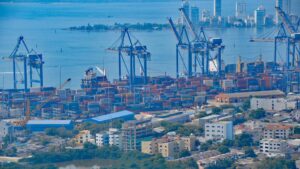
Let's talk about the worst-case scenario: cargo arrives at the Port of Los Angeles, but freight charges remain unpaid, telex release is not issued, and the container sits in the terminal accumulating fees. After the free storage period (usually 4–7 days at LA/Long Beach), demurrage kicks in. If the goods eventually clear but the container isn't returned on time, detention charges follow. In severe cases where fees exceed cargo value, importers have been forced to abandon shipments entirely — losing both the product and the freight paid. The lesson here isn't to panic, but to ensure your forwarder issues the freight invoice promptly and that you have funds ready to release within 1–2 business days of vessel departure. Working with a forwarder that has its own bonded warehouse in Los Angeles — as King-Hor does — provides an extra buffer, because in many cases cargo can be transferred out of the terminal to the forwarder's facility to avoid runaway port charges while a payment issue gets resolved.
Practical Checklist Before Your Next Shipment
Before you commit to any shipment where payment timing is tight, run through a quick verification with both your supplier and your freight forwarder. Confirm in writing with your supplier what percentage must be paid before they'll release goods to the forwarder's warehouse — some factories require full payment before pickup, others accept the BL copy trigger. Confirm with your forwarder when the freight invoice will be issued and how many days you have to pay before telex release is affected. Ask about monthly credit terms if you ship regularly. Finally, make sure your working capital covers not just the goods and freight, but a 3–5 day buffer for destination charges in case any leg of the process slips. Missing these conversations upfront is how shipments end up stuck in Los Angeles with the buyer, supplier, and forwarder all blaming each other.
The bottom line: yes, your freight forwarder can absolutely arrange shipment before you've paid your supplier in full — that's a commercial matter between you and your factory. What actually determines whether your goods reach you smoothly is the freight payment to the carrier, because the telex release (and therefore your ability to pick up cargo in Los Angeles) depends on it. Structure your supplier payment terms to give yourself leverage, budget for freight charges to be settled shortly after vessel departure, and consider building toward monthly credit terms with a trusted forwarder to unlock true cash flow flexibility. If you're navigating China-to-USA imports and want a forwarder that will walk you through payment structuring, coordinate supplier pickup, and hold your hand through customs and final delivery, reach out to the King-Hor team — we've been managing this workflow for small and mid-sized importers since 2015, and we're happy to review your specific situation before you book your next container.