A freight forwarder refusing a shipment can feel like an obstacle, especially when inventory is waiting, a production schedule is tight, or an Amazon replenishment deadline is approaching. But a responsible refusal is often a form of risk control—not a lack of capability.
Some goods cannot be exported through ordinary commercial channels. Others require authorization, special packaging, accurate dangerous-goods declarations, or qualified handling. If those conditions are missing, accepting the cargo could expose the shipper, consignee, forwarder, carrier, and other cargo owners to consequences far greater than a delayed shipment.
Some Cargo Cannot Be Exported Normally
The first question is not whether space is available. It is whether the proposed shipment is legally eligible for export and import.
Goods subject to prohibition or state control
Certain products may be prohibited from export or managed through government-controlled channels. Depending on the country, product, destination, and intended use, examples can include weapons, cigarettes, crude oil, and other strategically controlled commodities.
A normal freight booking does not override those controls. Changing the product description, using a vague customs code, or routing the shipment through another port does not make restricted cargo compliant. It may instead create additional customs and enforcement risks.
When a freight forwarder refuses cargo in this category, the correct next step is to determine whether the transaction is prohibited, restricted, licensed, or reserved for an authorized exporter. That review should happen before the goods enter a warehouse or container.
Branded products without authorization
A product may be commercially available yet still be unsuitable for international shipment because of intellectual property restrictions. Customs authorities can monitor trademarks and other rights recorded in intellectual property protection systems.
For well-known international brands, the exporter may need evidence that the goods are genuine and that the shipment is authorized by the brand owner or another party with the right to distribute them. A purchase receipt alone may not establish export or distribution rights.
If customs identifies suspected infringement, possible outcomes include detention, seizure, destruction, fines, storage costs, and legal claims from the rights holder. The risk also applies to packaging, labels, accessories, spare parts, and products carrying a protected logo—not only obvious luxury goods.

Importers and procurement teams should confirm the supply chain before ordering branded cargo. Ask who owns the trademark, whether the supplier is authorized, which markets the goods may enter, and what documents can prove the shipment’s legitimacy.
Fuels, Liquids, and Batteries Require Accurate Handling
Liquid fuels and many battery products can present fire, leakage, pressure, or chemical hazards. Their acceptance depends on the exact product, composition, capacity, packaging, mode of transport, and applicable dangerous-goods rules.
A shipment described simply as “electronics,” “parts,” or “liquid” does not provide enough information for a safe booking. The forwarder and carrier may need product specifications, safety documentation, test information, packaging details, labels, and a dangerous-goods declaration. The factory or shipper must also be able to support the required compliance process.
We may decline these goods when the factory lacks the necessary qualifications or documentation. If the cargo can be shipped legally as dangerous goods, it should be booked through the appropriate channel, with the correct container, packaging, declaration, and carrier acceptance.
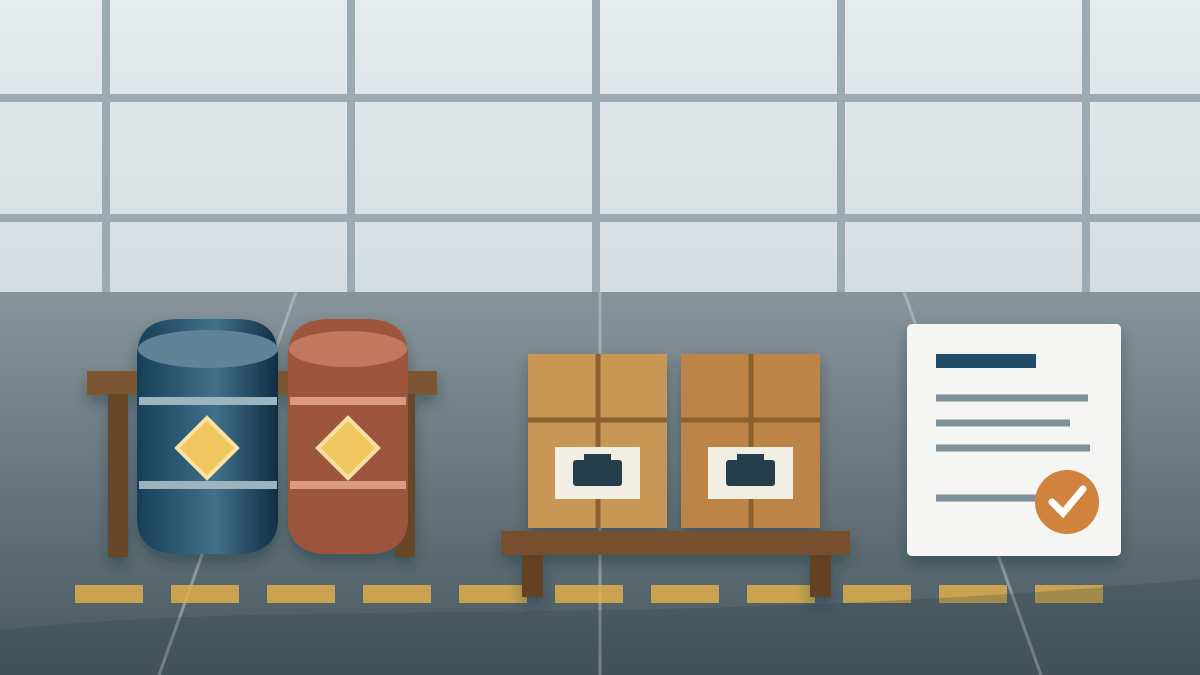
What we will not do is conceal the hazard. A request to remove battery information, change a fuel description, or declare dangerous cargo as ordinary goods is not a practical shortcut. It transfers an uncontrolled risk into a warehouse, truck, aircraft, terminal, or vessel where other people and shipments may be affected.
Why Cargo Misdeclaration Is a Serious Commercial Risk
The most dangerous assumption is that the only downside is losing the undeclared cargo. If a battery, fuel, or chemical product catches fire at sea, the consequences may extend across the entire vessel and its cargo.
Potential exposure can include emergency response, vessel damage, damage to other customers’ goods, operational disruption, investigation costs, and carrier claims. Insurance coverage may also be disputed when the cargo description or declaration is inaccurate.
Bills of lading and carrier terms contain detailed responsibilities, warranties, and indemnity provisions. The exact legal result depends on the contract and jurisdiction, but a shipper that supplies false or incomplete cargo information can face substantial liability. Once a carrier or another affected party pursues recovery, the dispute may be much larger than the commercial value of the original shipment.
Refusing to misdeclare cargo is therefore not a sign that a forwarder lacks experience. It shows that the forwarder understands what can happen after a hazardous shipment leaves the factory gate.
What a Responsible Refusal Should Include
A useful rejection should be specific enough to help the customer decide what to do next. The forwarder should identify the main concern, such as:
- A prohibited or state-controlled commodity
- Missing export or import authorization
- Suspected trademark or intellectual property infringement
- Inadequate information about batteries, fuels, liquids, or chemicals
- Missing dangerous-goods documentation or qualified packaging
- A request to use a false, incomplete, or misleading declaration
A refusal does not always mean that the product can never move. It may mean that it cannot move through the proposed route, under the proposed description, or with the documents currently available. Some shipments can proceed after the shipper obtains authorization, supplies accurate technical information, uses compliant packaging, and secures acceptance from an appropriate carrier.
However, if the product is prohibited, infringing, or intentionally misdeclared, changing forwarders does not remove the underlying problem. It merely moves the risk to another booking.
What Shippers Should Check Before Booking
Overseas importers, Amazon sellers, procurement teams, and industrial buyers can prevent many refusals by reviewing cargo at the purchasing stage.
Confirm the exact product identity
Use precise commercial names, model numbers, materials, intended use, and technical specifications. Avoid descriptions such as “samples,” “accessories,” or “general cargo” when they do not explain what is actually inside.
Review export and import restrictions
Check the rules in the origin country, destination country, and any transit location. Product controls can depend on destination, end user, end use, or technical characteristics—not just the product name.
Verify intellectual property rights
For branded goods, obtain authorization and traceable purchasing documents before shipment. Confirm that the supplier has the right to sell the goods into the intended market.
Identify hazardous characteristics early
Tell the forwarder about batteries, fuel, chemicals, pressurized contents, powders, magnets, or liquids before requesting a quotation. Early disclosure gives the forwarder an opportunity to assess suitable transport options instead of discovering the issue during warehouse inspection.
Match the documents to the physical cargo
The commercial invoice, packing list, customs declaration, labels, and transport documents should describe the same goods. Quantities, weights, packaging, models, and product characteristics should be consistent.
Do not pressure a supplier to conceal risk
A factory may describe misdeclaration as common practice, but the importer can still suffer from seizure, delays, claims, and supply-chain disruption. A short-term saving is not valuable if the shipment creates an uninsured or legally indefensible loss.
Refusal Can Be a Sign of a Safer Partnership
International freight involves more than moving cartons from one address to another. The forwarder is also helping determine whether the cargo is suitable for a specific mode, carrier, route, and declaration.
A trustworthy partner should be willing to lose a booking when accepting it would expose the customer to disproportionate risk. Clear boundaries protect legitimate cargo, other shippers, transport workers, and the customer’s wider business.
The safest question is not, “Can someone ship this somehow?” It is, “What conditions must be satisfied for this shipment to move legally, accurately, and safely?”
FAQ
Why would a freight forwarder refuse cargo after receiving a quotation request?
The product may be prohibited, controlled, infringing, hazardous, incorrectly described, or unsupported by the documents and packaging required for the proposed transport method.
Does a refusal mean the goods can never be shipped?
Not always. Some cargo can move after authorization, technical documents, compliant packaging, dangerous-goods booking, and carrier approval are obtained. Prohibited or infringing goods are different.
Can branded products be shipped with a supplier’s invoice?
An invoice may help establish the purchase history, but it may not prove authenticity or the right to export and distribute the brand in a particular market. Additional authorization may be required.
Why must batteries be disclosed before booking?
Battery type, configuration, capacity, condition, packaging, and transport mode can affect acceptance and handling requirements. Accurate information is necessary for carrier review and safe transport.
What happens if dangerous goods are declared as ordinary cargo?
The cargo may be rejected, detained, or subject to penalties. If an incident occurs, the shipper may also face claims for damage, emergency response, disruption, and losses involving other cargo.
Can the product description be simplified to avoid customs problems?
Descriptions can be concise, but they must remain accurate. A vague or false description intended to hide the product’s identity or hazardous nature can create customs, contractual, and safety exposure.
What documents should I prepare for sensitive cargo?
Requirements vary by product and route. Start with an accurate commercial invoice, packing list, specifications, safety information, authorization documents, and details of the physical packaging. Ask for a shipment-specific review.
How can I reduce the chance that my cargo is refused?
Disclose the complete product information before purchasing transport, verify restrictions and brand rights, prepare consistent documents, and allow time for dangerous-goods or carrier approval when required.