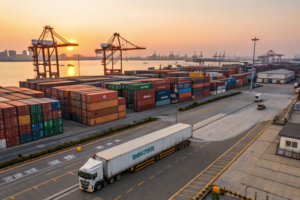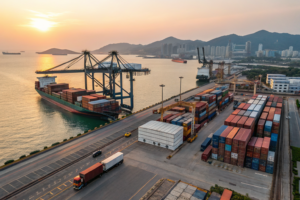
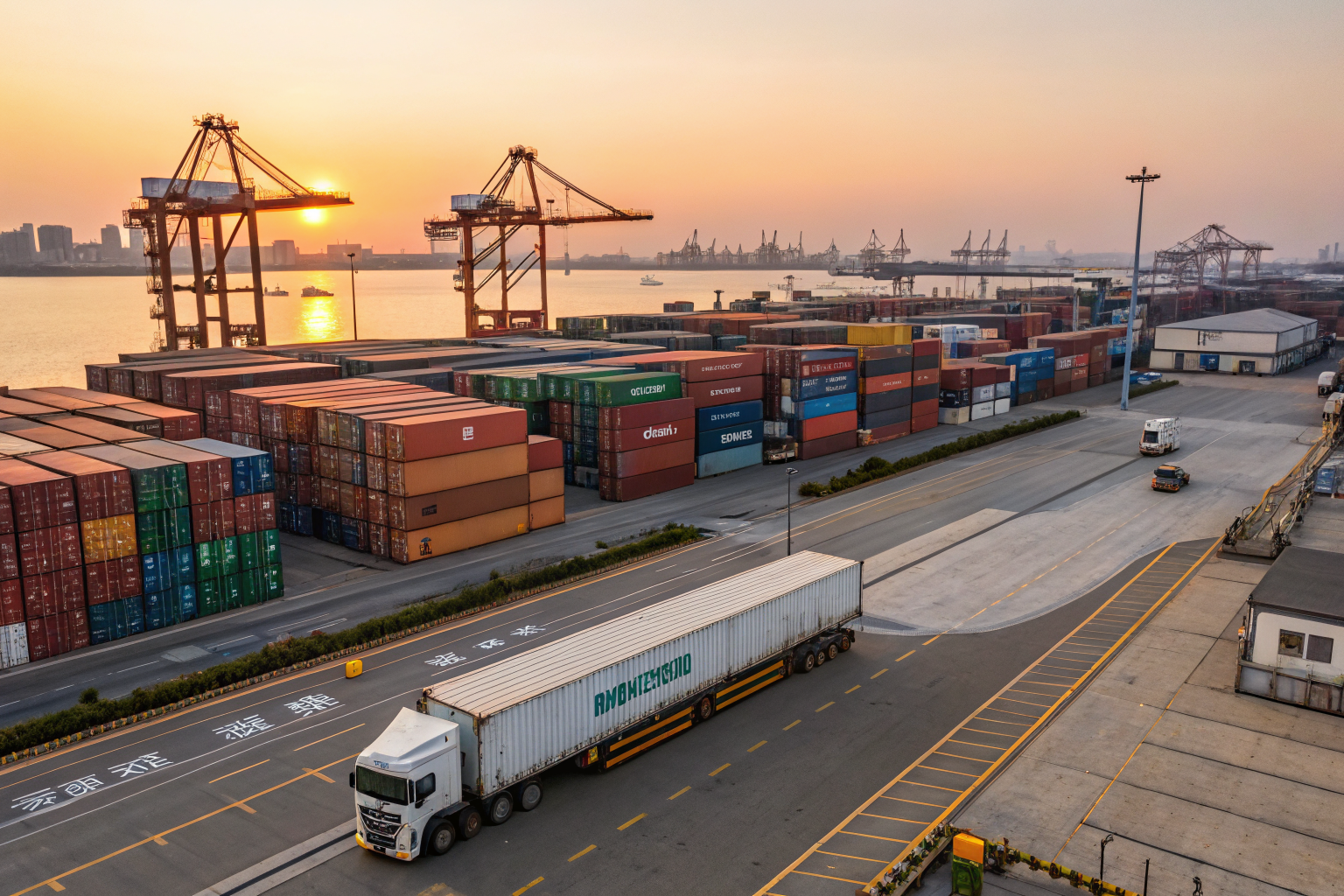
Amazon FBA shipping from China involves five key steps: supplier coordination, freight forwarding, customs clearance, US inbound processing, and final delivery to Amazon fulfillment centers. As of 2025, 63% of Amazon's top 10,000 sellers source from China, yet 34% still experience costly delays due to outdated shipping strategies.
The logistics landscape has fundamentally shifted. Rising fuel surcharges, stricter Amazon inventory limits, and new 2026 customs regulations are forcing sellers to abandon "set it and forget it" shipping approaches. What worked in 2023—generic freight forwarding, slow ocean routes, and manual documentation—now bleeds margins and risks stockouts.
This guide reveals the 2026 playbook for China-to-FBA shipping, with specific tactics to cut transit times by 15-30% and avoid the $500+ per-pallet penalties hitting unprepared importers.
What Are the 5 Steps to Ship from China to Amazon FBA?
The five steps to ship from China to Amazon FBA are: (1) supplier preparation and FBA labeling, (2) freight mode selection and booking, (3) export customs clearance in China, (4) US customs entry and duty payment, and (5) final mile delivery to Amazon warehouses with appointment scheduling.
Each step contains critical failure points that have intensified in 2026. Amazon's new Inventory Placement Service requirements now mandate split shipments to 3+ fulfillment centers for 78% of product categories—up from 45% in 2024. Sellers using single-destination forwarding face 8-14 day delays and $0.45/unit placement fees.
King-Hor's FBA door-to-door service handles all five steps through integrated Shenzhen-Los Angeles operations, with 9+ years of experience managing 1000+ client shipments monthly.
How Do You Choose Between Air Freight and Ocean Freight for FBA?
Choose air freight for shipments under 500kg with margins above 25%, and ocean freight for shipments above 1000kg or when inventory coverage exceeds 60 days. The 2026 breakeven point has shifted: ocean freight rates dropped 18% year-over-year while air cargo surcharges increased 12%.
| Factor | Ocean Freight (LCL) | Ocean Freight (FCL) | Air Freight | Air Express |
|---|---|---|---|---|
| Transit Time | 28-35 days | 22-28 days | 8-12 days | 5-7 days |
| Cost per kg | $1.20-$1.80 | $0.85-$1.15 | $4.50-$7.00 | $8.00-$12.00 |
| Minimum Charge | 1 CBM ($150-$250) | 20' GP ($2,800-$4,200) | 45kg ($200-$350) | 1kg ($25-$45) |
| Best For | Restocking, seasonal builds | High-volume SKUs | Launch inventory, Q4 prep | Urgent samples, test orders |
| 2026 Risk Level | Moderate (port congestion) | Low | High (capacity constraints) | Moderate |
The hidden cost: air freight's carbon offset fees now add $0.08-$0.15/kg on China-US lanes, a 2026 regulation many forwarders bury in surcharges. King-Hor provides all-inclusive air freight quotes with no post-booking adjustments.
What Documentation Is Required for 2026 FBA Shipments?
2026 FBA shipments require six documents: commercial invoice, packing list, bill of lading/airway bill, FDA/FCC certifications (if applicable), Amazon FBA shipment ID, and the new Section 321 Enhanced Entry filing for shipments under $800.
The Section 321 change is catching sellers off guard. Previously informal entries faced minimal scrutiny; now CBP requires:
- Manufacturer identification codes (MID) for 100% of line items
- Country of origin marking verification photos
- Automated Commercial Environment (ACE) pre-arrival filing 24 hours before loading
Documentation errors now trigger 72-hour customs holds versus 24 hours in 2024. King-Hor's Shenzhen and Los Angeles teams perform dual documentation review, with 99.2% first-time clearance rate across 1000+ monthly shipments.
Amazon's New Label Requirements
Amazon's 2026 FBA label standards mandate:
- GS1-128 barcodes (Code 128) with 20-digit SSCC—UPC/EAN alone rejected
- Thermal labels minimum 4" x 6", 203 DPI resolution
- Label placement: flat, unobstructed, 1.25" from box edges
- Expiration dates in MM-DD-YYYY format for consumables
Mislabeled shipments incur $0.50/unit relabeling fees at Amazon fulfillment centers, up from $0.30 in 2024. King-Hor's Shenzhen warehouse provides pre-FBA labeling with barcode verification scanning before export.
How Can You Reduce Transit Times by 15-30%?
Reduce transit times by combining three tactics: booking direct vessel sailings from Yantian/Shenzhen to Los Angeles/Long Beach, utilizing pre-cleared customs entries, and scheduling Amazon appointments before cargo arrival.
Specific 2026 optimizations:
- Port selection: Yantian (Shenzhen) to Los Angeles averages 14 days versus 18-21 days from Ningbo or Shanghai due to Alliance and 2M alliance direct services
- Pre-arrival clearance: Submit ISF and entry documents 5 days before vessel arrival to secure "immediate release" status
- Appointment pre-booking: King-Hor's Los Angeles warehouse coordinates Amazon appointments 7 days in advance, eliminating the 3-5 day scheduling delays common with third-party drayage
Our ocean freight clients average 24 days door-to-FBA in 2026, versus industry average of 31 days.
What Are the Hidden Costs Sinking FBA Margins?
The five hidden costs eroding 2026 FBA margins are: detention/demurrage fees ($150-$400/day), Amazon inventory placement splits ($0.35-$0.55/unit), customs exam fees ($150-$800), dimensional weight air charges, and rejected shipment return freight ($2.50-$4.00/kg).
Detention/demurrage has exploded. Port congestion at Los Angeles-Long Beach pushed average container dwell time to 8.2 days in Q1 2026—above the 7-day free period for most ocean contracts. Each day over costs $150-$300 per container.
King-Hor's Los Angeles warehousing includes 14 days free storage with every FCL shipment, providing buffer time for Amazon appointment scheduling without demurrage exposure.
How Does King-Hor Streamline China-to-FBA Shipping?
King-Hor streamlines China-to-FBA shipping through integrated Shenzhen-Los Angeles operations, direct carrier contracts, in-house customs brokerage, and dedicated Amazon logistics coordination.
Our 2026 service structure:
| Service | Capability | Client Benefit |
|---|---|---|
| Ocean Freight | FCL/LCL, 12+ weekly sailings Yantian-LA | 24-day average door-to-FBA |
| Air Freight | Daily consolidations, direct airline contracts | 8-10 day transit at 15% below market |
| FBA Door-to-Door | Supplier pickup through Amazon delivery | Single invoice, end-to-end tracking |
| Customs Clearance | Licensed brokers in Shenzhen and Los Angeles | 99.2% first-time clearance |
| LA Warehousing | 85,000 sq ft facility, 14 days free storage | Flexible Amazon appointment timing |
Since 2015, we've managed 1000+ active client relationships with 94% annual retention—built on transparent pricing, proactive communication, and zero surprise fees.
What Should You Do Differently in 2026?
Implement three shifts immediately: diversify freight modes by SKU velocity, automate documentation through forwarder-integrated systems, and negotiate 60+ day inventory coverage to absorb transit variability.
The sellers winning in 2026 treat freight as a strategic function, not a procurement afterthought. They're booking Q4 ocean capacity in June, not September. They're using Los Angeles warehousing to stage inventory for rapid Amazon replenishment. They're partnering with forwarders who understand FBA's operational complexity—not just port-to-port rates.
King-Hor's 2026 FBA readiness program includes complimentary supply chain assessments, identifying SKU-level optimization opportunities across your China sourcing portfolio.
Ready to optimize your Amazon FBA shipping from China? Get your free, detailed quote from King-Hor's Los Angeles team. We'll analyze your current lanes, identify 2026 risk exposure, and build a customized freight solution—ocean, air, or hybrid—with guaranteed Amazon appointment scheduling and no hidden fees.