Skip to content
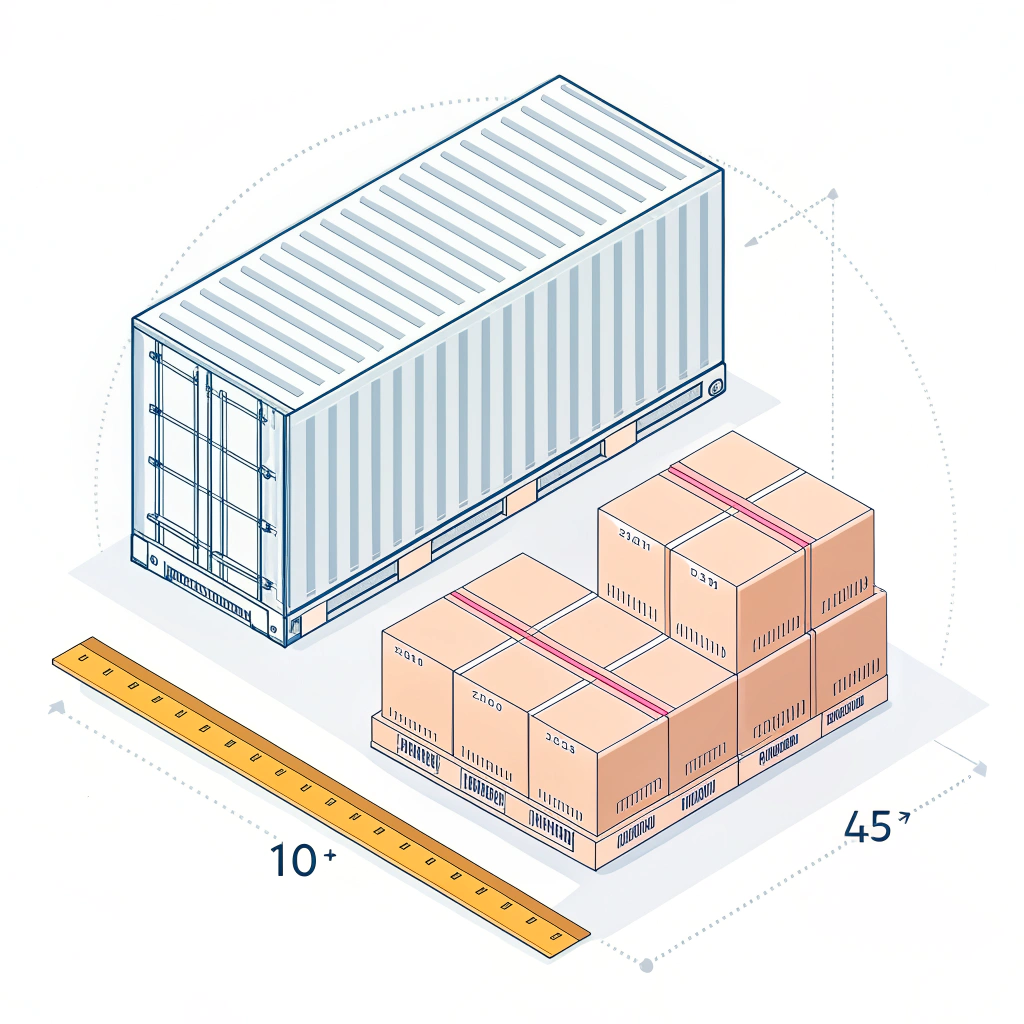
Quick answer: To calculate cubic feet for freight, measure the packed item’s outside length × width × height at the longest points. If you measured in inches, multiply L × W × H and divide by 1,728 to get cubic feet (CFT). If you measured in meters, multiply L × W × H to get cubic meters (CBM), then convert CBM × 35.3147 = CFT. Add up all pieces, include pallet/skid dimensions if palletized, and use the total for quotes and container planning.
Why importers rely on cubic feet calculations
Cubic feet drives how you’re quoted, billed, and how well you utilize space in ocean containers and on pallets. Mis-measurement leads to billing disputes, under- or over-booked containers, and avoidable freight spend. This guide explains the formulas, unit conversions, and dimensional/volumetric rules with worked examples so your team can measure consistently, compare LCL1 vs FCL, and optimize packing decisions.
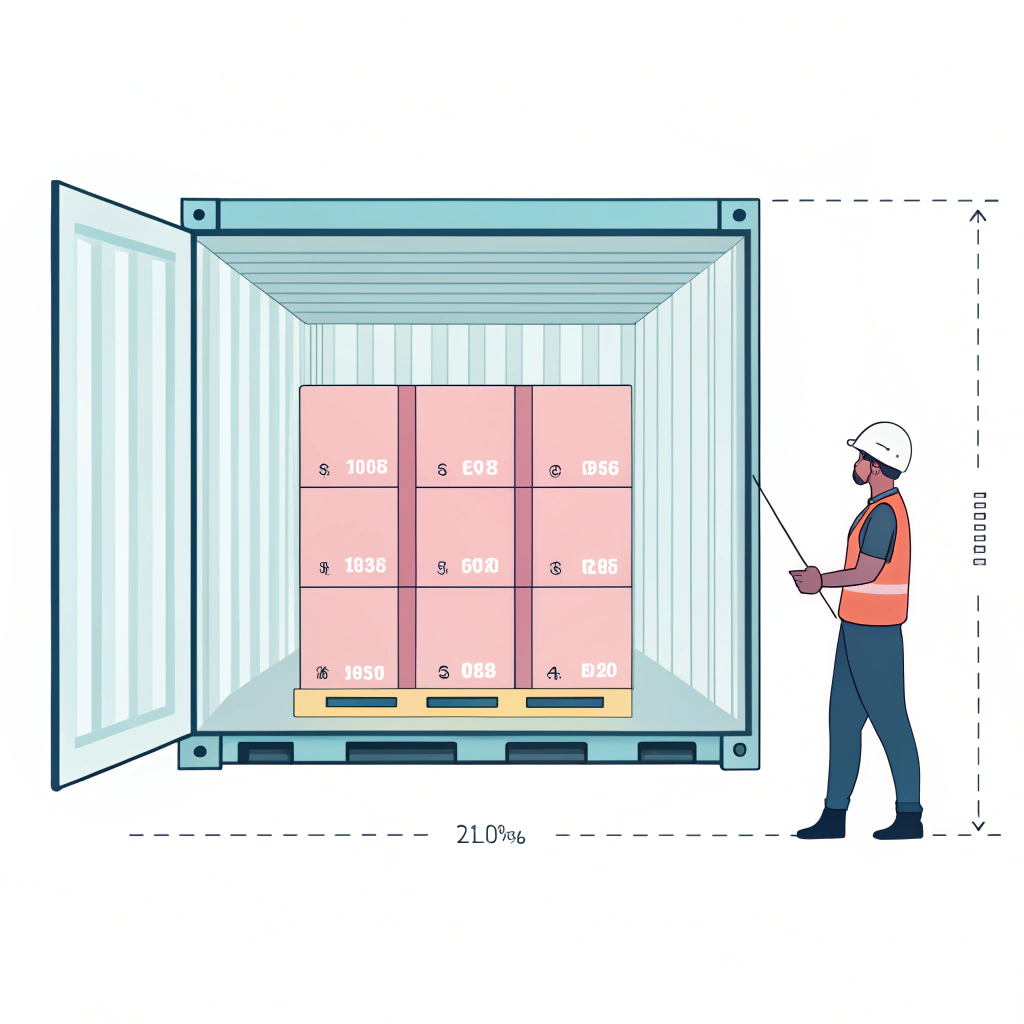
Common causes of incorrect cargo volume
- Mixed units: switching between inches, centimeters, and meters without converting all three dimensions consistently.
- Ignoring packaging: measuring product size, not the packed carton or the pallet footprint and total height.
- Overhang and compressibility: stretch-wrap bulges or top-box crush reduce or increase actual cube versus plan.
- Rounding and tolerance: different rounding rules (to 2 decimals CBM or nearest 0.5 CFT) across providers.
- Not summing across mixed sizes: forgetting to calculate each SKU size group and add them.
Step-by-step: how to measure cubes correctly
- Decide your measurement unit
- Imperial (inches/feet) is common in US pallets and air freight paperwork.
- Metric (cm/m) is common at origin factories and in most global ocean documentation.
- Measure at the longest points
- Length, Width, Height of the packed unit (carton or pallet), including any bulges, corner guards, or overhang.
- If palletized, measure the pallet’s footprint and full stack height (including pallet deck height).
- Apply the right formula
- In inches: CFT = (L × W × H in inches) ÷ 1,728
- In feet: CFT = L × W × H in feet
- In centimeters: CBM = (L × W × H in cm) ÷ 1,000,000; then CFT = CBM × 35.3147
- In meters: CBM = L × W × H in m; then CFT = CBM × 35.3147
- Sum across pieces
- If all cartons are the same size: CFT total = CFT per carton × quantity.
- If mixed sizes: calculate each size group and add.
- Apply charging rules to get chargeable weight2
- Air freight: dimensional weight (volumetric weight) in kg = CBM × 167. In imperial: volumetric weight in lb = (L × W × H in³) ÷ 166. Chargeable weight = max(actual weight, volumetric weight).
- Ocean LCL: charged by “W/M” (weight or measure). 1 revenue ton = 1 CBM or 1,000 kg (whichever is higher). For quoting in imperial, convert CFT to CBM.
- Ocean FCL: pay per container; cube tells you if the cargo will fit and informs container choice.
Quick reference conversions
- 1 foot = 12 inches
- 1 cubic foot (CFT) = 1,728 cubic inches
- 1 meter = 100 centimeters = 39.37 inches
- 1 cubic meter (CBM) ≈ 35.3147 CFT
- Air volumetric rules: 1 CBM ≈ 167 kg; 1 ft³ ≈ 4.73 kg (≈ 10.4 lb) under IATA air cargo; some express networks use different divisors (e.g., 139 for in³/lb).
Worked examples importers use daily
Example 1: Single carton in inches (air or LCL quoting)
- Carton measured: 24 in × 20 in × 18 in
- Volume in cubic inches = 24 × 20 × 18 = 8,640 in³
- CFT = 8,640 ÷ 1,728 = 5.00 ft³
- If shipping by air: volumetric weight (lb) = 8,640 ÷ 166 ≈ 52.0 lb
- Actual weight is 45 lb → chargeable air weight = 52.0 lb (volumetric dominates)
- If LCL ocean: CBM = (24 × 20 × 18 in) convert to meters first
- Convert inches to meters: 24 in = 0.6096 m; 20 in = 0.508 m; 18 in = 0.4572 m
- CBM ≈ 0.6096 × 0.508 × 0.4572 ≈ 0.142 m³
- LCL charge basis uses W/M: compare 0.142 CBM vs weight/1000 kg
Example 2: Palletized shipment (US 48×40 pallet)
- Pallet footprint: 48 in × 40 in; pallet height: assume 5 in
- Stacked cartons bring total height to 50 in (including pallet)
- Total volume in cubic inches = 48 × 40 × 50 = 96,000 in³
- CFT = 96,000 ÷ 1,728 ≈ 55.56 ft³ per pallet
- If air: volumetric weight (lb) ≈ 96,000 ÷ 166 ≈ 578 lb
- If ocean LCL: convert to CBM: CBM ≈ 55.56 ÷ 35.3147 ≈ 1.575 m³
- Revenue ton basis: 1.575 CBM vs weight/1000 kg → charge whichever is greater
What about overhang?
- If stretch-wrap bulges add 1 inch on each side: new footprint becomes 49 × 41 × 50 in
- New cube = (49 × 41 × 50) ÷ 1,728 ≈ 57.96 ft³ (≈ +4.3% increase)
- Small overhang can add measurable chargeable volume—keep edges flush where possible.
Example 3: Mixed cartons, metric measurements
- 10 cartons: 60 × 40 × 40 cm each → per carton CBM = (60×40×40) ÷ 1,000,000 = 0.096 m³
- Total CBM = 10 × 0.096 = 0.96 m³
- Total CFT = 0.96 × 35.3147 ≈ 33.90 ft³
- 5 cartons: 50 × 30 × 35 cm each → per carton CBM = (50×30×35)/1,000,000 = 0.0525 m³
- Total CBM for group = 5 × 0.0525 = 0.2625 m³
- Shipment total CBM = 0.96 + 0.2625 = 1.2225 m³ → CFT ≈ 43.16 ft³
- Air volumetric weight (kg) = 1.2225 × 167 ≈ 204 kg
- LCL: revenue tons = 1.2225 CBM vs actual weight/1000 kg
Example 4: “Skid” vs “pallet”
- A “skid” may be a simple platform without bottom boards, often lighter and lower profile.
- If the skid height is 2 in instead of a 5 in pallet, total stack height drops (e.g., 50 → 47 in).
- Using Example 2 footprint (48 × 40), CFT with skid: (48×40×47)/1,728 ≈ 52.22 ft³
- Savings per unit ≈ 55.56 − 52.22 = 3.34 ft³ (~6%), which reduces volumetric weight for air and CBM for LCL.
Example 5: Irregular items
- Measure at maximum length, width, height bounding box3, not product dimensions alone.
- Avoid estimating by “average” shape; carriers charge by the bounding cube.
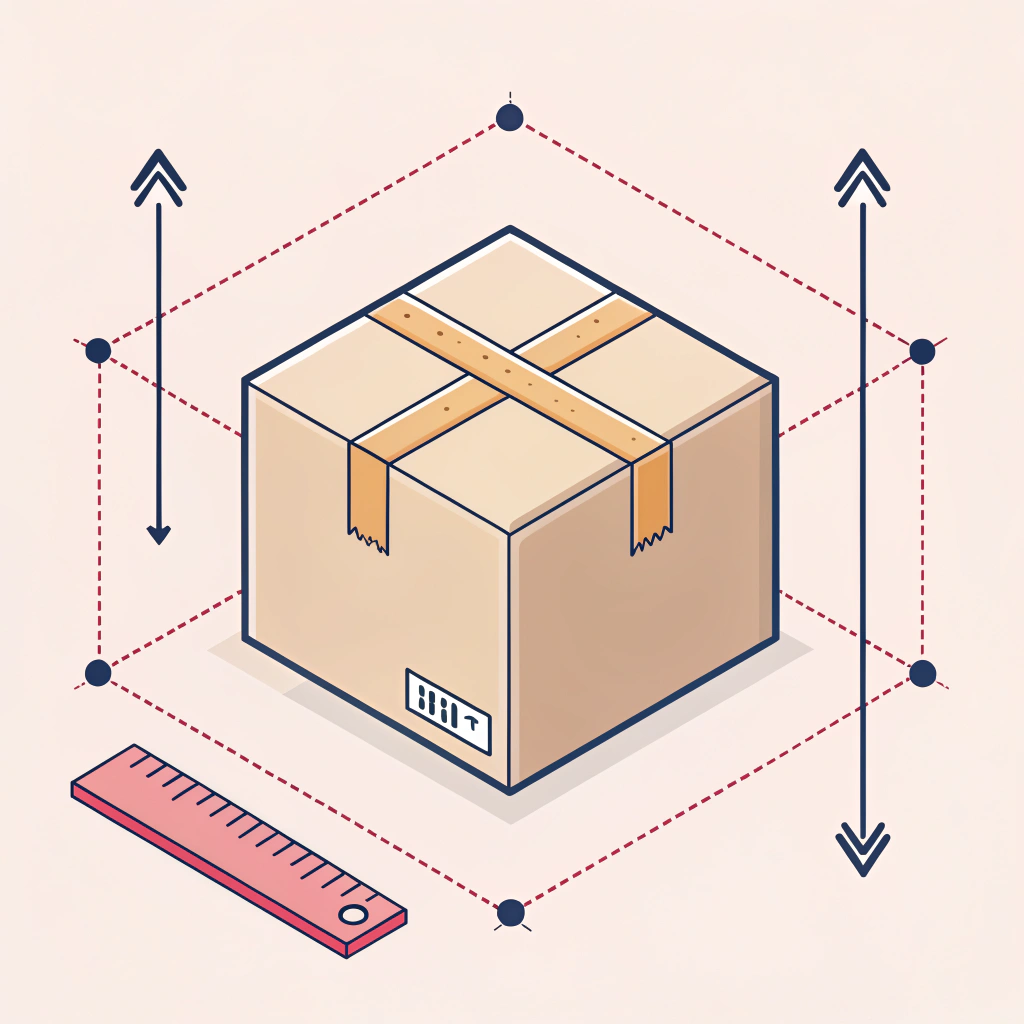
Tables you can reuse in quotes and packing plans
Typical pallet sizes and indicative cube
| Region/Type | Footprint (L×W) | Deck Height | Example Total Height | CFT at Example Height |
|---|---|---|---|---|
| US Standard | 48 in × 40 in | ~5 in | 50 in | ~55.56 ft³ |
| Euro (EUR 1) | 1200 mm × 800 mm | ~144 mm | 1200 mm | CBM ≈ 1.3824; CFT ≈ 48.83 |
| Asia (1100×1100) | 1100 mm × 1100 mm | ~130 mm | 1200 mm | CBM ≈ 1.452; CFT ≈ 51.29 |
Note: Adjust total height to your real stacking. Always measure after wrapping.
Container interior capacity (approximate; varies by make)
| Container Type | Internal Dimensions (L×W×H) | CBM | CFT |
|---|---|---|---|
| 20' Standard | ~5.9 m × 2.35 m × 2.39 m | ~33 m³ | ~1,165 ft³ |
| 40' Standard | ~12.03 m × 2.35 m × 2.39 m | ~67 m³ | ~2,366 ft³ |
| 40' High Cube4 | ~12.03 m × 2.35 m × 2.69 m | ~76 m³ | ~2,684 ft³ |
| 45' High Cube | ~13.55 m × 2.35 m × 2.69 m | ~86 m³ | ~3,036 ft³ |
Use cube numbers for fit planning. Real loadable cube is lower due to voids, door clearance, and palletization.
Air vs sea charging rules (quick lookup)
| Mode | How You’re Charged | Key Formula | Practical Implication |
|---|---|---|---|
| International Air | Max(actual weight, volumetric weight) | Volumetric kg = CBM × 167; Volumetric lb ≈ in³ ÷ 166 | Low-density cargo costs more than it weighs |
| Express Parcels | Divisor varies (commonly 139 in³/lb) | Dim weight lb ≈ in³ ÷ 139 | Check your carrier’s divisor |
| Ocean LCL | W/M: per revenue ton (1 CBM or 1,000 kg) | Charge by whichever is greater | Density matters only relative to 1,000 kg/CBM |
| Ocean FCL | Per container rate | Fit to container cube and weight limits | Optimize packing to reduce wasted space |
How cube affects LCL vs FCL decisions
- LCL is ideal for smaller volumes (e.g., under ~12–15 CBM) where you pay only for the space used. Above certain thresholds, FCL often becomes cheaper and faster.
- Cube also drives handling risk: more pieces and more palletized units mean more touchpoints. FCL can reduce handling and damage at higher volumes.
- Use your total CBM/CFT plus expected voids to model container utilization. For pallets, consider clearances and interlocks inside containers.
Simple utilization example
- Total CBM = 28 CBM across 18 US pallets
- 40' High Cube has ~76 CBM gross; but palletized loads may achieve only 60–70% practical utilization due to voids (≈45–53 CBM).
- If your 28 CBM fits with smart stacking and double-decking (where allowed), FCL likely beats LCL on cost-per-unit and transit certainty.
Measurement best practices to avoid billing disputes
- Measure after packing and wrapping; include pallet/skid height.
- Use a single unit set for all three dimensions before converting.
- Record dimensions to the nearest 0.5 cm or 0.25 in; keep photos with a tape measure shown.
- Share dimension spreadsheets with your forwarder; agree on rounding rules (e.g., CBM to two decimals).
- For air, know your carrier’s divisor (166 vs 139) and confirm whether volumetric applies at piece level or shipment level.
- For LCL, confirm whether minimum charges or density surcharges apply.
Packing optimization tips that shrink chargeable cube
- Right-size cartons: eliminate void space and excessive dunnage5; use inserts instead of oversized boxes.
- Pallet footprint discipline: keep edges flush to avoid overhang; choose skid height thoughtfully.
- Stack height planning: maximize vertical space within carton strength limits; use strapping to prevent bulges.
- Standardize on pallet types that interlock efficiently in containers (e.g., 40″ width aligns well with container internal width).
- Bundle small items: consolidate into master cartons to reduce handling and air gaps.
- Align SKU dimensions to create “modular” layers that minimize voids on a pallet and inside the container.
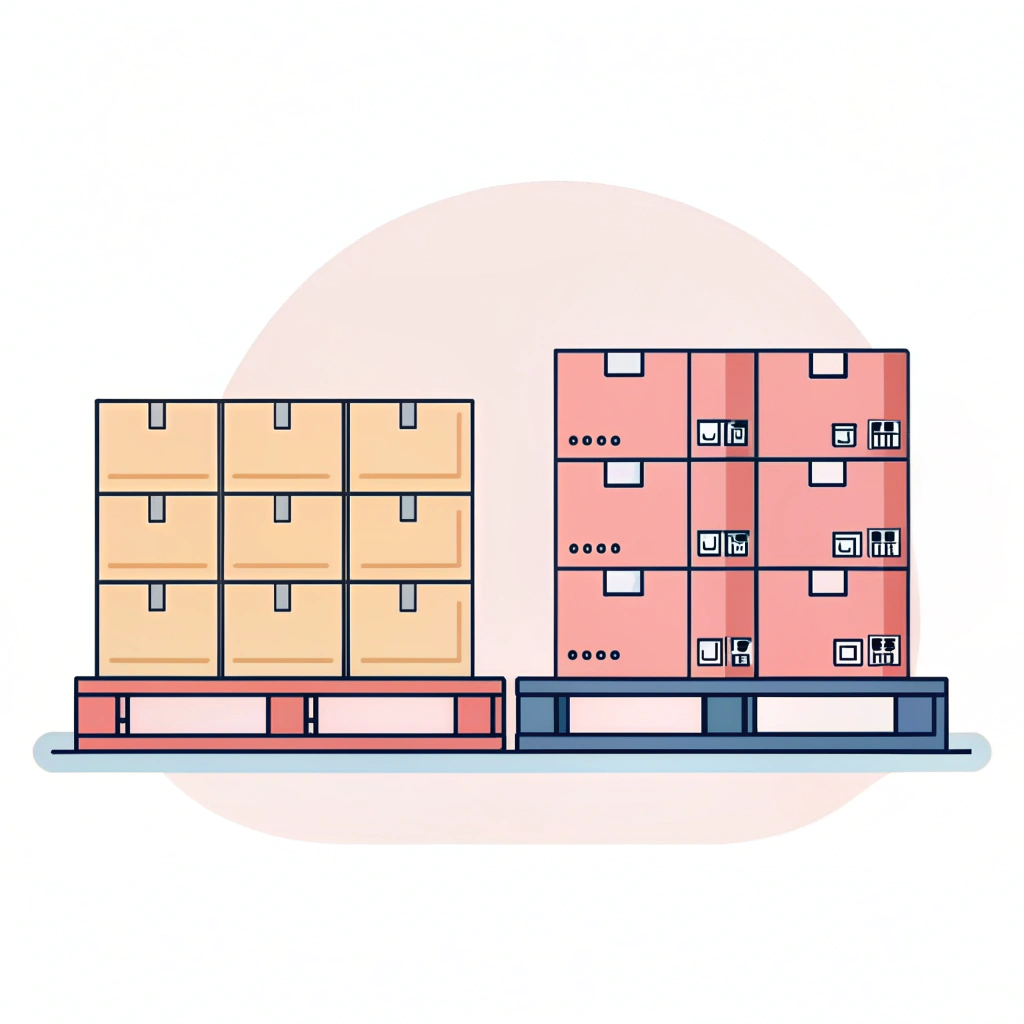
Case: converting factory metrics to buyer-ready quotes
Scenario: Factory provides carton data in cm.
- Data: 30 cartons, each 55 × 45 × 40 cm; actual weight per carton = 18 kg.
- Per-carton CBM = (55×45×40) ÷ 1,000,000 = 0.099 m³
- Shipment CBM = 30 × 0.099 = 2.97 m³ → CFT ≈ 2.97 × 35.3147 ≈ 104.9 ft³
- Air: volumetric kg = 2.97 × 167 ≈ 495 kg; actual weight = 30 × 18 = 540 kg
- Chargeable air weight = max(540, 495) = 540 kg (actual dominates)
- LCL: revenue tons = 2.97 CBM vs 540 kg/1000 = 0.54 → LCL charges based on 2.97 CBM
Action: Convert once to CBM and CFT and carry forward. Quote air using chargeable weight, quote LCL by CBM. If running FCL, compare against container utilization.
Attention and limitations
- Divisors and rounding can vary by carrier and trade lane. Confirm in writing.
- Commodity restrictions (e.g., over-height pallets, hazardous materials) may force different packing and reduce usable cube.
- Warehouse measurement tolerance exists; small differences can occur. Keep evidence for reconciliation.
- Container weight limits: even if cube fits, weight distribution must meet flooring and axle limits.
Summary and next steps
Cubic feet is simple math that materially impacts your freight spend. Measure the packed item at its longest points, calculate volume using consistent units, convert CBM↔CFT when needed, and apply the correct charging rules for air and ocean. With clean measurements and a few optimization tactics—right-size cartons, disciplined pallet footprints, and smart stacking—you can reduce chargeable space, avoid billing surprises, and choose confidently between LCL and FCL.
Pick one upcoming shipment and run the full check: measure correctly, convert, calculate chargeable weight, and model container fit. Then standardize the measurement and rounding rules with your suppliers and warehouses to lock in savings shipment after shipment.
People Also Ask
How to calculate cubic feet for freight?
Measure the length, width, and height of the packed unit at the longest points. If dimensions are in inches, multiply L × W × H and divide by 1,728 to get cubic feet. If dimensions are in meters, multiply L × W × H to get CBM, then convert using CBM × 35.3147 = cubic feet. Sum all pieces and include pallets/skids when relevant.
What is the formula for cargo volume calculation?
Use L × W × H. In metric, CBM = length (m) × width (m) × height (m). In imperial, CFT = length (ft) × width (ft) × height (ft), or (length × width × height in inches) ÷ 1,728. For mixed sizes, calculate each item or size group separately and add the volumes to get the shipment total.
What are common mistakes in measuring cubic feet?
Typical errors include mixing units (e.g., converting only one dimension), measuring the product instead of the packed carton or pallet, ignoring overhang from wrapping, and rounding inconsistently. Always measure at the longest points, convert all three dimensions to the same unit before calculating, and include pallet/skid height if the shipment is palletized.
-
LCL: Reading will help you understand when less-than-container load pricing makes sense, how consolidation works, and how cube drives cost and transit time so you can choose the right mode. ↩
-
chargeable weight: Learn how carriers determine the billable weight across air and ocean, so you can forecast costs accurately and avoid surprises when volumetric weight exceeds actual weight. ↩
-
bounding box: See why carriers use the maximum-length × width × height box for irregular shapes, with tips to measure consistently and prevent overcharges on non-rectangular items. ↩
-
High Cube: Understand the dimensions and trade-offs of high-cube containers to improve fit planning, increase utilization, and select the right equipment for your shipment. ↩
-
dunnage: Discover practical ways to use protective fillers efficiently to prevent damage while minimizing wasted space and chargeable volume in cartons and on pallets. ↩