Skip to content
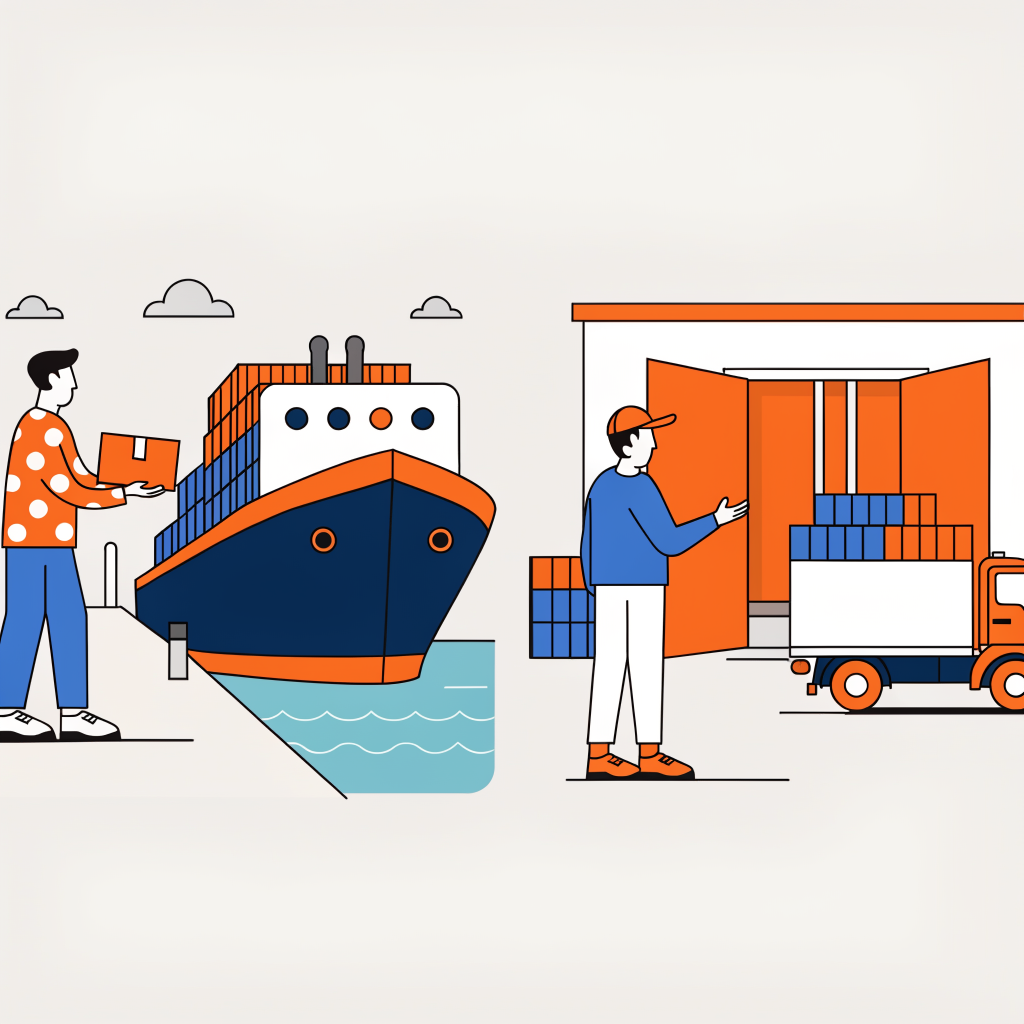
FOB vs EXW: Choose FOB if you want the seller to handle origin steps and export clearance; choose EXW if you want full control and can manage pickup and export from the seller’s site. Under FOB (Free On Board), the seller delivers goods on board at the named port and clears export; risk transfers to the buyer once loaded. Under EXW (Ex Works), the buyer is responsible from the seller’s door—including loading, export customs, and all freight—so hidden origin costs and operational complexity are higher.
Why this choice matters for importers
Selecting the right Incoterm before booking freight directly affects control, cost, and risk. The wrong choice can lead to:
- Surprise origin surcharges (pickup, terminal handling, export documentation)
- Delays when suppliers lack export licenses or decline to load trucks on-site
- Confusion over who books carriers and receives the bill of lading (B/L)1
- Inaccurate landed cost2 estimates and missed delivery windows
If your priority is predictable origin handling and fewer unknowns, FOB is usually safer. If your priority is total control and cost transparency—and you have a trusted China-based forwarder and processes—EXW can work, but it requires more coordination.
Responsibilities and risk transfer: EXW vs FOB
The matrix below reflects Incoterms 20203. Note that FOB is for sea/inland waterway, and Incoterms recommend FCA for containerized shipments; however, FOB remains widely used in practice for containers.
| Task / Risk Area | EXW (Buyer vs. Seller) | FOB (Buyer vs. Seller) | Practical Notes |
|---|---|---|---|
| Seller’s factory loading | Buyer responsibility (seller not obliged to load) | Seller responsibility | Under EXW you must confirm the supplier will load; otherwise arrange loading gear/labor. |
| Inland pickup to origin terminal/port | Buyer | Seller | EXW often incurs higher first-mile cost for ad hoc pickups; FOB rolls local trucking into the supplier’s price. |
| Export customs clearance in China | Buyer | Seller | Under EXW, ensure an exporter of record (EOR)4 is available; supplier’s export license may be needed or a trading company must act as EOR. |
| Origin terminal handling (THC), CFS/warehouse fees | Buyer (typically, under buyer’s carrier contract) | Seller, in theory up to “on board”; but may be billed to buyer in practice | Charges follow carrier contract rather than pure Incoterms theory; align with who books freight. |
| Carrier booking (ocean/air) | Buyer | Buyer | If the seller books, you are no longer in FOB; that’s CFR/CIF territory. Keep booking control to avoid inflated freight. |
| Risk transfer point | At seller’s door, before loading | When goods are on board the vessel | This affects insurance scope: EXW needs coverage from the door; FOB from on-board. |
| Main carriage freight | Buyer | Buyer | Both require buyer to pay linehaul unless you agree CFR/CIF/DDP. |
| Insurance (cargo) | Buyer | Buyer | Neither EXW nor FOB obligates insurance; buyers should secure cover (ICC A/C). |
| Destination port charges | Buyer | Buyer | Include D/O, ISPS, congestion, CFS fees for LCL. |
| Import customs + duties/taxes | Buyer | Buyer | Provide HS codes and documents early; misclassification causes delays. |
| Final delivery to consignee | Buyer | Buyer | Plan truck size, liftgate, appointment windows, and pallet specs. |
How it works in China (and why it trips teams up)
- Exporter of record: For EXW, your forwarder needs a legal exporter in China. If your supplier lacks an export license, they cannot file export customs, and you must engage a trading company or have your forwarder arrange EOR services.
- Loading obligations: Under EXW the seller is not obliged to load. Confirm loading arrangements at the facility to avoid failed pickups.
- Incoterms 2020 note: For container shipments, FCA often fits operational reality better than FOB because delivery occurs at a terminal rather than “on board.” Many suppliers still quote FOB; align roles via your booking instructions.
- Origin fees on LCL: In LCL, consolidators charge origin CFS/handling under the party who holds the freight contract. Even under FOB, you may see origin fees from your forwarder because they relate to your booking. Avoid confusion by mapping fees to the contracting party.
Landed cost: structure and sample scenarios
A clear landed cost model prevents budget surprises. At minimum:
Landed Cost = Product Cost (EXW or FOB) + Origin Costs + Main Carriage + Insurance + Destination Port/Terminal + Customs/Duties/Taxes + Final Delivery
Below are illustrative ranges for typical China-to-destination moves. Actual rates vary by season, weight/volume, commodity, and surcharges.
Scenario 1: EXW LCL Shenzhen → Los Angeles (6 CBM, 1,200 kg, general cargo)
- Product (EXW): $5,000
- Factory loading assistance: $50–$150 (if supplier won’t load)
- First-mile pickup to CFS: $120–$220 within Shenzhen; $250–$450 if from surrounding cities
- Export customs/EOR service: $80–$180 + customs filing $30–$60
- Origin CFS/THC/doc fees under your booking: $60–$120 per CBM
- Ocean LCL freight: $25–$45 per CBM + base fees
- Insurance (ICC A): 0.1%–0.3% of insured value
- Destination D/O + CFS + ISPS/congestion: $90–$160 per CBM
- US import clearance + duties: commodity-specific (check HTS)
- Final delivery (LA area, palletized): $180–$350
Key insight: EXW exposes you to more origin line items. Control is high; administrative workload is higher.
Scenario 2: FOB LCL Shenzhen → Los Angeles (6 CBM)
- Product (FOB): $5,300 (supplier includes local trucking, terminal access, export clearance, and loading)
- Origin CFS/THC under your booking: $60–$120 per CBM (still billed to you in LCL)
- Ocean LCL freight: $25–$45 per CBM + base fees
- Insurance: 0.1%–0.3% of insured value
- Destination port/CFS charges: similar to EXW
- US import + delivery: similar to EXW
Key insight: FOB reduces buyer-managed steps and pickup variables. Origin costs don’t disappear; they shift into supplier’s price and your carrier-related origin fees.
Scenario 3: FOB FCL Ningbo → Rotterdam (1×40’)
- Product (FOB): Includes trucking, export clearance, VGM provision, port handover
- Ocean freight: market-driven (spot vs. named account)
- Insurance: based on cargo value
- Destination terminal + EU import: EORI, customs, possible VAT deferment
- Final delivery: local drayage + chassis + appointment fees
Scenario 4: EXW FCL Guangzhou → Sydney (1×20’)
- Factory loading: arrange at shipper site (forklift/crane if needed)
- Trucking to port: buyer pays; expect tolls and terminal booking fees
- Export customs/EOR: buyer arranges
- Ocean freight + AU destination port charges (D/O, terminal lifts, quarantine fees)
- AU import clearance (HS codes, ICS lodgment), duties/GST
- Delivery: metro vs. regional pricing varies significantly
Carrier booking, control of freight, and B/L issuance
- Booking control: Under both EXW and FOB, the buyer should contract the carrier or forwarder. If the seller books main carriage, you are drifting into CFR/CIF, which changes pricing and leverage.
- Bill of lading (B/L): When you control the booking, the master B/L should show your forwarder as the booking party; the house B/L names you/your consignee. Under FOB, the seller clears export but shouldn’t control the B/L. Under EXW, all documentation flows through your forwarder and exporter of record.
- Avoid “switch BL” surprises: Clarify whether you need a switch B/L before cargo departs; some carriers charge more for post-issue changes.
Insurance and documentation essentials
- Insurance scope: Under EXW, cover from seller’s door; under FOB, cover from “on board.” Use ICC(A) for higher protection (all risks), ICC(C) for basic cover. Always include war/strikes if required by trade lanes.
- Export documents: Commercial invoice, packing list, export declaration (China), HS codes, any licenses. For wood packaging, ensure ISPM-15 compliance.
- Destination documents: Arrival notice, B/L, certificates (origin, fumigation, MSDS for hazardous, test reports if applicable), importer ID/EORI5. Missing documents cause storage and demurrage.
LCL vs FCL under Incoterms
- LCL (Less than Container Load): More touchpoints—CFS origin/destination, per-CBM fees, more risk of “who pays THC?” confusion. FOB can still work, but expect origin CFS charges tied to your booking.
- FCL (Full Container Load): Cleaner cost structure—port lifts and terminal fees, chassis, demurrage/detention risk management. FOB aligns well for non-containerized or breakbulk; for containers, FCA aligns with actual delivery to the terminal gate.
- Operational tip: Explicitly name the Incoterm and port/place. Example: “FOB Shanghai (Yangshan)” or “EXW, Supplier’s Address, Foshan.”
Checklists you can use immediately
Supplier briefing checklist (choose one based on your Incoterm)
- If EXW:
- Confirm supplier can load at factory (equipment, labor, palletization)
- Share pickup window, truck type, and packing conditions
- Confirm exporter of record arrangement (supplier license or trading company)
- Provide HS codes and export requirements to forwarder
- Agree who prepares labels, carton markings, and export marks
- If FOB:
- Confirm named port of shipment and terminal
- Supplier responsible for export customs and delivery “on board”
- Request timely VGM and cut-off compliance (SI, DOC, CY/CFS cut-off)
- Clarify who issues commercial invoice/packing list format
- Supplier shares readiness date to align with vessel booking
Forwarder booking checklist
- Incoterm + named place (e.g., “FOB Ningbo”, “EXW Shenzhen, Supplier XYZ”)
- Cargo specs: CBM, gross weight, carton count, pallet count, stackability, DG status
- Pickup details: address, loading conditions, contact person, time windows
- HS codes, commodity description, value, insurance instruction
- Required services: EOR, export clearance, palletizing/repack, fumigation, photos
- Destination: port, final delivery address, appointment needs, liftgate/inside delivery
- Documentation preferences: HBL/MBL consignee/notify, SI deadline, originals vs. telex release
Common pitfalls and how to avoid them
- Misusing FOB for containers without naming the port/terminal: Always specify the port and ensure supplier commitments match cut-offs and “on board.”
- Assuming “FOB” includes free origin charges: It doesn’t. Supplier covers their obligations to get cargo on board; your booking-related origin fees (especially LCL) still apply.
- Letting the seller control main carriage under FOB: That turns into CFR/CIF dynamics. Keep booking control to prevent inflated freight or unfavorable routing.
- EXW with a supplier lacking export rights: You will need an EOR solution; budget the time and cost.
- Unclear B/L instructions: Decide early on consignee/notify, telex vs. original, and any switch B/L requirements.
- Missing compliance details: HS code misclassification, missing certificates, VGM late submission can cause rollovers and storage costs.
Decision guidance: When to choose FOB vs EXW (and when to consider DDP)
- Choose FOB when:
- You want the seller to manage origin trucking, export clearance, and loading
- Your shipment is routine, and you prefer fewer moving parts
- You want predictable origin timelines and fewer factory pickup headaches
- Choose EXW when:
- You need full control, transparency of every origin cost, and you have a strong China-based forwarder
- Your supplier’s location or capacity makes their trucking/export unreliable
- You’re consolidating multiple suppliers into one export (merge-in-transit)
- Consider DDP (Delivered Duty Paid) when:
- You prefer a single all-in price to your door and are willing to let the seller (or their logistics partner) handle import duties/taxes and final delivery
- Note: DDP can reduce visibility and control; vet the service provider carefully to avoid hidden destination charges.
Summary
- Under EXW, the buyer controls and pays for everything from the seller’s door, including loading and China export clearance. Risk is higher but so is operational control.
- Under FOB, the seller handles origin steps up to “on board” and export clearance; the buyer controls main carriage and destination. Risk transfers at loading.
- Map fees to the booking party, not just Incoterms theory. Use explicit naming (“FOB Shanghai, Yangshan”) and checklists to avoid surprises.
- For container moves, consider FCA if contractual precision matters, but if FOB is the commercial reality, lock down roles, cut-offs, and B/L control.
People Also Ask
Which is better, FOB or EXW?
FOB is better for most importers who want the seller to handle local trucking, terminal handover, and export clearance, reducing origin complexity. EXW is better if you need full control and have a reliable forwarder to manage pickup, loading, and export from the seller’s site. Choose FOB for predictability; choose EXW for control and consolidation flexibility.
What are the common mistakes using FOB?
- Treating FOB as “free origin charges”: Supplier obligations end once cargo is on board; booking-related origin fees (especially LCL) may still be billed to the buyer.
- Letting the seller book the main carriage: That shifts you toward CFR/CIF and erodes control over routing, freight rates, and documentation.
- Not naming the port/terminal or cut-offs: Without specifics, cargo misses SI/VGM/CY/CFS deadlines, causing rollovers and storage.
Do you need FOB price or EXW price?
Request FOB if you want the supplier to include origin trucking, export clearance, and loading in the unit cost. Request EXW if you prefer to control and pay each origin element yourself through your forwarder. If you’re new to China-origin logistics, FOB pricing offers more predictability; if you’re experienced and consolidating shipments, EXW pricing can optimize total landed cost.
-
bill of lading (B/L): Read to understand the legal role of the B/L, differences between master vs. house B/L, and how control of the document impacts booking authority and cargo release. ↩
-
landed cost: Read to learn how to build a complete landed cost model, itemize typical origin/destination charges, and avoid budget surprises and margin erosion. ↩
-
Incoterms 2020: Read to clarify the responsibilities, cost/risk transfer points for each Incoterm, and common pitfalls such as using FOB instead of FCA for containerized cargo. ↩
-
exporter of record (EOR): Read to grasp the EOR’s compliance role, licensing requirements in China, and practical ways to arrange EOR services via trading companies or forwarders. ↩
-
EORI: Read to understand EU EORI registration, when it’s required, and how it affects customs processing, VAT deferment, and delivery timelines. ↩