Skip to content
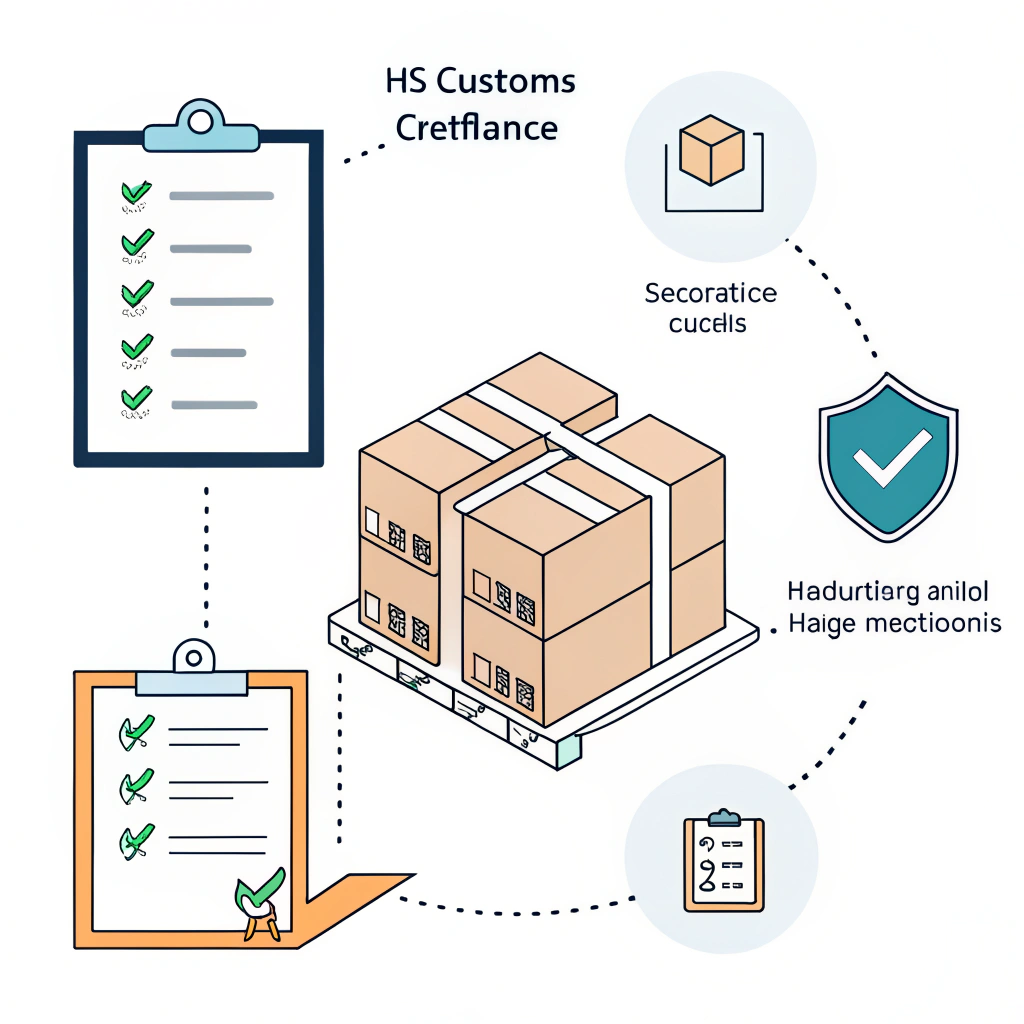
To reduce the risk of customs inspection at the destination port, build a clean, consistent data trail before cargo departs: lock down accurate HS code classification1 and plain‑language product descriptions, align your commercial invoice, packing list, and cargo manifest, pre‑file required advance data (such as Importer Security Filing and advance cargo information) on time, comply with labeling/packaging and partner‑agency rules, and route sensitive or mixed cargo through consolidation and bonded options when useful. Pair these process controls with a disciplined supplier compliance program and an experienced forwarder/broker that audits documentation and manages exceptions before arrival.
Why inspections happen and why they matter
Customs administrations use risk‑based targeting2 to select shipments for documentary checks, X‑ray, or physical inspection. Random percentage checks exist, but most holds are triggered by data mismatches, sensitive commodities, valuation/origin concerns, safety standards, and new or inconsistent importer profiles. An exam can add 1–10+ days and hundreds to thousands in storage, demurrage, and exam fees. The best mitigation is not negotiation after arrival—it is prevention within your purchase order to entry filing workflow.

Root causes that trigger inspections
- Inconsistent data:
- HS code in the entry doesn’t match invoice description or product use.
- Quantity/weight differs across invoice, packing list, and bill of lading/air waybill.
- Vague descriptions like “parts,” “samples,” “gift,” or “personal items.”
- Late or incomplete advance filings:
- Importer Security Filing (ISF) for US ocean, EU/UK advance cargo information (ENS/ICS2/S&S), Canada eManifest.
- Sensitive goods or partner‑agency jurisdiction:
- Batteries, chemicals, food, cosmetics, medical devices, electronics with radios, children’s products, textiles.
- Valuation and origin risks:
- Undervaluation, missing assists/royalties, incorrect certificates of origin for preferential claims, inconsistent COO marking.
- Packaging and labeling gaps:
- Missing country‑of‑origin marking, improper battery labels, mismatched SKU labels, mixed SKUs in one carton.
- New or inconsistent importer profile:
- Sudden volume spikes, newly established companies, or importers without a compliance history.
- Routing anomalies:
- Transshipments via high‑risk hubs without clear audit trail; unusual shipper/consignee pairings.
A tight, practical control plan (what to change this week)
- Classify once, use everywhere
- Create a maintained HS code classification library per SKU with:
- Clear description (what it is, material, function), HTS/HS code, duty/tax, origin, regulatory flags.
- Legal notes/rulings references; obtain Binding Rulings where available for complex SKUs.
- Lock descriptions: the same plain‑language description goes on invoice, packing list, entry, and manifest.
- Train suppliers to copy the exact SKU descriptions from your master; prohibit generic descriptions.
- Clean commercial documents
- Commercial invoice must show: legal exporter/importer names, full item description, HS code (recommended), unit price, currency, Incoterms, terms of sale, country of origin per line, and any assists/royalties if applicable.
- Packing list best practices:
- Carton‑level detail with SKU, quantity, net/gross weight, carton count, and dimensions.
- Avoid mixed SKUs in cartons; if unavoidable, list exact splits and label cartons externally.
- Use your forwarder for document QC at least 72 hours pre‑ETD (air: 24 hours) to catch inconsistencies.
- Pre‑file and pre‑lodge on time
- For ocean to the US: file ISF 10+2 at least 24 hours before vessel loading; ensure seller and factory identifiers are accurate.
- Transatlantic/EU/UK/Canada/Australia: submit advance cargo information (e.g., EU ICS2 ENS, UK S&S, Canada ACI/eManifest, AU ICS) per mode and deadline.
- Use a single data source for filings; never retype descriptions manually in multiple systems.
- Package and label for compliance and visibility
- Labeling and packaging compliance:
- Country of origin marking is clear and permanent; retail labeling meets destination rules (e.g., fiber content for apparel, electrical ratings, CE/UKCA where required).
- For lithium batteries: UN38.3 test summary on file, proper shipping names, and hazard labeling; consider Section II limits for air where appropriate.
- Palletization:
- Standardized pallets (e.g., 40x48 in NA, 120x80 cm in EU), externally visible carton IDs matching the packing list.
- Shrink‑wrap with a readable pallet label; avoid overhanging cartons that attract damage/inspection.
- Valuation discipline
- Correct customs valuation3 method (usually transaction value) including assists, tooling, design, and royalties where dutiable.
- Reconcile Incoterms with declared charges; don’t embed dutiable costs off‑invoice.
- For related‑party transactions, retain transfer pricing support.
- Use bonded and consolidation strategically
- Bonded warehouse4 or in‑bond transit can reduce impact if a check is likely:
- Defer duties while clarifying documents; move for inspection at a less congested CFS.
- Consolidate multiple small lots into one compliant entry.
- Mixed‑SKU or high‑risk product lines: consider segregated consolidation in origin warehouses with photo evidence and seal logs.
- Supplier compliance program
- Implement a supplier compliance program:
- Document pack SLA: invoice, packing list, HS code per line, COO per line, test reports/certificates, MSDS where needed—due X days before ETD.
- First‑article import: trial a small batch with full compliance audit before scaling.
- Scorecard suppliers on documentation accuracy, on‑time pack, and labeling error rate; tie score to allocation.
- Broker/forwarder partnership
- Use a broker that:
- Audits classification, runs anomaly checks (description vs HS code vs value), and pre‑alerts for partner‑agency flags.
- Files advance data on time and provides exception dashboards.
- At origin, a forwarder like us can:
- Pre‑audit documents, relabel/repack in our warehouse, verify pallet weights/dimensions, photograph cargo, and maintain chain‑of‑custody.
- Validate battery and chemical paperwork; route sensitive cargo via carriers familiar with your commodity.
- Build a clean importer profile
- Enroll in trusted trader programs when eligible (e.g., C‑TPAT5 in the US, AEO in EU/UK, PIP in Canada) to reduce risk‑based targeting.
- Keep a consistent importer number, broker, and routing pattern where possible.
- Document your internal trade compliance SOPs and provide on request during audits.
- Visibility and exception management
- Use track & trace with milestone alerts: ISF/ENS status, departure/arrival, holds/exams, entry acceptance, release.
- Create an exception playbook: who does what within 2 hours of a customs hold—document revision, additional evidence, or re‑route to bonded.
Control map: from trigger to preventive action
| Risk trigger | Preventive control | Owner | Timing |
|---|---|---|---|
| Vague description on invoice/manifest | Enforce SKU description library; reject generic terms | Importer + Supplier | Before doc issuance |
| HS code mismatch across docs | Broker pre‑classification + locked HS per SKU | Broker + Importer | PO stage |
| Late ISF/ENS | Automated data feed; pre‑cutoff reminders | Forwarder/Broker | 48–72h pre‑ETD |
| Mixed SKUs in cartons | Pack by SKU; carton ID map; photo evidence | Supplier + Forwarder warehouse | At packing |
| Battery/chemical items | UN38.3/MSDS file check; carrier acceptance pre‑approval | Forwarder DG team | Booking |
| Preferential origin claimed | Verify supplier origin docs; keep supplier declarations | Importer + Supplier | Before shipment |
| Undervaluation/assists missing | Valuation SOP and finance sign‑off | Importer Finance | Pre‑invoice |
| New importer/profile | Trusted trader enrollment; consistent routing | Importer | Quarter plan |
Pre‑arrival timeline you can copy
| Mode | Milestone | Deadline | What to verify |
|---|---|---|---|
| Ocean | Booking | 10–14 days pre‑ETD | Commodity acceptance, routing, DG restrictions |
| Ocean | Document draft pack (CI/PL) | 5–7 days pre‑ETD | Descriptions, HS, COO, values, weights, carton map |
| Ocean (US) | ISF 10+2 filing | ≥24h before loading | Seller/buyer, manufacturer, HTS, container stuffing location |
| Ocean | Carrier manifest cut | As per line (often 48–72h pre‑ETD) | Align CI/PL with manifest data |
| Air | Booking + screening | 24–72h pre‑ETD | Battery limits, dimensions, AWB details |
| All | Advance cargo info (ENS/ACI/S&S/eManifest) | Per jurisdiction deadline | Parties, goods, HS, routing |
| All | Entry pre‑lodgement | Before arrival where possible | Duties/taxes estimates, licenses, partner‑agency docs |
| All | Arrival | Day 0 | Watch for holds; trigger exception playbook |

Partner‑agency hotspots to clear before departure
- Food and cosmetics: prior notice/notification, facility registration, ingredient lists, labeling claims.
- Electronics with radios: test reports and approvals (e.g., FCC/RED), proper labeling.
- Children’s products and toys: conformity certificates, test reports.
- Textiles/apparel: fiber content, care labels, country of origin rules; potential quota/visas in some markets.
- Chemicals: SDS/MSDS, classification under GHS/CLP, possible permits.
For these categories, submit documentation with your pre‑audit. Do not ship until the broker confirms readiness to file.
Use consolidation and warehousing to reduce inspection exposure
Our origin warehouses can segregate SKUs, repack to single‑SKU cartons, apply compliant labels, and capture carton/pallet photos and weights. This creates a strong audit trail that aligns the physical cargo with documents, reducing inconsistencies that trigger exams. For the US, using a fast‑transit service paired with on‑time ISF and accurate AMS reduces arrival risk; for EU/UK/CA/AU, timely ENS/ACI plus consistent item descriptions materially lowers selection probability. If a check still occurs, having cargo consolidated and properly palletized minimizes intensive exam time and repack errors that lead to re‑holds.
Data quality beats “explaining at the port”
- Match words, numbers, and codes: your description, HS, quantities, weights, and values must tell one consistent story across invoice, packing list, and manifest.
- Plain language wins: “Men’s cotton knit T‑shirt, 100% cotton, size range S‑XL” clears faster than “garment sample” even when legal.
- Evidence ready: keep spec sheets, product photos, and test certificates accessible. When officers ask, answering in minutes—not days—often prevents escalation from document check to physical exam.
When to consider a bonded path
- You’re claiming a new preference (e.g., FTA) and awaiting supplier declarations.
- Goods are high‑value and demurrage is costly; bonded storage buys time without duty outlay.
- You expect an exam due to commodity or importer profile; moving in bond to a less congested site can shorten queues.
Note: Bonded does not remove the possibility of inspection; it reduces cost/time impact while issues are resolved.
Case example: cutting exam rates in 90 days
A lifestyle accessories brand importing mixed electronics and textiles had a 22% exam rate into the US and EU. Root causes were vague descriptions, mixed‑SKU cartons, and late ISF/ENS.
What we changed:
- Built an SKU classification library with officer‑friendly descriptions, applied identically to all documents.
- Moved packing to single‑SKU cartons; added exterior carton IDs tied to the packing list; photo‑evidence at pallet level.
- Introduced a 5‑day pre‑ETD document audit gate; automated ISF and ENS feeds from the master data.
- Segregated batteries; verified UN38.3; booked carriers familiar with DG restrictions.
Results in 90 days:
- Exam rate dropped to 7–9%, with fewer intensives and faster document checks.
- Storage and exam fees reduced by 60%+; average door delivery improved by 3.2 days.
- No missed filings; zero rejections for description mismatch.

Limitations and realistic expectations
- Random checks exist: even perfect files can be sampled. The goal is to move from “high‑risk” to “routine low‑risk.”
- Country specifics vary: filing names and deadlines differ (e.g., ICS2 phases in EU). Always verify current rules per lane.
- New products raise flags: run first‑article imports and pre‑clear documentation when changing product lines.
- Low‑value shipments are not immune: misdeclared values or vague descriptions can trigger holds even under de minimis.
A quick buyer’s checklist for your next shipment
- Classification: HS codes confirmed with notes/rulings; officer‑friendly descriptions locked.
- Documents: CI/PL complete; carton‑level detail; COO and values per line; no generic terms.
- Advance data: ISF/ENS/ACI filed on time; a single source feeds all filings.
- Packaging: country‑of‑origin marking; product labels compliant; single‑SKU cartons where possible.
- Valuation: assists/royalties considered; Incoterms aligned with declared charges.
- Partners: broker pre‑audit complete; forwarder has photos, weights, and seal logs.
- Contingency: bonded path ready if a hold occurs; exception playbook defined.
How we support this approach
As a China‑based forwarder with our own warehouses in Shenzhen, Hong Kong, and Los Angeles, we execute the prevention steps importers need:
- Pre‑classification support and document QC 72h before ETD.
- ISF/AMS/ENS/ACI filings via integrated data feeds.
- Origin repack, relabel, palletize, and photo‑document; single‑SKU carton programs.
- DG checks for batteries/chemicals and carrier acceptance.
- Consolidation and bonded strategies, plus door‑to‑door options across air and ocean.
- Live milestone tracking and exception playbooks for holds or exams.
If your goal is fewer inspections and faster release, the path runs through better data, earlier filings, and disciplined packing—executed by suppliers and enforced by your logistics partners.
People Also Ask
Q: How to avoid customs clearance issues?
A: Use clear, specific product descriptions and accurate HS codes on all documents, align invoice, packing list, and manifest data, submit required advance filings on time (e.g., ISF, ENS/ACI), and comply with labeling and partner‑agency rules for your product. Avoid restricted or misdeclared items, provide honest values including assists/royalties where applicable, and work with a broker/forwarder to pre‑audit documents before departure.
Q: What is risk management in customs?
A: Customs risk management is the systematic process of identifying, assessing, and prioritizing shipment risks—such as data mismatches, sensitive commodities, and non‑compliance—and applying controls to focus inspections where risk is highest. Authorities use predefined criteria and data analytics to target checks, while compliant traders with accurate advance information generally face fewer interventions.
Q: What are the three customs clearance procedures?
A: Many administrations use a tiered approach: (1) release without examination (often called green lane), (2) documentary check without physical inspection (yellow/orange lane), and (3) physical inspection or intensive exam (red lane). The lane assigned depends on risk analysis of the shipment data, importer profile, and any regulatory flags.
-
HS code classification: Reading will help you apply the correct tariff codes per SKU, understand legal notes and rulings, avoid misclassification penalties, and reduce inspection triggers tied to description/code mismatches. ↩
-
risk‑based targeting: Reading will show how customs triage shipments, which data points raise risk, and how to design processes that lower your selection probability for exams. ↩
-
customs valuation: Reading will clarify accepted valuation methods, treatment of assists/royalties and related‑party pricing, helping you declare compliant values and prevent holds or post‑entry corrections. ↩
-
Bonded warehouse: Reading will explain duty deferral, in‑bond movements, and operational steps to use bonded storage strategically to cut demurrage and manage inspections with less disruption. ↩
-
C‑TPAT: Reading will outline eligibility, security criteria, and tangible benefits (fewer exams, faster releases) so you can assess enrollment and implementation for your importer profile. ↩