Skip to content
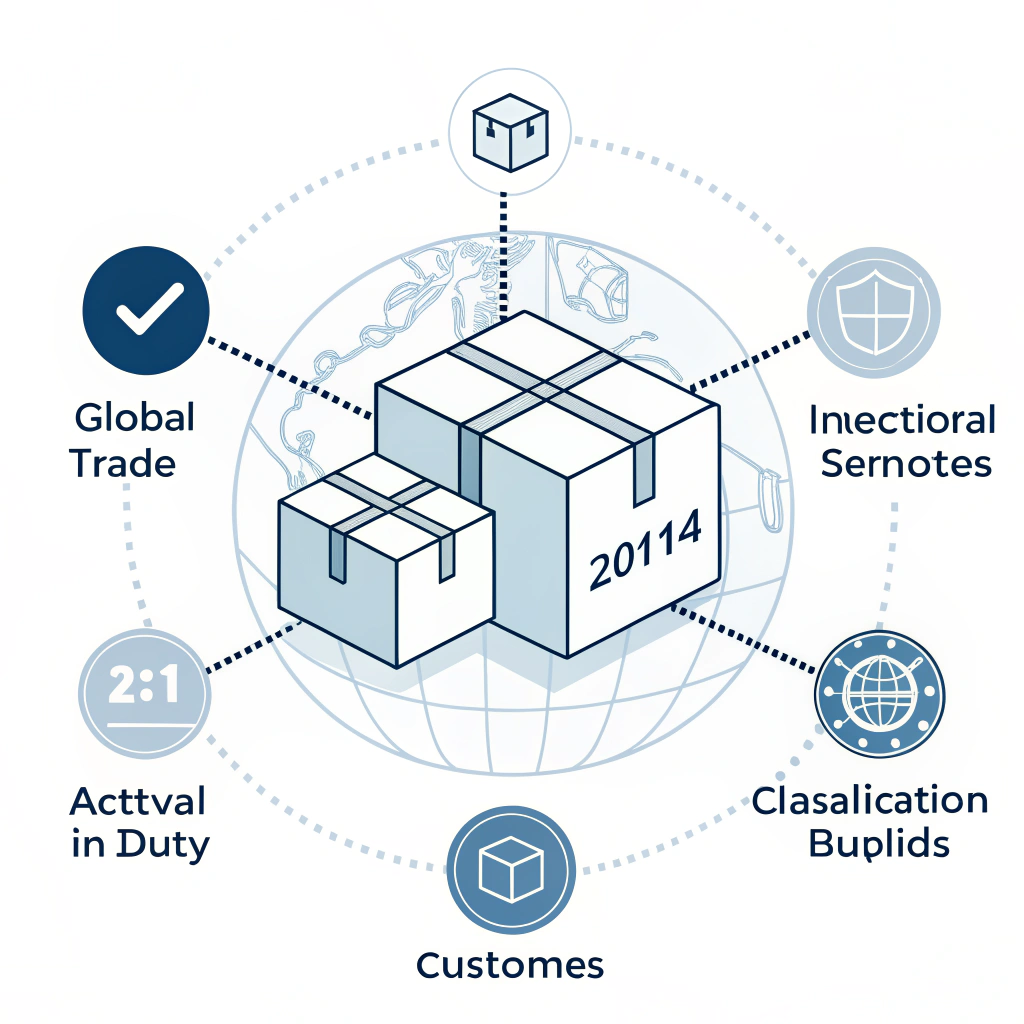
HSN codes (HS codes) are the universal product identifiers that drive how customs classify your goods, calculate duties and taxes, apply trade measures, and decide inspections. Getting the right code affects landed cost, documentation, and lead time: the 6‑digit Harmonized System nomenclature1 defines the product globally, while each country adds extra digits (8–10) to set local duty rates and controls. Correct tariff classification = predictable costs and smooth customs clearance; wrong codes can trigger penalties, delays, and rework.
Why HSN/HS codes matter to importers
- Cost control: HS codes determine your import duty, VAT/GST, excise, and whether extra tariffs (e.g., US Section 301) apply.
- Compliance: The code you declare tells customs what your product is. It can trigger licenses, product safety checks, and agency holds (e.g., FDA, FCC in the US).
- Speed: Accurate codes reduce queries, inspections, and misdeclaration penalties that create storage and demurrage costs.
- Data consistency: The HS is maintained by the WCO and updated every five years. Using current codes avoids rejects and post‑entry corrections.
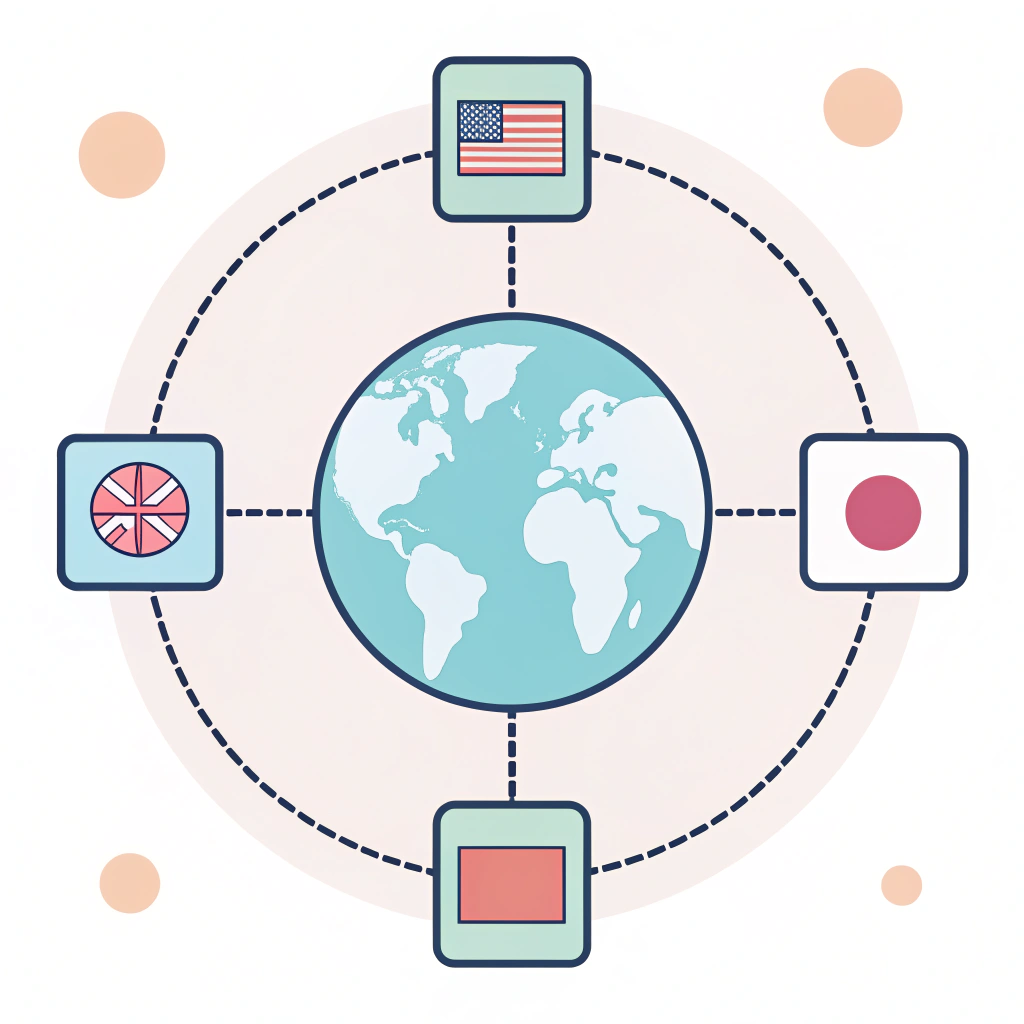
HS vs HSN vs HTSUS vs TARIC2 vs Commodity Code
Many terms describe the same hierarchy. Here is how they relate and where they are used.
| Term | What it is | Digits | Who uses it | What it controls |
|---|---|---|---|---|
| HS/HSN (Harmonized System Nomenclature) | Global product taxonomy administered by WCO | 6 digits | All countries | Defines product families and subheadings; common language |
| HTSUS | US Harmonized Tariff Schedule | 8–10 digits | United States | MFN duty rate, quotas, Section 301/232 notes, agency flags |
| TARIC | EU integrated tariff | Up to 10 digits (CN 8 + TARIC measures) | European Union | EU duty rate, anti‑dumping, quotas, trade defense measures |
| UK Commodity Code | UK Global Tariff | 10 digits | United Kingdom | UK duty rate, measures, licenses |
| India HSN (GST) | HSN used in tax invoices | 6–8 digits | India | GST reporting and customs; mirrors HS with national splits |
Key takeaway: the first six digits are common worldwide; the extra digits are national. Always classify at 6 digits first, then select the correct national suffix where you import.
How an HS code is structured
- Digits 1–2: Chapter (e.g., 61 = knitted apparel; 85 = electrical machinery)
- Digits 3–4: Heading (e.g., 8517 = telephones and other communication devices)
- Digits 5–6: Subheading (e.g., 8517.13 = smartphones in HS 2022)
- National suffix: Country‑specific splits for duty and controls (8–10 digits)
Example: Smartphones moved from 8517.12 to 8517.13 in HS 2022. If you still use 8517.12, many systems will reject your entry.
Why misclassification happens (and how to avoid it)
- Vague product description: “electronics accessory” is not enough. Use materials, function, power, composition, and use.
- Outdated catalogs: HS evolves every five years; national tariffs update annually. Codes for drones, vapes, LEDs changed in 2022.
- Parts vs. accessories confusion: Parts “solely or principally” used with a machine may classify with that machine; general accessories may not.
- Kits and sets: Mixed items may be classified by the component giving the “essential character.”
- Marketing names: “Smart lamp” could be a lamp (lighting) or an electrical apparatus, depending on function.
Step‑by‑step: a practical classification method
This method is aligned with the HS General Rules of Interpretation (GRIs)3, simplified for operations teams.
- Gather technical facts
- What is it made of? (materials and percentage if relevant)
- What does it do? (principal function)
- How is it used? (end‑use, environment)
- How is it powered? (battery, AC)
- Does it work by itself or only with another device?
- Dimensions and key performance specs
- Start at the chapter level (GRI 1)
- Use WCO or national tariff search by keywords.
- Read Section and Chapter Notes; they often exclude/include products.
- Narrow to heading and subheading
- Compare heading texts carefully.
- Check Explanatory Notes (if accessible) for examples and exclusions.
- Apply special rules when needed
- Incomplete/unfinished items (GRI 2): classify as the finished good if they have the essential character.
- Sets/mixtures (GRI 3): choose the most specific; if that fails, classify by the component giving essential character.
- Parts and accessories: use Notes that define “parts” and “accessories” for the chapter.
- Subheading choice (GRI 6): repeat the logic at the subheading level.
- Confirm with national tariff
- Map HS‑6 to HTSUS/TARIC/UK/Canada etc.
- Review footnotes for quotas, anti‑dumping, special tariffs, or licensing.
- Record your decision
- Keep a classification sheet with rationale, links to notes, and images.
- Assign a responsible owner and a review date (e.g., annually or when specs change).
- Validate on first shipment
- Ask your customs broker to review.
- For high‑value/complex items, consider a binding ruling (US CBP)4 or BTI (EU).
Examples: common China‑to‑US/EU products
The examples below show how description quality drives the code and duty. Always verify current rates in national databases.
| Product | Likely HS‑6 | Reasoning | Typical duty impact (US/EU) |
|---|---|---|---|
| Smartphones | 8517.13 | Specific subheading in HS 2022 for smartphones | Often duty‑free MFN in US/EU; US Section 301 may or may not apply depending on lists |
| T‑shirts, cotton, knitted | 6109.10 | Knitted garments; T‑shirts of cotton | US often mid‑teens %; EU often around 12% (style/gender affect rate) |
| LED lamps (bulbs) | 8539.50 | Dedicated subheading for LED lamps in HS 2022 | US often free to low %; EU low single digits; energy regulations may apply |
| Wooden furniture (other) | 9403.60 | Other wooden furniture | US low to mid single digits; EU varies by type; anti‑dumping may apply to specific items |
| Drones (unmanned aircraft) | 8806.xx | HS 2022 added UAV subheadings | Rates vary; may trigger aviation/safety controls |
Note: Even if MFN duty is zero, VAT/GST still applies in destination markets. Trade remedies (anti‑dumping, countervailing duties, safeguards) can override the base rate.
From code to landed cost: duties, taxes, and origin
- Import duty calculation: Duty rate x customs value. The HS code determines the rate. The customs value is usually the transaction value (price paid) plus certain costs (assists, packing, some royalties), per customs valuation rules.
- VAT/GST: Calculated on CIF value plus duty (jurisdiction dependent). HS code also determines VAT exemptions or reduced rates in some cases.
- Preferential origin: Under FTAs, a product can qualify for reduced/zero duty if it meets the rules of origin5 tied to the HS heading change, regional value content, or specific processing. Your HS code anchors the origin test.
- Trade remedies: Additional duties may apply by HS code and origin (e.g., US Section 301 for certain goods from China; EU anti‑dumping on selected categories like bikes or fasteners).
- Non‑tariff measures: HS codes trigger licensing, standards, or agency approvals.
Quick mini‑calculations (illustrative only):
- US import of cotton T‑shirts: HTSUS base ~16% + possible trade remedy; dutiable value USD 20,000 => duty ≈ USD 3,200 (plus MPF/harbor fees).
- EU import of LED bulbs: base 0–4% on CIF EUR 10,000 => duty EUR 0–400; add 21% VAT if applicable.
Always verify current rates in HTSUS, TARIC, or the relevant tariff.
Documentation and data touchpoints for HS codes
- Commercial invoice: Include the accurate HS code, full product description, quantity, unit price, INCOTERMS, and country of origin.
- Packing list: Match SKU to HS code for each line.
- Shipping instructions/AMS/ACI: Your forwarder uses HS info for filings.
- US ISF 10+2: Provide at least HS‑6. Early, accurate data reduces holds.
- Entry summary (US CBP) / Customs declaration (EU): Must show full national tariff code and valuation.
- Certificates of origin / FTA statements: HS code is referenced in the origin statement or long‑term supplier’s declaration.
- Product compliance files: Some regimes link HS to product standards, testing, or registrations.
Controls and tools that keep you compliant
- Maintain an HS code matrix: SKU → HS‑6 → national tariff code, duty, measures, notes, and last review date.
- Version control: Flag products affected by WCO updates (e.g., HS 2022 changes for smartphones, drones, LED lamps). Next HS update is due 2027.
- Cross‑functional review: Engineering confirms materials/functions; logistics checks documents; finance models landed cost.
- Use official databases: HTSUS Online, EU TARIC, UK Trade Tariff, Canada CBSA, plus WCO Explanatory Notes where available.
- Automate with care: Screening tools help, but human review with GRIs is essential for borderline cases.
When to seek a ruling or involve a broker/forwarder
- High duty exposure or ambiguous descriptions (blended fabrics, multifunction devices, kits)
- Large recurring volumes or long‑term contracts
- Goods that frequently draw customs queries or holds
- New technologies not well covered by older catalogs
Actions: - US: Request a Binding Ruling from CBP; it provides legal certainty for your imports of that product.
- EU: Apply for a Binding Tariff Information (BTI); binding across EU for usually 3 years.
- Work with your customs broker or forwarder to draft the technical description, attach drawings/specs, and manage submissions.
A quick scenario: the cost of a wrong code
An SME importing “smart LED desk lamps” declared them as “other electrical apparatus” at 2% duty. Customs reclassified to “LED lamps” with a 4% rate and applied the change to six months of entries. Result: back‑duties, a penalty for negligence, delayed deliveries under examination, and storage charges at the terminal. The fix: strengthened product specs on the invoice, alignment with suppliers on HS‑6, and a pre‑clearance review process with the broker.

Your pre‑shipment HS checklist
- Confirm HS‑6 under the latest HS edition; read the Chapter Notes.
- Map to national code (HTSUS/TARIC/UK etc.), verify duty and measures.
- Validate with your broker; obtain a ruling for gray areas.
- Update your invoice and packing list with full descriptions and codes.
- Check origin and any trade remedies; model landed cost.
- Store the rationale and set a review date; train your team.
Summary: make HS codes work for you
The HSN/HS code is more than a number; it is the backbone of your international shipping, affecting cost, documents, and speed. Classify methodically using the GRIs, keep your codes current with WCO updates, and involve technical and brokerage expertise early. Do this well, and you’ll cut surprises, accelerate clearance, and accurately predict landed cost for every purchase order.
People Also Ask
What is the role of the HS code in international shipping?
The HS code is the universal product identifier customs use to recognize what you are shipping. It standardizes product descriptions worldwide so authorities can assess duties and taxes, apply trade measures, and collect statistics. The system is maintained by the World Customs Organization and updated on a five‑year cycle.
What is the primary purpose of the Harmonized System HS code in international trade?
Its core purpose is to harmonize how goods are described and classified across countries. With a common taxonomy, customs and traders can exchange data efficiently, align procedures, and reduce the administrative cost and errors associated with cross‑border trade.
What is the HSN Harmonized System of Nomenclature?
HSN (Harmonized System of Nomenclature) is the global classification system for goods. At its core are six digits that group thousands of products into chapters, headings, and subheadings recognized by nearly every customs authority. Countries then extend these digits to set local duty rates and trade measures.
-
Harmonized System nomenclature: Reading this helps you understand the global 6‑digit structure, how chapters/headings/subheadings are organized, and how that foundation drives accurate classification and compliance across markets. ↩
-
TARIC: Learn how the EU’s integrated tariff works, including CN codes, EU‑specific measures (anti‑dumping, quotas), and how to look up duty rates and controls for your products. ↩
-
General Rules of Interpretation (GRIs): Mastering the GRIs lets you classify correctly, resolve tricky cases (sets, incomplete goods, parts vs. accessories), and defend your decisions with consistent logic. ↩
-
binding ruling (US CBP): See how to request and use CBP rulings to get legal certainty on classification, what evidence to submit, timelines, and how rulings mitigate audit risk and reclassification. ↩
-
rules of origin: Understand how FTAs grant reduced/zero duty based on tariff shifts, regional value content, or processing—so you can qualify products, document origin, and lower landed costs. ↩