Skip to content
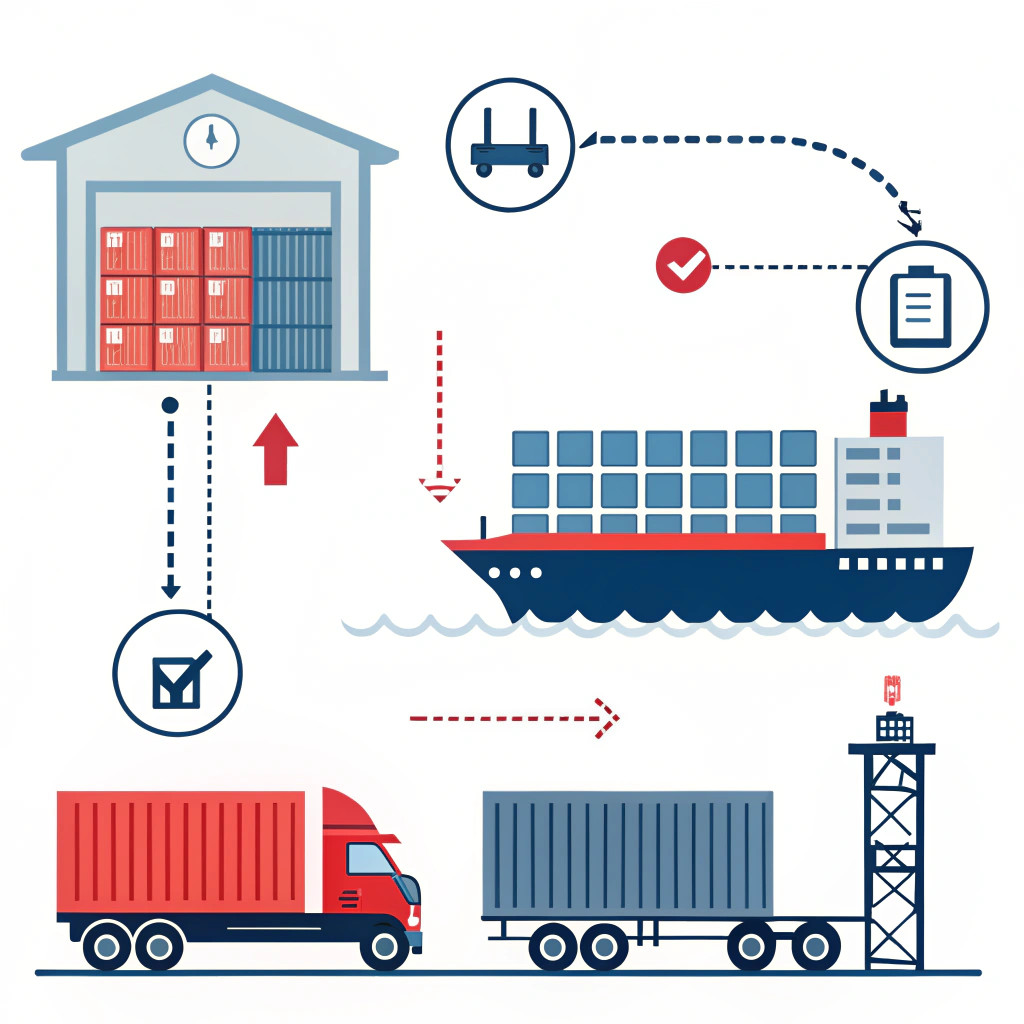
Incoterms 2020 are international trade rules published by the ICC that define who pays for which parts of freight, who handles customs, and where the risk transfers from seller to buyer. For importers from China, the most used terms are EXW, FCA, FOB, CFR/CIF, DAP, and DDP. In short: EXW puts almost everything on the buyer; FOB splits at the loading port; CIF includes ocean freight and basic insurance to destination port; DAP delivers to your site but you handle import duties/taxes; DDP delivers to your site with the seller handling import duties/taxes. Use the chart below to see costs, risks, and responsibilities at a glance.
Problem: avoid surprise costs and delays when importing from China
If you have ever been hit by unexpected destination charges, argued over who books export customs in China, or discovered your goods were uninsured during a port strike, you have faced the consequence of unclear Incoterms use. The goal is simple: pick the right term, name the place precisely (e.g., FOB Yantian, Incoterms 2020), and document who does what. Done right, you reduce landed cost variance and delivery risk.
Why confusion happens
- Incoterms are delivery terms, not full contracts. They do not set ownership, payment terms, or remedies for breach. They only allocate transport-related obligations, costs, and the risk transfer point.
- Mode matters. Some terms fit sea/inland waterway only (FAS/FOB/CFR/CIF). Others are multimodal (EXW, FCA, CPT, CIP, DAP, DPU, DDP).
- Containerized shipments need care. For FCL/LCL1, FCA often works better than FOB because risk passes when the carrier takes charge, not “on board” where you have less control before loading.
Your quick chart: who pays and where risk transfers (Incoterms 2020)
Note: “Seller” = your supplier in China; “Buyer” = you. “Export clr.” and “Import clr.” mean customs clearance. Insurance refers to cargo insurance. Risk point = when loss/damage risk moves from seller to buyer.
| Incoterm | Mode | Risk transfer point (delivery) | Export clr. | Origin charges | Main carriage | Insurance | Import clr. | Duties & taxes | Final delivery |
|---|---|---|---|---|---|---|---|---|---|
| EXW [Named place] | Any | When goods are placed at seller’s premises, ready for pickup | Buyer | Buyer | Buyer | Buyer | Buyer | Buyer | Buyer |
| FCA [Named place] | Any | When seller hands goods to buyer’s carrier at named place | Seller | Seller to handover point | Buyer | Buyer | Buyer | Buyer | Buyer |
| FOB [Port of loading] | Sea/Waterway | When goods are on board at the loading port | Seller | Seller | Buyer | Buyer | Buyer | Buyer | Buyer |
| CFR [Port of destination] | Sea/Waterway | On board at loading port (same as FOB) | Seller | Seller | Seller | Buyer | Buyer | Buyer | Buyer |
| CIF [Port of destination] | Sea/Waterway | On board at loading port (same as FOB) | Seller | Seller | Seller | Seller (minimum) | Buyer | Buyer | Buyer |
| CPT [Named place of destination] | Any | When goods handed to first carrier | Seller | Seller | Seller | Buyer | Buyer | Buyer | Buyer (unless named place = final site) |
| CIP [Named place of destination] | Any | When goods handed to first carrier | Seller | Seller | Seller | Seller (higher cover) | Buyer | Buyer | Buyer |
| DAP [Named place of destination] | Any | When goods are ready for unloading at named place | Seller | Seller | Seller | Seller | Buyer | Buyer | Seller |
| DPU [Named place] | Any | When goods unloaded at named place | Seller | Seller | Seller | Seller | Buyer | Buyer | Seller (includes unloading) |
| DDP [Named place of destination] | Any | When goods are ready for unloading at named place | Seller | Seller | Seller | Seller | Seller | Seller | Seller |
Key notes:
- CIF requires the seller to buy at least basic insurance (Institute Cargo Clauses C2). CIP requires higher cover (ICC A)—relevant if you consider those terms.
- For container shipments, FCA is often safer than FOB to avoid gaps before the container is loaded.
- Always write “Incoterms 2020” after the term and precisely name the place/port.
Plain-English definitions for buyers (focus on China exports)
-
EXW (Ex Works, seller’s premises)
- Risk transfer: when goods are made available at the seller’s site in China.
- Seller: packs and makes goods available.
- Buyer: all transport, export customs in China, insurance, import clearance, duties, delivery.
- Use when: you control everything in China; you have a strong local forwarder. Beware: arranging export clearance as a foreign buyer can be complex in China.
-
FCA (Free Carrier, named place—factory gate, forwarder’s warehouse, or port terminal)
- Risk transfer: when goods are handed to your nominated carrier at the named place.
- Seller: export customs in China, delivers to handover point.
- Buyer: main carriage, insurance, import clearance, duties, delivery beyond named place.
- Use when: containerized cargo; you want control over main freight and insurance without FOB’s “on-board” risk gap.
-
FOB (Free On Board, named port of loading)
- Risk transfer: once goods are on board the vessel at, e.g., Yantian/Shanghai/Ningbo.
- Seller: export customs and origin charges up to loading on board.
- Buyer: ocean freight, insurance, destination charges, import clearance, duties, onward delivery.
- Use when: traditional sea FCL; your forwarder controls main freight. Avoid for LCL/terminal handovers.
-
CFR (Cost and Freight, destination port)
- Risk transfer: same as FOB (on board at loading port).
- Seller: pays ocean freight to destination port.
- Buyer: bears risk during voyage; handles insurance if needed; pays destination charges, customs, duties, last mile.
- Use when: supplier has strong ocean rates but you manage risk.
-
CIF (Cost, Insurance, and Freight, destination port)
- Risk transfer: on board at loading port (like FOB/CFR).
- Seller: pays ocean freight and basic insurance to destination port.
- Buyer: destination charges, customs, duties, last mile. Consider topping up insurance if cargo is high value.
-
DAP (Delivered At Place, named final site)
- Risk transfer: when goods arrive at your site/warehouse, ready for unloading.
- Seller: main freight, export clearance, destination delivery.
- Buyer: import customs, duties and taxes.
- Use when: you want delivery to door but keep control of taxes.
-
DDP (Delivered Duty Paid, named final site)
- Risk transfer: when goods arrive at your site, ready for unloading.
- Seller: everything including import customs and duties/taxes.
- Buyer: just receives goods.
- Use when: you need a landed-cost, tax-included quote and a single responsible party. Confirm that the seller or their forwarder can legally act as the importer of record3 in your country.
Real-world shipping examples from China
- FOB Shenzhen (Yantian) to Los Angeles, FCL 1x40HQ
- Contract line: “FOB Yantian, Incoterms 2020”
- Seller: books export clearance and terminal handling in Shenzhen; loads container to vessel; risk passes once “on board.”
- Buyer: books ocean freight to Los Angeles/Long Beach, insurance, pays destination THC4, customs entry, duties (e.g., Section 301 tariffs if applicable), drayage to your DC in Ontario, CA.
- Why choose: control of main carriage and visibility of schedule; competitive US-side logistics.
- FCA Ningbo (seller delivers to buyer’s forwarder’s CFS), LCL to Hamburg
- Contract line: “FCA, Buyer’s forwarder CFS, Ningbo, Incoterms 2020”
- Seller: clears export in China, trucks to your forwarder’s CFS, risk passes at handover to your carrier.
- Buyer: consolidates LCL, books ocean freight, insurance, destination handling, EU customs, duties, final delivery.
- Why choose: for LCL, FCA avoids who-pays-THC disputes common with FOB LCL.
- CIF Shanghai to Felixstowe, FCL 1x20
- Contract line: “CIF Felixstowe, Incoterms 2020”
- Seller: books sea freight and basic insurance to Felixstowe; risk passed at Shanghai on board.
- Buyer: manages destination THC, UK import clearance, VAT/duties, haulage to Midlands.
- Watch-out: ensure you receive the insurance policy/certificate and it covers likely risks; upgrade cover if needed.
- DAP Paris (air), two pallets of electronics
- Contract line: “DAP Paris 75013, Incoterms 2020”
- Seller: exports in China, books air freight PVG–CDG, pre-alerts, delivers to your site in Paris.
- Buyer: acts as importer, pays duties/VAT, provides EORI5 and documents.
- Why choose: speed and convenience while keeping tax control in-house.
- DDP Amazon FBA ONT8 (USA), 5 CBM small parcels
- Contract line: “DDP Amazon ONT8, Incoterms 2020”
- Seller/their forwarder: handles export, air/express or sea-air, US import, duties/taxes, appointment and delivery to FBA.
- Buyer: sets labeling and prep standards; receives inbound at FBA.
- Watch-out: verify who is the US importer of record; ensure proper customs valuation to avoid compliance issues.
FOB vs CIF: which is better for importers from China?
- Control and transparency: FOB wins. You (or your forwarder) choose carrier, routing, and service level. You see real freight costs.
- Cash flow: CIF can seem cheaper upfront because the seller bundles ocean freight and basic insurance. But destination charges are yours, and risk still passes at loading port.
- Risk: Under FOB, you can tailor insurance to cargo value. Under CIF, insurance level may be minimum unless you negotiate higher cover.
In short: If you have a capable forwarder, FOB (or FCA) often gives better control and predictable landed costs. Use CIF only when the seller’s route and insurance meet your standards and you have visibility on destination fees.
DAP vs DDP: where taxes live
- DAP: seller delivers to your site; you clear customs and pay duties/taxes. Good for tax governance, especially if you reclaim VAT.
- DDP: seller clears import and pays duties/taxes. Great for simplicity, but confirm importer-of-record capability and correct tax treatment to avoid post-entry audits or blocked VAT reclaim.
EXW vs FCA (China reality)
- EXW looks simple but pushes export clearance to the buyer. In China, many foreign buyers cannot file export customs directly. Your forwarder must use an exporter of record or your supplier must export on your behalf.
- FCA solves this: the seller handles export clearance and hands over to your carrier—clean and compliant.
How to choose your Incoterm: a quick decision guide
- You want full control and already have a forwarder: choose FOB for FCL sea, FCA for LCL/air.
- You want the seller to arrange main freight but you handle taxes: choose CFR/CIF (sea) or CPT/CIP (air/rail).
- You need door delivery with minimal internal work: choose DAP.
- You need a tax-included landed cost and one responsible party: choose DDP (after compliance checks).
Negotiation tips with suppliers
- State the term precisely: “FOB Ningbo, Incoterms 2020” (never just “FOB China”).
- Ask for two quotes: FOB price and DAP/DDP price. Compare landed costs with your own forwarder’s rate.
- Clarify documents: commercial invoice, packing list, HS codes, country of origin, and for sea shipments a negotiable or express bill of lading as needed.
- For CIF/CIP: specify the insurance clauses (e.g., ICC A) and insured value (110% of CIF value is common).
What Incoterms do not cover (know the limits)
- Not a sales contract: they do not set price, payment terms, or transfer of title.
- No performance penalties: they don’t cover late delivery penalties or liquidated damages.
- Not compliance guarantees: export licenses, sanctions screening, and product certifications are your contract’s job, even if tied to delivery obligations.
- Demurrage and detention: Incoterms allocate who is responsible for delivery stages; your contract should clarify time limits and who pays storage/demurrage/detention if delays occur.
- Packaging and marking standards: not specified—set them explicitly.
The freight forwarder’s role and key documents
- Origin (China):
- Booking with carrier, pickup, export customs declaration, VGM (for sea), export licenses if needed.
- Documents: commercial invoice, packing list, export declaration, certificate of origin (if required), bill of lading/air waybill.
- In transit:
- Tracking, exceptions handling, insurance claims support if loss/damage happens after risk passes to you.
- Destination:
- Arrival notice, customs entry (broker), duty/tax payment method, delivery appointment, POD.
Tip: keep the risk transfer point in mind when deciding who buys insurance. If risk passes early (EXW/FCA/FOB), make sure your own policy is in place before pickup/handover.
Sample clause and RFP checklist
Sample clause
- “Delivery term: FOB Ningbo, Incoterms 2020. Seller shall complete export customs clearance. Buyer to nominate the ocean carrier and receive an onboard bill of lading. Title transfer and payment terms as per Sales Agreement Section X.”
RFP checklist for suppliers/forwarders
- Incoterm + precise named place + “Incoterms 2020”
- What’s included in price: origin THC, documentation fee, pick-up, palletizing, fumigation, etc.
- Who handles export customs in China and what documents are needed
- Mode and service: FCL/LCL, air service level, rail lead times
- Insurance: who buys it, coverage (ICC A/B/C), insured value
- Destination: expected THC, brokerage, duties/taxes (if DDP), delivery to which address
- Free time at port/terminal and storage policies
- Exception handling: roll-overs, force majeure, delays
Data and reality check (Incoterms 2020 highlights)
- Published by the International Chamber of Commerce (ICC) and widely adopted worldwide.
- Changes from 2010 to 2020 that matter for buyers:
- Higher default insurance under CIP than under CIF.
- FCA option for onboard notation on bills of lading (to support LC payments).
- Clearer security-related obligations.
- Practical takeaway: mark your contracts “Incoterms 2020” to avoid legacy interpretations.
Summary: choose terms that fit your control and compliance appetite
- If you want control and cost transparency: FOB (sea FCL) or FCA (air/LCL).
- If you want convenience without tax handling: DAP.
- If you want fully landed, single party responsible: DDP—after importer-of-record checks.
- If supplier bundles freight: check CIF/CFR pricing against your forwarder’s quote and validate destination costs and insurance coverage.
When in doubt, ask your forwarder to model two landed-cost scenarios (e.g., FOB vs DAP) using your actual lanes, HS codes, and weights. A one-page comparison will usually reveal the best-fit Incoterm for your shipment profile.
People Also Ask
-
What are the 11 Incoterms 2020?
The 11 Incoterms 2020 are EXW, FCA, FAS, FOB, CFR, CIF, CPT, CIP, DAP, DPU, and DDP. FOB/CFR/CIF are for sea/inland waterway only; the rest are multimodal. Always state the named place/port and “Incoterms 2020” in contracts. -
Is FOB or CIF better when importing from China?
FOB usually gives importers better control and transparency because you choose the carrier and insurance. CIF can be convenient, but risk still transfers at the loading port and the seller’s insurance is often minimum. Compare total landed costs and insurance coverage before deciding. -
What is the difference between DAP and DDP?
Under DAP, the seller delivers to your site but you handle import clearance and pay duties/taxes. Under DDP, the seller handles import clearance and pays duties/taxes, delivering goods ready for unloading. DDP is simpler but requires the seller (or their agent) to act as importer of record compliantly.
-
FCL/LCL: Reading will help you decide between Full Container Load and Less-than-Container Load, understanding impacts on cost, transit time, consolidation, and where risk/control handovers occur. ↩
-
Institute Cargo Clauses C: Reading will clarify the coverage and exclusions of ICC Cargo Clauses C, when minimum insurance is insufficient, and how/when to upgrade to broader A/B cover under CIF/CIP. ↩
-
importer of record: Reading will explain legal responsibilities, compliance requirements, and how to appoint an IOR to avoid customs holds, tax misreporting, and liability issues under DDP or door deliveries. ↩
-
THC: Reading will define Terminal Handling Charges, how they are applied at origin/destination, why they often appear as surprise fees under CIF/FOB, and how to forecast and negotiate them. ↩
-
EORI: Reading will explain the EU Economic Operators Registration and Identification number, how to obtain and use it for customs clearance, and how it prevents delays and penalties on EU imports. ↩