Skip to content
OEM vs. ODM (quick answer)
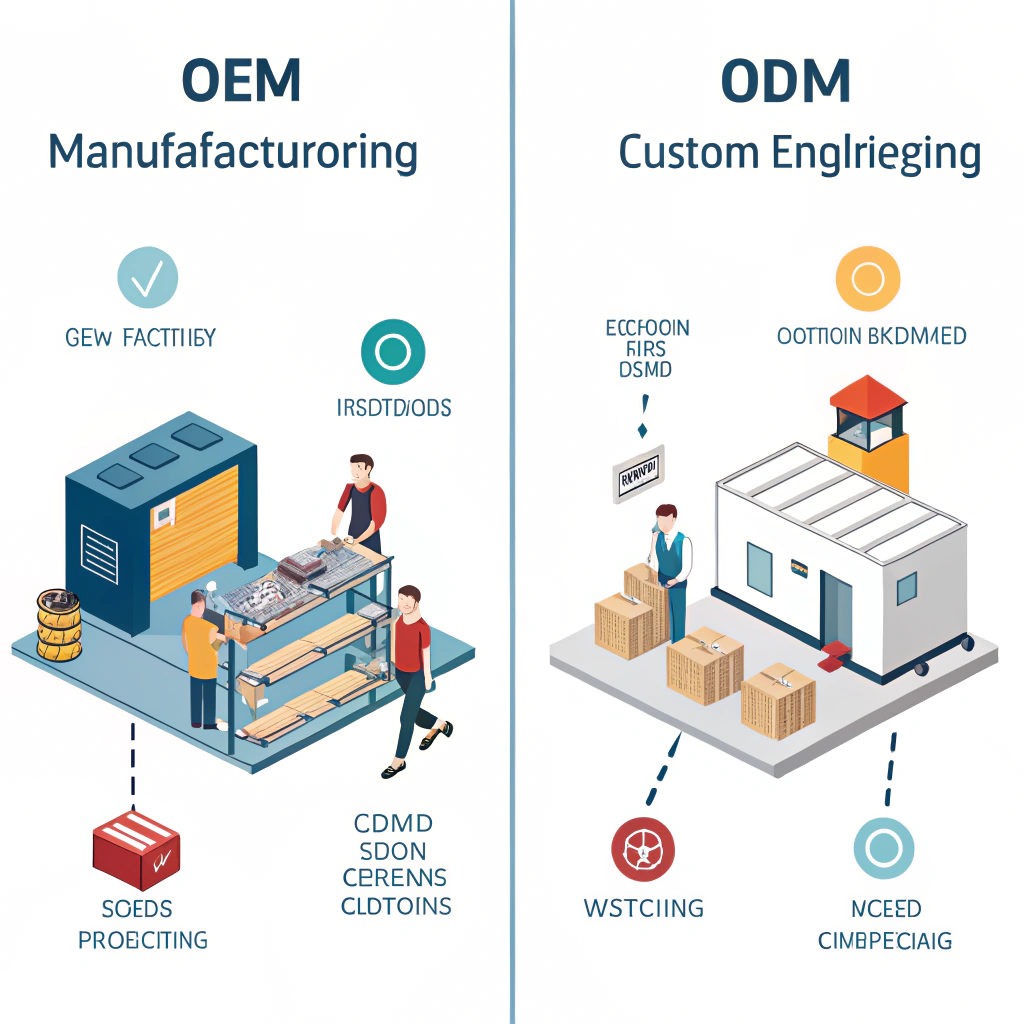
OEM means you bring the design and specifications, and the factory manufactures to your requirements. You get more control, uniqueness, and IP ownership, but pay higher upfront costs (tooling, engineering) and face longer development. ODM means the factory owns the base design; you brand it with limited changes. You get faster launch and lower upfront costs, but have less control and greater risk of product sameness. For logistics, OEM often involves custom parts, packaging engineering, and “assists1” (tooling) that can affect customs valuation; ODM tends to have lower MOQs and simpler, standardized packing, which reduces freight complexity. Choose OEM for differentiation and long-term value; choose ODM for speed-to-market and budget sensitivity.
The decision you are actually making
If you’re sourcing from China, your dilemma is not just “OEM vs. ODM.” It’s “How much control do I need over design and IP versus how fast and cheaply do I need to land units?” That trade-off flows into everything else: tooling budgets, minimum order quantity (MOQ), testing, packaging, HS code2, shipping mode, and finally your landed cost and margin. Below is a clear, procurement-ready way to evaluate the two models—with the downstream freight and customs implications you need to plan for.
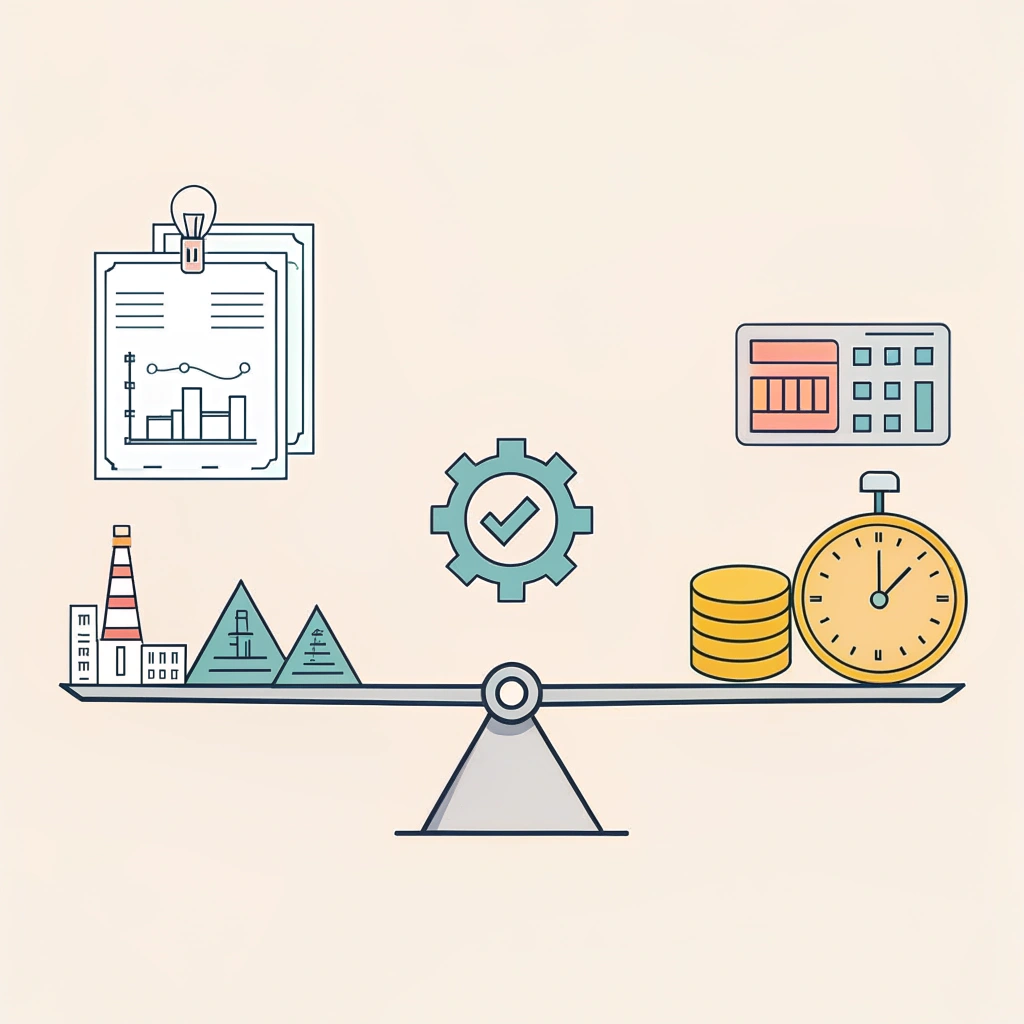
OEM vs. ODM at a glance
- OEM (Original Equipment Manufacturer): You own the design, the specifications, and often the tooling. The factory executes your design under a manufacturing services agreement. Best for differentiated products, performance-critical categories, and when you want to build long-term brand equity.
- ODM (Original Design Manufacturer): The factory owns the base design and offers a catalog (sometimes called a “platform”) you can customize—logos, colors, minor components. Often marketed as private label manufacturing or white label products with optional tweaks. Best for entering a category quickly and testing demand.
Side-by-side comparison with logistics impact
Below is a practical comparison including design control, cost drivers, quality, and shipping/customs considerations.
| Dimension | ODM (you brand their design) | OEM (they make your design) | Freight & Customs Implication |
|---|---|---|---|
| Design ownership | Factory owns base design; you get branding and minor changes | You own drawings, BOM, firmware, and final design | OEM docs drive HS code precision; ODM may default to broader categories |
| Upfront cost (tooling/NRE3) | Low to medium; small fixture costs; no major molds in many cases | Medium to high: molds, dies, jigs, engineering hours | Tooling provided by buyer may count as “assists” in customs value; budget compliance |
| MOQ | Lower on standard SKUs; higher if you request custom colors/materials | Often higher because they must set up lines for your spec | ODM easier to consolidate across SKUs for full-container optimization |
| Lead time | Shorter: 2–6 weeks after sample approval | Longer: 8–20+ weeks including tooling and pilot runs | OEM timelines may push you toward air for first drop; plan buffer |
| IP risk | Moderate: similar products sold to others | Lower if contracts are tight; still enforce with NNN4 | ODM changes may be too cosmetic to differentiate in customs audits and marketplaces |
| Quality risk | Lower variance on mature SKUs | Higher early variance during ramp-up | More QC steps for OEM (FAI, PPAP-like gates) add time but reduce rework |
| Unit cost | Slightly higher than factory’s baseline but no amortized tooling | Unit cost can be lower at volume; upfront amortized | OEM packaging right-sizing can reduce dimensional weight |
| Certification | Often pre-tested for basic compliance; verify documents truly match your exact SKU | You must own test plans and certificates | OEM requires early budgeting for lab tests and country-specific labels |
| Change flexibility | Limited to cosmetic and minor functional tweaks | Full control; changes require ECOs and may reset certifications | Change means new HTS rationale or battery test updates; plan with forwarder |
| Supplier leverage | You depend on factory’s platform road map | Factory depends on your design business | OEM: negotiate mold ownership/custody and spare tooling |
| Pricing transparency | Bundled pricing; less visibility into BOM | Line-item BOM, labor, overhead, margin | Transparent BOMs help accurate landed cost forecasting |
Key term highlights:
- ODM: factory-owned designs, faster launch.
- OEM: contract manufacturing of your design, more control.
- Private label manufacturing: often ODM with branding.
- White label products: stock ODM with minimal or no customization.
How the choice changes your landed cost
Your real comparator is not ex-works unit price; it’s landed cost. That includes product + packing + ocean/air + insurance + duty/taxes + last-mile + any compliance/testing.
Key terms at first mention:
- Minimum order quantity (MOQ): the smallest number of units the factory will produce.
- Lead time: time from deposit or PO to goods ready for shipment.
- FOB: Free On Board—supplier handles export clearance and delivers goods onboard vessel at the named port.
- EXW: Ex Works—buyer picks up from factory; you handle everything else domestically and abroad.
- DDP: Delivered Duty Paid—seller/forwarder quotes door delivery including duty/tax; you should verify compliance.
- Landed cost: total cost per unit at your warehouse.
Illustrative example (not a quote)
| Cost component (per unit) | ODM Scenario | OEM Scenario | Notes |
|---|---|---|---|
| Factory price | $6.50 | $5.80 | OEM lower at volume; ODM includes platform margin |
| Tooling amortization | $0.00 | $0.40 | OEM $20,000 molds amortized over 50,000 units |
| Packaging | $0.30 | $0.20 | OEM right-sizing reduces dimensional weight |
| Ocean freight allocation | $0.45 | $0.38 | OEM packs denser; container utilization improves |
| Duty + taxes | $0.98 | $1.05 | Different HS codes or assists may change customs value |
| Destination drayage + final mile | $0.25 | $0.25 | Similar if same warehouse and volumes |
| Quality inspections | $0.06 | $0.10 | More gates for OEM during ramp-up |
| Compliance testing | $0.02 | $0.08 | OEM needs full certification plan |
| Estimated landed cost/unit | $8.56 | $8.86 (first runs) | OEM often higher early; may drop below ODM at scale |
Why the swing?
- ODM usually ships quicker with standard packing, but can carry higher unit price and duty if HS classification ends up less favorable.
- OEM can engineer cost out (materials, packing density) and reduce freight per unit, but has one-off costs and complexity early on.
Compliance note: If you provide molds, patterns, or components free of charge or at a reduced price, many customs authorities treat them as assists and may require their value to be added to the customs value. Work with your broker to disclose correctly and avoid penalties.
Workflow: what changes in manufacturing and logistics
ODM workflow
- Inquiry: Select a platform SKU; request cosmetic changes (color, logo) and accessory bundle.
- Sampling: Factory sends standard sample; small fee; 1–2 rounds.
- Contract: Private label agreement; branding rights; optional market exclusivity (SKU- or region-specific).
- Production: Short lead time; QA on a mature line.
- Logistics: Standard cartons fit existing pallet patterns; easier consolidation across multiple SKUs.
OEM workflow
- RFQ package: Your drawings, BOM, performance specs, tolerances, packaging specifications, certifications required.
- Prototyping: EVT/DVT/PVT5 or similar gating; pilot run.
- Tooling: Molds/jigs fabricated; T0/T1 iterations.
- Contract: Manufacturing services agreement with IP clauses; mold ownership and custody; NNN and no-redistribution commitments.
- Quality control: Incoming inspection for critical components, in-process checks, pre-shipment inspection (AQL), and golden samples.
- Logistics: Custom packaging specs; labelling; possibly different HS codes. More careful booking windows and buffer time. Consider split shipments (air for launch, ocean for replenishment).
Where your forwarder adds value
- Pack density optimization: Engineer carton sizes to standard pallets to reduce dimensional weight for air and improve CBM utilization for ocean.
- Mode mix planning: Air for launch quantities, ocean for replenishment; lock space during peak season.
- Compliance gating: Lithium batteries (UN38.3), hazardous materials classification, textile fiber/content labels, country-of-origin marks.
- Customs planning: HS code validation, assists valuation, related-party pricing if applicable, PGA filings (e.g., FDA for devices, FCC for radios).
- Consolidation: Merge-in-transit of ODM SKUs from multiple suppliers; fewer entries, lower fixed customs costs per PO.
Negotiation levers for each path
ODM
- Exclusivity: Ask for region- or channel-specific exclusivity for a specific model/SKU and a realistic annual volume commitment.
- Change requests: Lock approved cosmetic changes in a specification sheet; avoid surprises that reset MOQs.
- Certification scope: Verify test reports match your exact configuration; ask for fresh tests if you change materials or add accessories.
- Pricing tiers: Tie price breaks to cumulative purchase volume rather than single large POs.
OEM
- Tooling terms: Define ownership, custody location, maintenance responsibility, and end-of-life disposal or return rights. Ban use of your tooling for third parties.
- NRE amortization: Separate NRE from unit price; set a clear amortization schedule and “sunset” after a threshold volume.
- Engineering change control: Require ECO sign-off, impact analysis on cost and certification, and cut-in dates.
- Spare tools: For critical parts, negotiate a backup mold to mitigate downtime and peak-season risk.
MOQ, lead time, and quality control you can expect
- ODM MOQs: Often 200–1000 units per SKU with cosmetic changes; can go higher for custom colors/materials. Lead time 2–6 weeks post-approval.
- OEM MOQs: Driven by process (injection molding, die-casting, PCBA) and component MPQs. Expect 1000–5000+ units for launch. Lead time 8–20+ weeks including tooling and pilot builds.
- Quality control (QC): For ODM, a pre-shipment inspection might suffice on stable SKUs. For OEM, add First Article Inspection (FAI), in-line process checks, and a stricter AQL early to catch ramp issues. Budget for extra inspection days.
Incoterms and freight strategy that fit each model
- EXW works when you have strong local pickup and export clearance support; risk is hidden factory-handling fees and export paperwork delays. Good for experienced importers with a trusted forwarder in China.
- FOB balances risk: supplier clears export and delivers to port; you control the main leg. This is the most common for both ODM and OEM.
- DDP can be attractive for cost predictability, but make sure the provider declares full value, uses your correct HS codes, and includes duties and taxes legitimately. Non-compliant DDP can create seizure and brand risk.
Practical tips
- For ODM first runs, FOB is often best: predictable main leg pricing, simple paperwork.
- For OEM pilots, consider FCA/FOB with partial air freight for schedule-critical samples and first units. Then switch to ocean once defects are ironed out.
- Lock carton specs early. Small changes in size/weight can push you into different air freight tiers or reduce ocean container fill from 95% to 80%, eroding margin.
IP and brand protection
- Intellectual property (IP) clarity: In OEM, your design and foreground IP should be yours; the factory’s pre-existing (background) IP remains theirs. Spell this out.
- NNN agreement: Non-disclosure, non-use, non-circumvention signed before sharing drawings or BOMs.
- Mold tagging and storage audit: Physically tag tooling with your company and tool number; audit storage location; photo evidence in every inspection report.
- Market monitoring: Track marketplaces for lookalikes. In ODM, expect similar listings; negotiate SKU-specific changes that are visible and enforceable (e.g., unique enclosure with your logo molded in, not printed).
- Recordal: Where relevant, record trademarks with customs to aid border enforcement.
When to choose ODM vs. OEM
Choose ODM if:
- You are validating a new market or channel and need speed-to-market within 4–8 weeks.
- Differentiation is mostly branding, packaging, and service.
- Category is standardized (kitchen gadgets, simple electronics without firmware changes, textiles).
- You need lower MOQs and want to consolidate multiple SKUs quickly for a trial launch.
Choose OEM if:
- Performance, safety, or brand value depends on unique design or firmware.
- You plan to scale and can amortize tooling over volume.
- You want control over BOM for cost-down, redundancy, and compliance.
- You can invest in a 3–6 month development cycle and staged logistics.
Common pitfalls to avoid
- Treating ODM as “instant compliance”: If you change materials or add a battery/accessory, you may need new tests and new HS classification.
- Forgetting assists in customs value: Free tooling/components can trigger under-valuation penalties.
- DDP without transparency: If duties seem “too low,” your shipments—and reputation—carry risk.
- Underestimating packaging: Ignoring carton optimization can add 10–20% to your freight bill.
- Skipping pilot inspections in OEM: Early defects multiply across POs and returns.
Action checklist (sourcing + logistics)
- Define your product strategy: ODM for speed or OEM for differentiation. Write it down as a one-pager.
- Request quotes under the same Incoterm (preferably FOB) from all suppliers to compare apples-to-apples.
- For OEM, issue an RFQ pack: drawings, BOM, tolerances, compliance requirements, packaging specs.
- For ODM, request market exclusivity terms where commercially feasible.
- Lock QC plan: AQL levels, inspection points (in-line, pre-shipment), and golden sample custody.
- Confirm compliance: HS code pre-classification, required certifications, labeling, battery/chemicals declarations.
- Align packaging with freight: carton dimensions, pallet patterns, barcode/label position, drop-test requirements.
- Decide mode mix: target air vs. ocean % for the first three POs; book capacity early in peak seasons.
- Address assists: If you supply tooling or parts, align on valuation and customs disclosure with your broker.
- Build a landed cost model: include unit price, NRE amortization, freight, duty/tax, inspections, testing, and last mile.
Summary
The operational truth is simple: ODM buys you time and reduces early cash outlay, but limits differentiation. OEM buys you control and long-term margin potential, at the cost of time, complexity, and upfront investment. Both paths can be profitable—if you plan your manufacturing workflow and logistics together. Choose the path that best matches your product strategy and cash cycle, then lock in contracts, QC, packaging, and a compliant freight plan to protect your margins all the way to your warehouse.
People Also Ask
- No additional PAA questions were provided for this article.
-
assists: Learn how tooling, molds, or components you provide can increase customs value, how to disclose them properly, and how this affects duty and landed-cost calculations to avoid penalties. ↩︎ ↩
-
HS code: Understand tariff classification rules to get correct duty rates, anticipate documentation requirements, and reduce reclassification risk during audits and inspections. ↩︎ ↩
-
NRE: Non-recurring engineering costs—learn what’s included, how to budget and amortize them, and how to negotiate terms separate from unit price to protect margins. ↩︎ ↩
-
NNN: Non-disclosure, non-use, non-circumvention agreements common in China—see how they differ from NDAs, key clauses to include, and enforcement considerations to protect your IP. ↩︎ ↩
-
EVT/DVT/PVT: The standard hardware development gates—learn what each stage tests, how to set exit criteria, and how to tie samples to QC and certification to de-risk ramp-up. ↩︎ ↩