Skip to content
A quick answer: The top 10 global freight forwarders that consistently dominate the USA–Asia trade lane with owned branches across Asia are DHL Global Forwarding, Kuehne + Nagel, DSV, DB Schenker, Expeditors, UPS Supply Chain Solutions, FedEx Logistics, CEVA Logistics, Sinotrans, and Nippon Express (NX). They combine deep Asia origin coverage, strong ocean FCL/LCL and air express programs, brokerage, and warehousing/transloading in US gateways. For most importers, shortlist three to five from this list based on your specific origins (China/SE Asia/Japan/Korea/India), service mix (ocean vs. air), e‑commerce/FBA needs, and required visibility/integration, then run trial shipments to validate transit time and reliability.
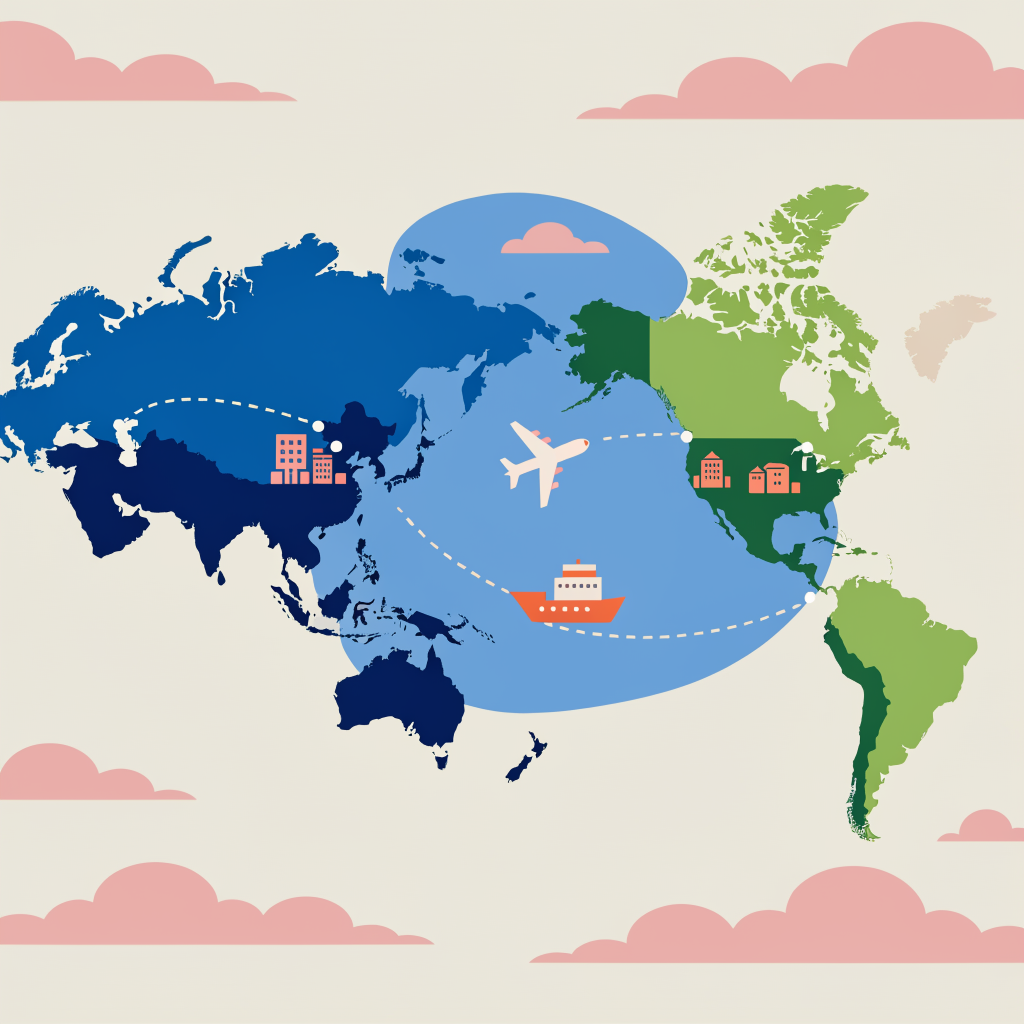
Why “owned branches across Asia” matter for USA trade
- Owned branches reduce handoffs: Fewer intermediaries between your factory and the US gateway cut delays and miscommunication.
- Unified SOPs and IT: A single transpacific freight forwarder1 with standardized processes and systems improves visibility, milestone capture, and exception handling.
- Contract leverage: Large forwarders pool volume to get space protection with liners and airlines, critical during peak seasons.
- Customs risk control: Integrated customs brokerage services2 and pre‑clearance routines lower compliance issues and demurrage.
However, an owned‑branch network is not a guarantee of speed or cost. You still need to match the forwarder’s strengths to your origin mix, cargo profile, and seasonality.
A ranked overview of the top 10
- DHL Global Forwarding
- Footprint: Extensive owned Asian branches across China, Hong Kong, Taiwan, Korea, Japan, ASEAN, and India.
- Service mix: Strong ocean freight FCL/LCL, robust air freight capacity, pharma and temperature‑controlled capabilities, and mature brokerage and warehousing.
- Notable: Deep visibility tools, reliable during peak with breadth of carrier contracts.
- Kuehne + Nagel (K+N)
- Footprint: Broad Asia coverage with strong China/SE Asia presence.
- Service mix: Well‑balanced ocean and air, advanced automation and analytics, integrated consolidation services.
- Notable: High consistency on standard lanes; strong NVOCC3 relationships.
- DSV (incl. former Panalpina)
- Footprint: Comprehensive Asia network, heavy China and India presence.
- Service mix: Competitive air charters, solid ocean programs, integrated customs and warehouse solutions.
- Notable: Known for scalable capacity solutions during disruptions.
- DB Schenker
- Footprint: Pan‑Asia coverage including China, Japan, Korea, ASEAN, India.
- Service mix: Full‑suite door‑to‑door logistics4 with strong contract management and end‑to‑end SOP control.
- Notable: Good project cargo and industrial vertical expertise.
- Expeditors
- Footprint: Owned offices across Asia with tight operational control; asset‑light but fully controlled network.
- Service mix: Strong air and ocean, meticulous compliance, high‑quality warehousing and transloading in the USA.
- Notable: Exceptional documentation discipline and exception management.
- UPS Supply Chain Solutions
- Footprint: Extensive Asia presence tied to integrator networks.
- Service mix: Air priority programs, competitive ocean, brokerage, and global 3PL options.
- Notable: Seamless ties to small‑parcel for omnichannel and FBA and e‑commerce logistics workflows.
- FedEx Logistics
- Footprint: Asia branches integrated with FedEx express infrastructure.
- Service mix: Air express and deferred options, ocean NVOCC services, customs and distribution.
- Notable: Speed and appointment management for retail/e‑commerce, strong returns logistics.
- CEVA Logistics (CMA CGM Group)
- Footprint: Growing Asia network, strong China and SE Asia footprints.
- Service mix: Ocean capacity synergies via CMA CGM, competitive LCL, inland and contract logistics.
- Notable: Good for programs blending ocean, transloading, and domestic distribution.
- Sinotrans
- Footprint: Deep China coverage with owned branch dominance; regional Asia offices plus US gateways.
- Service mix: Strong origin consolidation, cost‑effective ocean programs, customs and documentation strength at China origin.
- Notable: Advantageous for multi‑supplier consolidation services in China/HK.
- Nippon Express (NX)
- Footprint: Very strong Japan, solid Korea and SE Asia; China coverage via owned offices.
- Service mix: Reliable air and ocean with focus on automotive, electronics, and high‑tech cargo care.
- Notable: High performance on Japan→USA lanes; dependable SOP control.
Comparison table: footprint, services, and typical transit times
| Company | Asia owned branches (selected) | Primary US gateways | Ocean (FCL/LCL) | Air freight | Warehousing/Transloading | Customs brokerage | E‑commerce/FBA | Typical China→USA Ocean (FCL/LCL) | Typical China→USA Air |
|---|---|---|---|---|---|---|---|---|---|
| DHL GF | CN, HK, TW, KR, JP, VN, TH, MY, SG, ID, PH, IN | LAX/LGB, SEA, SFO/OAK, HOU, NY/NJ, SAV/CHS | Strong contracts, reliable LCL | Broad capacity incl. pharma | Extensive in US & Asia | Mature | Yes | FCL 18–30 days door‑to‑door; LCL +2–6 days | 3–6 days door‑to‑door |
| K+N | CN, HK, KR, JP, VN, TH, MY, SG, ID, IN | LAX/LGB, SEA, SFO/OAK, NY/NJ, SAV | High reliability, global LCL network | Robust scheduled uplift | US hubs with value‑added | Strong | Yes | 18–30 days; add LCL consolidation time | 3–6 days |
| DSV | CN, HK, KR, JP, VN, TH, MY, SG, IN | LAX/LGB, SEA, ORD, JFK/EWR | Solid FCL/LCL capacity | Charter options in peak | US transload close to ports | Integrated | Yes | 18–30 days; LCL +2–6 days | 3–7 days |
| DB Schenker | CN, HK, KR, JP, VN, TH, MY, SG, IN | LAX/LGB, SEA, SFO, NY/NJ | Stable FCL; efficient LCL | Established uplift | US nationwide | Strong | Yes | 18–30 days; LCL + time | 3–6 days |
| Expeditors | CN, HK, KR, JP, VN, TH, MY, SG | LAX/LGB, SEA, SFO, JFK/EWR | Reliable FCL/LCL execution | Strong priority air | Tight SOP control US‑wide | Strong | Yes | 18–30 days; LCL +2–6 days | 3–6 days |
| UPS SCS | CN, HK, KR, JP, VN, TH, MY, SG, IN | LAX/LGB, SDF/ONT (air), NY/NJ | Competitive, space via contracts | Priority via integrator | Dense DC network | Strong | Yes | 18–30 days; LCL + time | 3–6 days |
| FedEx Logistics | CN, HK, KR, JP, VN, TH, MY, SG | LAX/ONT, MEM, JFK/EWR | NVOCC ocean options | Express/deferred | US DCs integrated | Strong | Yes | 18–32 days; LCL + time | 2–5 days |
| CEVA | CN, HK, KR, JP, VN, TH, MY, SG, IN | LAX/LGB, HOU, NY/NJ | Capacity synergies (CMA CGM) | Competitive uplift | US transload near ports | Strong | Yes | 18–30 days; LCL + time | 3–6 days |
| Sinotrans | CN dominant, HK, select Asia | LAX/LGB, NY/NJ | Cost‑efficient, strong origin conso | Solid uplift via partners | US gateways/partners | Strong | Yes | 18–34 days; LCL +2–6 days | 4–7 days |
| NX (Nippon Express) | JP, KR, CN, VN, TH | LAX/LGB, SEA, NY/NJ | Reliable, especially ex‑Japan | Consistent uplift | US warehousing for tech | Strong | Yes | 18–30 days; LCL + time | 3–6 days |
Notes:
- Transit times above are typical door‑to‑door (factory pickup to US delivery) for standard service under normal conditions. Seasonality, port congestion, chassis availability, drayage capacity, and customs holds can shift actuals.
- For LCL, add consolidation and deconsolidation time (usually 2–6 days total, depending on cutoffs and schedules).
- Air door‑to‑door typically includes 1–3 days for clearance and last‑mile, beyond flight time.
Owned branches vs. agent networks: pros and cons
- Pros of owned branches
- Unified control of SOPs, billing, and IT from Asia origins to US delivery.
- Faster resolution for exceptions (rollovers, AMS/ISF issues, exams).
- More predictable space allocation through consolidated contracts.
- Cons or tradeoffs
- Potentially higher overhead; rates may be less aggressive for price‑only procurement.
- Large forwarders may prioritize strategic accounts during extreme peak demand.
- Specific niche origins (smaller ports) can still benefit from highly specialized local agents.
If your supply base is concentrated in China to USA shipping, a forwarder with dozens of owned offices in mainland China plus Hong Kong often delivers better consolidation options, proactive VGM/SI control, and fewer delays.
How to shortlist for your RFP or pilot shipments
- Map your Asia origins: China (by province/port), Hong Kong, Taiwan, Korea, Japan, Vietnam, Thailand, Malaysia, Singapore, Indonesia, India. Weight the forwarder’s owned‑branch presence in each.
- Define service mix:
- Ocean freight FCL/LCL percentage, service strings (e.g., South China→LA, North China→Seattle, East China→NY/NJ).
- Air freight express lanes for urgent SKUs; target uplift windows and consolidation cutoffs.
- Warehousing and transloading needs near LAX/LGB, SEA, NY/NJ for DC bypass or merge‑in‑transit.
- Customs brokerage requirements: PGA filings, bonded moves, Section 321/DDP for e‑commerce.
- Validate reliability:
- Request historical on‑time delivery rate definitions (e.g., arrival within committed day range).
- Ask for route‑level performance by port pair (origin port → US gateway) over the last 6–12 months.
- Check coverage and cutoffs:
- Origin office addresses, weekly LCL sailing schedules, air consolidation cutoffs, IATA station codes.
- IT and visibility:
- Commercial structure:
- Space protection clauses, BCO/NVOCC carrier mixes, GRI/peak season surcharge handling, demurrage/detention escalation SOP.
Indicative performance and reliability ranges
- Ocean FCL door‑to‑door (China → West Coast): 18–26 days typical; 85–95% on‑time under normal conditions.
- Ocean LCL door‑to‑door (China → West Coast): 20–32 days typical; reliability varies with consolidation windows.
- Air door‑to‑door (China → West Coast): 3–6 days typical; 92–98% on‑time for priority services.
- East Coast routings add 5–10 days via Panama or intermodal rail.
Use these ranges to benchmark vendor proposals and to spot overly optimistic commitments.
Which forwarder fits which scenario?
- Cost‑optimized ocean programs with multi‑supplier consolidation (China‑dense origins)
- Consider Sinotrans, DHL GF, K+N, CEVA for robust LCL programs and tight origin control.
- Peak‑season air resilience and uplift certainty
- Consider DSV (charters), UPS SCS, FedEx Logistics, Expeditors for capacity and operational discipline.
- Complex compliance and PGA filings (food, chemicals, medical, electronics)
- Consider DB Schenker, Expeditors, DHL GF for meticulous customs brokerage routines.
- Japan/Korea high‑tech supply chains
- Consider Nippon Express (NX), K+N, DB Schenker for lane familiarity and SOP depth.
- Omnichannel and e‑commerce logistics with returns
- Consider UPS SCS, FedEx Logistics, Expeditors for parcel integrations and DC bypass workflows.
Commercial tradeoffs to consider
- Space priority vs. rate: Larger forwarders often secure space in tight markets but may hold rate discipline. Clarify your allocation and escalation rules in the contract.
- EDI/API integration costs: Advanced visibility may carry onboarding fees or IT effort; budget for it in your RFP.
- Demurrage/detention risk: Ask for forwarder SOPs to pre‑clear, schedule appointments, and manage chassis/yard constraints to protect landed cost.
- LCL cutoffs and frequency: Frequent sailings provide flexibility, but missing a cutoff can add a week; align production plans and origin pickups.
- Door‑to‑door vs. port‑to‑port: Door‑to‑door simplifies accountability (one provider), while port‑to‑port can be cheaper but increases handoffs and risk.

Recommended RFP questions and scoring approach
- Coverage and branches:
- List owned branches by city across China and SE Asia; provide headcount and capabilities per branch.
- Capacity and contracts:
- Detail liner and airline contract volumes on your target lanes; disclose space protection terms and roll‑over policies.
- Operations and SOPs:
- Provide standard operating procedures for ISF, AMS, customs exams, and demurrage prevention; share escalation matrix and 24/7 contacts.
- Visibility and data:
- Show sample milestone feeds; confirm API/EDI timelines; share track‑and‑trace dashboards.
- Performance:
- Provide last 12 months’ on‑time performance by lane; share average dwell and customs clearance times by gateway.
- Commercials:
- Quote FCL base rates by string, LCL per‑CBM, air per‑kg (priority/standard), accessorials, and surcharge handling.
Scoring matrix (example weights)
- Asia footprint and owned branches: 20%
- Ocean/air capacity and reliability: 25%
- Customs/warehouse capabilities: 20%
- Visibility and IT: 15%
- Pricing and commercial flexibility: 20%
Run two to three pilot shipments per lane (ocean FCL, ocean LCL, air priority) before finalizing awards.
Key takeaways
- Start with footprint alignment: Prioritize Asia owned branches where your suppliers sit.
- Validate service mix against actual needs: Balance ocean freight FCL/LCL, air freight, warehousing and transloading, and customs brokerage services.
- Use data to drive selection: Require route‑level performance, clear SOPs, and integration proof.
- Pilot before you scale: Confirm real transit times and reliability with live freight.
People Also Ask
Who are the top 3 global freight forwarders?
DHL Global Forwarding, Kuehne + Nagel, and DB Schenker are consistently ranked among the top global freight forwarders. They maintain extensive owned office networks across Asia, strong ocean and air capacity, and comprehensive customs and warehousing services, making them reliable choices for transpacific shipments.
-
Transpacific freight forwarder: Reading about this role helps you evaluate providers that manage end‑to‑end shipments from Asia origins to US gateways, including standardized SOPs, IT systems, and exception handling—improving visibility and reliability in your lane planning. ↩
-
Customs brokerage services: Learn how professional entry filing, classification, PGA coordination, and risk controls reduce delays, demurrage, and compliance exposure—and how integrating brokerage with forwarding streamlines your import workflow. ↩
-
NVOCC: Understand Non‑Vessel‑Operating Common Carriers, how their carrier contracts and consolidations affect space allocation, rates, and reliability, and why strong NVOCC ties matter for ocean performance. ↩
-
Door‑to‑door logistics: See how end‑to‑end service—from factory pickup to final delivery—simplifies accountability, tightens milestone control, and improves transit‑time predictability versus multi‑party handoffs. ↩
-
API/EDI: Explore data integration methods that connect your systems with a forwarder’s platforms to enable granular milestones, PO/carton tracking, and automation—plus typical onboarding steps and cost considerations. ↩