Skip to content
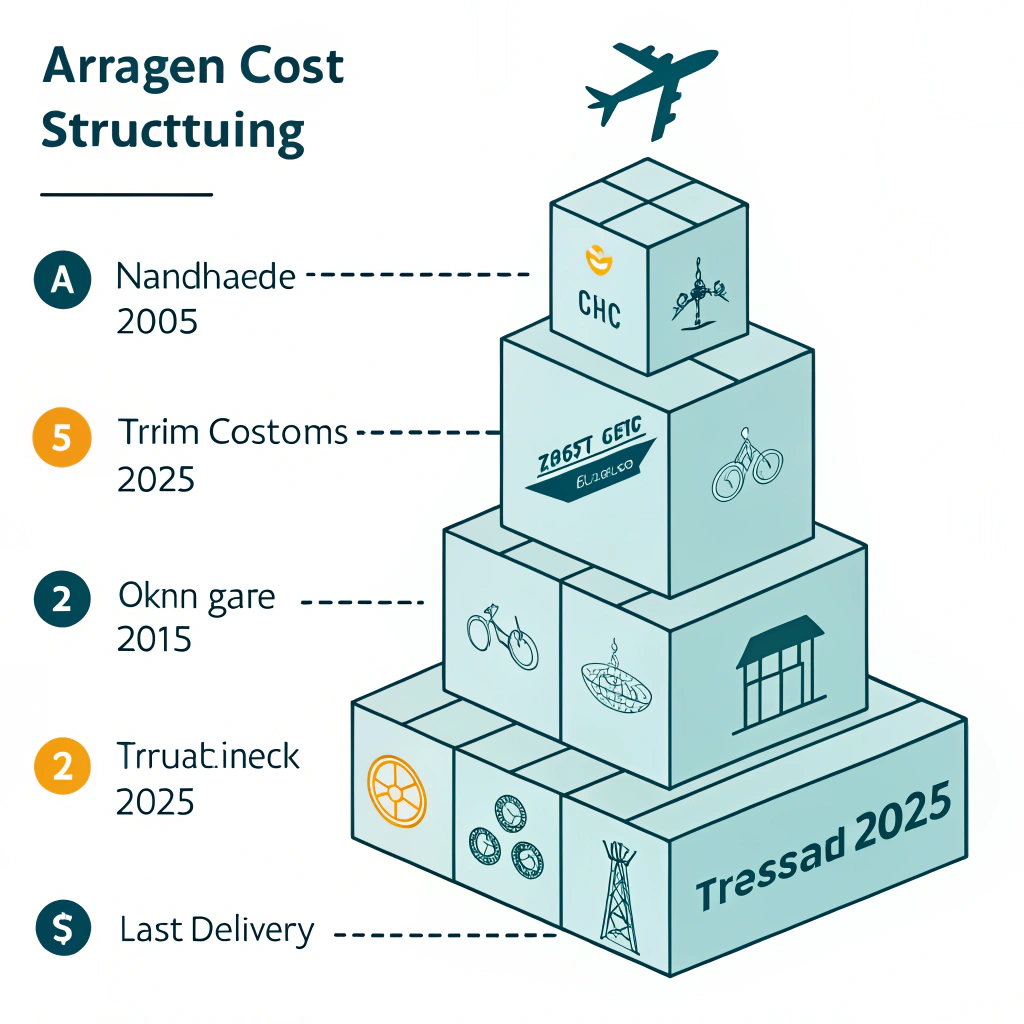
Amazon shipping is more expensive in 2025 because your total landed cost now stacks higher across multiple layers: increased carrier base rates and fuel surcharges, stricter dimensional weight (DIM)1 billing, premium last‑mile delivery costs, Amazon network changes to FBA fees, and international extras like customs brokerage, import duties and tariffs, and compliance. For cross‑border sellers, route choice (air vs ocean), DDP vs DDU, and fulfillment strategy (FBA vs FBM) directly determine whether these costs compound or can be engineered down.
For a global Amazon seller, “shipping” is not a single fee. It is a layered stack you pay from factory to customer:
- Origin handling: pickup, export documentation, palletization
- Main transit: ocean consolidation (LCL/FCL)2 or air cargo/express
- Destination handling: port/airport fees, customs brokerage, duties/taxes, exams
- Amazon inbound: labels, appointments, FBA receiving, placement, drayage/line‑haul
- Storage: monthly storage, peak multipliers, aged inventory surcharges
- Outbound (to customer): pick/pack, weight/dimensional tiers, last‑mile carrier charges
- Returns: processing, refurbishment, disposal or removal, reverse logistics
A practical way to think about 2025 costs: every handoff adds a surcharge, and every cubic centimeter in your packaging risk is punished through DIM.
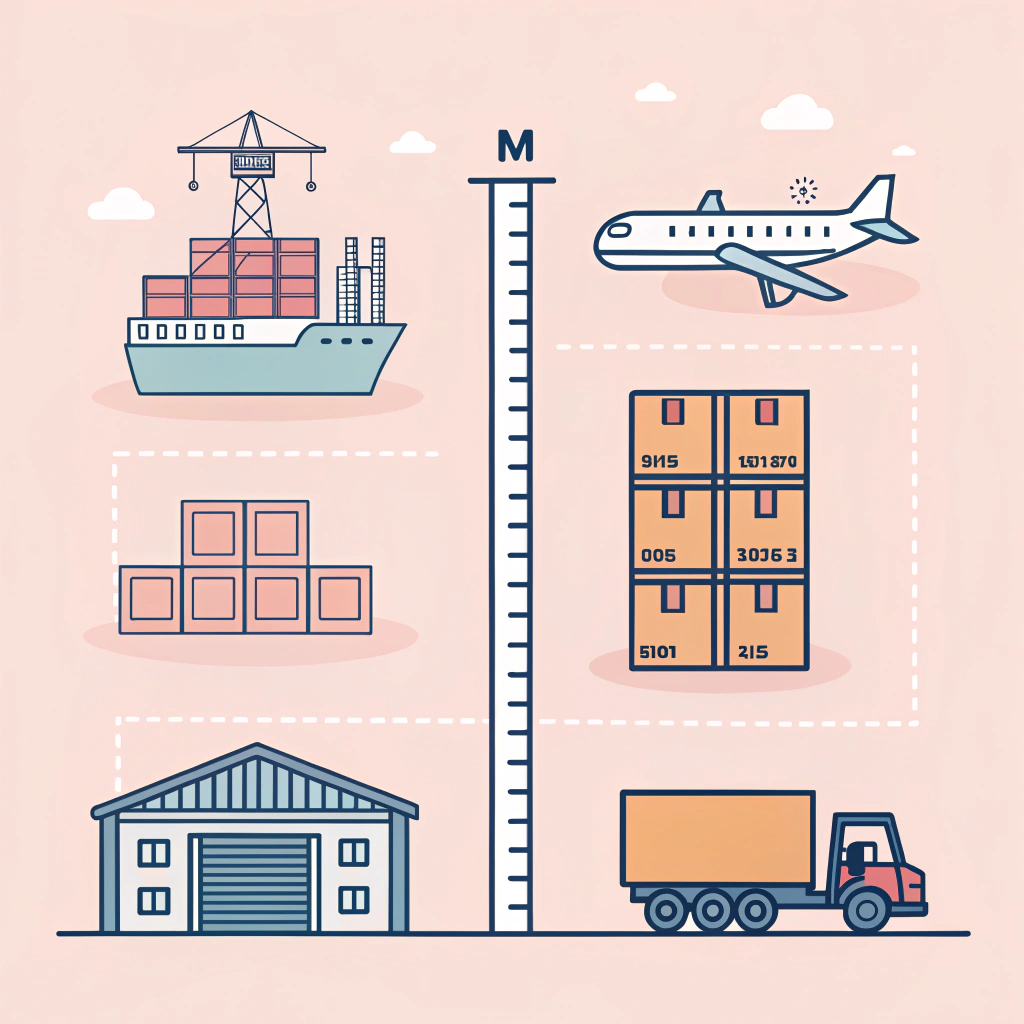
- Carrier base rates and fuel: UPS/FedEx/USPS rate adjustments plus volatile fuel indices; ocean bunker surcharges and emergency GRIs/PSS3.
- DIM billing: lower DIM divisors and stricter enforcement make volume, not weight, the primary cost driver for many SKUs.
- Peak season surcharges: holiday and capacity surcharges extend longer windows, not just Q4.
- Labor and last‑mile: wage inflation and remote area fees raise the final leg cost.
- Compliance/regulatory: more customs exams, EPR in EU markets, and security fees on air cargo.
- Ocean volatility: route diversions, port congestion, and seasonal space pushes carriers to add GRIs and PSS. The result is higher per‑CBM for LCL and higher all‑in for FCL during peak weeks.
- Air cargo cost structure: jet fuel indices, security screening fees, and demand swings (electronics, fast‑fashion cycles) lift rates and push dimensional charging.
- Parcel/last‑mile economics: carriers recover costs via additional handling, large package fees, and residential surcharges. Amazon’s own network balances capacity via fees linked to size/weight tiers.
- Inventory economics: storage and aged inventory surcharges in FBA compress tolerance for slow movers, effectively making “shipping + storage” a single cost line you must manage together.
- Currency: quotes in USD vs CNY/EUR can move materially month to month; unhedged FX changes can erase margin.
Dimensional weight (DIM) means you pay for space, not just mass. Carriers calculate DIM as length × width × height divided by a divisor, then bill the higher of actual weight or DIM.
- Practical formula: DIM weight (lb) = (L × W × H in inches) / divisor
- The divisor is carrier‑specific and may differ by service; if your carton is big and light, expect DIM to dominate.
Example impact of packaging changes:
| Carton Option | Dimensions (in) | Volume (in³) | DIM Divisor | DIM Weight (lb) | Actual Weight (lb) | Billed Weight (lb) | Comment |
|---|---|---|---|---|---|---|---|
| Current | 20 × 16 × 12 | 3,840 | 139 | 27.6 | 18 | 27.6 | Paying for air in the box |
| Optimized inserts | 18 × 14 × 12 | 3,024 | 139 | 21.8 | 18 | 21.8 | ~21% drop in billed weight |
| SIOC redesign4 | 17 × 13 × 11 | 2,431 | 139 | 17.5 | 18 | 18.0 | DIM no longer dominates |
Action: invest in carton right‑sizing, SIOC packaging, and bundle redesign. The payback is fast because DIM affects both air and ground parcel legs.
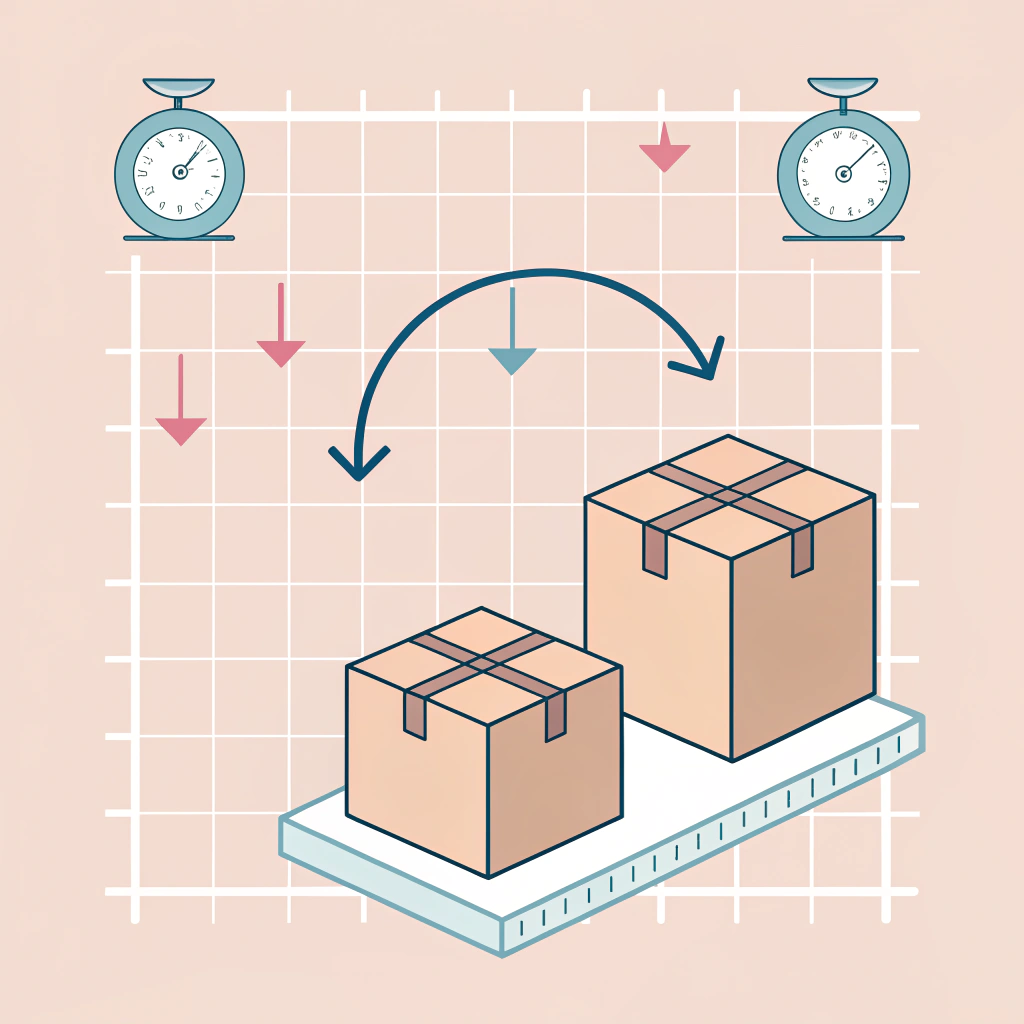
Fulfilled by Amazon (FBA) shifts last‑mile and customer service to Amazon but adds inbound and storage complexity. Fulfilled by Merchant (FBM) keeps your control but requires your own last‑mile contracts and SLAs.
| Cost Category | FBA (Pros/Cons) | FBM (Pros/Cons) |
|---|---|---|
| Inbound to FC | Efficient if palletized/labelled; subject to appointments and placement fees | Flexible inbound to your 3PL; schedule control |
| Storage | Networked, fast‑moving wins; aged inventory surcharges apply | You set storage strategy; can be cheaper off‑peak |
| Outbound to customer | Amazon’s rates and speed; dense network | Your contracts and service levels; can tailor methods |
| Returns handling | Standardized processing fees; disposal/removal options | Custom reverse logistics; refurbishment flexibility |
| Buy Box / Prime | Stronger Prime conversion; low inventory penalties matter | Seller‑fulfilled Prime requires strict metrics |
| Cost transparency | Multiple fee types; easy to miss “small” surcharges | Clear P&L at your 3PL; negotiate directly |
When FBA wins: fast movers, compact packaging, consistent weekly replenishment, strong Prime conversion.
When FBM wins: bulky or heavy items (DIM‑sensitive), custom bundles, seasonal spikes, or when you can beat Amazon’s outbound with your 3PL.
For inbound FBA, Delivered Duty Paid (DDP) means you prepay duties, taxes, and customs brokerage so the shipment arrives complaint‑free. Delivered At Place (DDU/DAP) pushes those costs to the consignee—dangerous when the consignee is an Amazon FC that cannot act as importer.
| Factor | DDP | DDU/DAP |
|---|---|---|
| Duties & taxes | Included in your quote; predictable | Pay on arrival; can delay handover |
| Brokerage | Included; one party accountable | Buyer pays; risk of unexpected fees |
| FBA inbound | Preferred (Amazon isn’t importer) | Often rejected or delayed |
| Cash flow | Higher upfront cost | Lower upfront; higher risk |
| Delivery speed | Faster customs clearance | Potential holds and returns |
Tip: specify DDP with named service levels (door‑to‑door), and ensure your broker handles ISF/AMS filing5, bond, and exam coordination. The reduction in exception risk often outweighs the slightly higher headline rate.

For international replenishment, mode selection sets your unit economics.
| Mode | Speed | Cost per kg/CBM | Best for | Notes |
|---|---|---|---|---|
| LCL (ocean) | Slow | Moderate per CBM | Sub‑FCL volumes, frequent restocks | Pay per CBM; more handling; exam exposure |
| FCL 20’/40’ (ocean) | Slow | Lowest per CBM | 10–28+ CBM loads, planned cycles | Break‑even often ~10–12 CBM+ vs LCL |
| Air cargo | Fast | High; DIM‑sensitive | Launches, urgent replenishments | Airport to airport; add terminal/line‑haul |
| Air express | Fastest | Highest | Samples, high‑margin SKUs | Simplest door‑to‑door; steep DIM billing |
Rules of thumb:
- Move to FCL when your rolling 4‑week forecast exceeds ~10–12 CBM; FCL reduces touchpoints and exam risk.
- For air, optimize packaging first; every inch pays twice—airport fees and last‑mile parcel DIM.
These fees rarely appear in marketing, but they hit margins:
- Customs entry and clearance
- ISF/AMS filings and bonds (US)
- Terminal handling charges, port security fees
- Exams: VACIS/X‑ray, CET, intensive—time plus cost
- Duty rates by HS code, MFN, Section tariffs where applicable
- EU VAT considerations, IOSS for B2C, EPR packaging compliance
Actions:
- Classify HS codes accurately; small duty changes beat rate negotiations.
- Prepare complete documents (invoice, packing list, COO, product compliance docs).
- Pre‑clear when possible and use DDP to avoid consignee exceptions.
Outbound costs rise with:
- Residential delivery and remote area fees
- Additional handling for oversize or non‑conveyable packages
- Peak season capacity surcharges
- Returns processing and unsellable dispositions
Operational levers:
- Align carton to conveyor limits; avoid non‑conveyables.
- Use address validation to reduce delivery failures.
- Reduce returns at source (QA, clearer listings); each return triggers processing fees and potential disposal.
Use a simple stack that you can audit monthly:
- Ex‑factory product cost
- Origin handling and export docs
- Main transit (ocean/air) + fuel/surcharges
- Destination fees + customs brokerage + duties/taxes
- Amazon inbound (labels, drayage/line‑haul, placement)
- Storage (monthly, aged inventory)
- Outbound (pick/pack, weight/DIM tiers, last‑mile)
- Returns and removal/disposal
- FX impact (if buying in CNY, selling in USD/EUR)
Illustrative example (per unit):
- SKU: 1.2 kg actual weight, current carton 18 × 14 × 12 in
- Air cargo DIM billed weight ≈ 21.8 lb before optimization
- After packaging change to 17 × 13 × 11 in, billed ≈ 18 lb
- If your air rate is charged per billed kg/lb, this single change can cut main transit by ~17% and reduce last‑mile parcel charges similarly.
A simplified unit P&L table:
| Cost Layer | Before (USD/unit) | After (USD/unit) | Lever |
|---|---|---|---|
| Main transit (air) | 3.90 | 3.25 | DIM reduction |
| Destination/clearance | 0.65 | 0.60 | DDP with bundled brokerage |
| Inbound to FC | 0.45 | 0.40 | Better palletization & appointment |
| Storage (60 days) | 0.50 | 0.42 | Faster turns; weekly replenishment |
| Outbound (FBA fee portion) | 4.20 | 3.90 | Size tier change via packaging |
| Returns & disposal | 0.30 | 0.25 | QA and listing clarity |
| Total shipping‑related | 10.00 | 8.82 | 11.8% reduction |
Your exact numbers will vary; the point is the structure—attack DIM, consolidation, and exception costs first.
- Right‑size packaging to drop a size tier and reduce DIM billed weight.
- Consolidate weekly into LCL/FCL cut‑offs; target the FCL break‑even as early as 10–12 CBM.
- Use DDP to eliminate consignee exceptions and unpredictable brokerage add‑ons.
- Pre‑label and palletize to Amazon spec to avoid inbound rework and appointment delays.
- Balance inventory to avoid aged inventory surcharges; forecast weekly replenishments.
- Choose slower service levels for non‑urgent SKUs; air cargo instead of air express, ocean instead of air where feasible.
- Deploy transloading at destination to move from ocean container to parcel faster, cutting storage overlap.
- Use merge‑in‑transit to combine multi‑supplier shipments into one delivery, reducing last‑mile touches.
- Hedge FX exposure for recurring lanes to protect per‑unit margins.
- Validate addresses and reduce returns through better product content and QA.
- Negotiate program rates with carriers/forwarders on a rolling forecast rather than spot buys.
- Audit HS codes annually; reclassifications and preference programs can lower duty rates.
Costs climbed in 2025 because carriers and networks priced capacity more tightly, DIM and peak surcharges expanded, and compliance took a larger slice. For global Amazon sellers, the winning playbook is straightforward: engineer packaging to beat DIM, choose the right mode and consolidation level (move to FCL when you can), use DDP to control brokerage and clearance, and decide FBA vs FBM by SKU profile rather than habit. Build a landed cost model, audit each layer quarterly, and attack the highest‑impact levers first.
People Also Ask
Q1: Why is international shipping so expensive now in 2025?
A1: Global shipping in 2025 is costly because carriers raised base rates and fuel surcharges, capacity is tighter during extended peak windows, and dimensional weight billing penalizes bulky packaging. Cross‑border moves add customs brokerage, duties and taxes, and potential exam costs. Route disruptions and longer transit paths also push up ocean and air rates, while last‑mile delivery remains the most expensive leg.
Q2: Why is Amazon charging me so much for shipping?
A2: Your Amazon shipping total reflects several layers: carrier rate increases and fuel, strict DIM billing for large or light items, expensive last‑mile delivery, and Amazon network fees tied to size/weight tiers and storage. Orders not eligible for Prime, marketplace seller shipping rules, and international duties or brokerage can add further charges. Consolidating orders, right‑sizing packaging, and choosing slower services can lower the bill.
Q3: Why is Amazon shipping so slow now in 2025?
A3: Longer timelines come from port congestion, security checks, and carrier network capacity balancing, which extend both ocean transit and parcel delivery windows. Inventory imbalances and stockouts can delay FBA replenishment, affecting Buy Box performance. Many sellers are prioritizing cost over speed, shifting from air to ocean and accepting longer lead times to protect margins.
-
Dimensional weight (DIM): Reading the article will clarify how carriers calculate DIM, what divisors apply by service, and which packaging tactics reduce billed weight—cutting costs across air and parcel legs. ↩
-
Ocean consolidation (LCL/FCL): Reading the article will help you decide between LCL and FCL, understand consolidation impacts on touchpoints, exam exposure, and per‑CBM economics, and plan replenishments more profitably. ↩
-
GRIs/PSS: Reading the article will explain General Rate Increases and Peak Season Surcharges, how and when carriers apply them, and strategies to mitigate seasonal spikes in your quotes. ↩
-
SIOC redesign: Reading the article will show what “Ships In Own Container” entails, the design standards Amazon recognizes, and how SIOC lowers size tiers, damages, and inbound rework. ↩
-
ISF/AMS filing: Reading the article will outline Importer Security Filing and Automated Manifest System requirements, timelines, and penalties so you can coordinate with your broker to avoid holds, fines, and delays. ↩