Skip to content
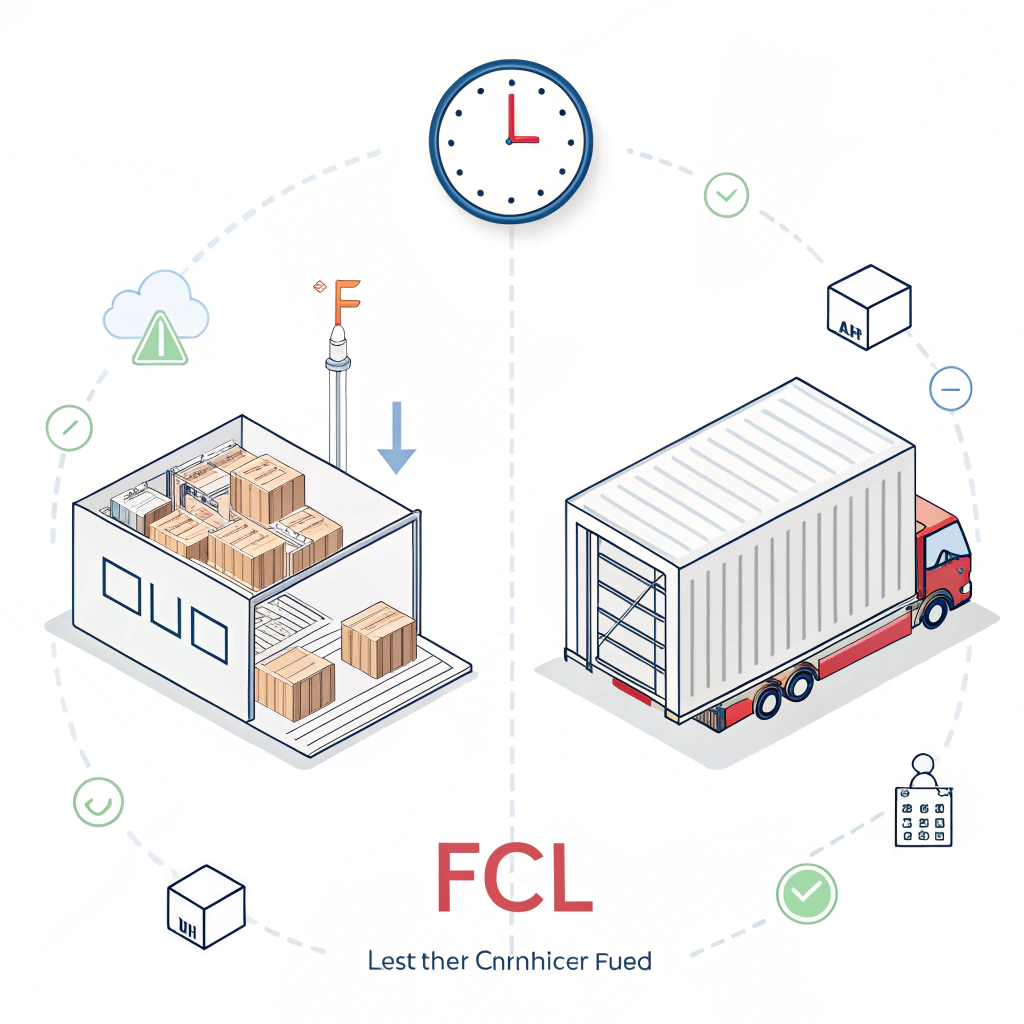
LCL shipments usually take longer than FCL because they involve extra consolidation and deconsolidation steps at origin and destination, more parties and handoffs, and stricter cutoff windows. Freight must wait at a CFS (Container Freight Station)1 for enough cargo to fill a box, be stuffed into shared containers, and later destuffed and sorted before final delivery—all adding days of variability compared to an FCL (Full Container Load) that moves directly from shipper to vessel to consignee.
Behind the scenes: what adds time to LCL versus FCL
If your team is balancing cost and speed, understanding the operational chain is the fastest way to improve reliability. Here’s the process difference that creates longer lead times for LCL (Less than Container Load) compared to FCL.
- FCL flow (simplified): factory or warehouse stuffing → drayage to port → terminal stack and load → sail → discharge → customs clearance → drayage to consignee.
- LCL flow (expanded): pickup → receive at CFS → inspection, measurement, and sorting → wait for weekly (or bi‑weekly) consolidation window → container stuffing → drayage to port → terminal stack and load → sail → discharge → move to destination CFS → destuffing and segregation → customs clearance per HBL (house bill of lading)2 → pickup or final delivery.
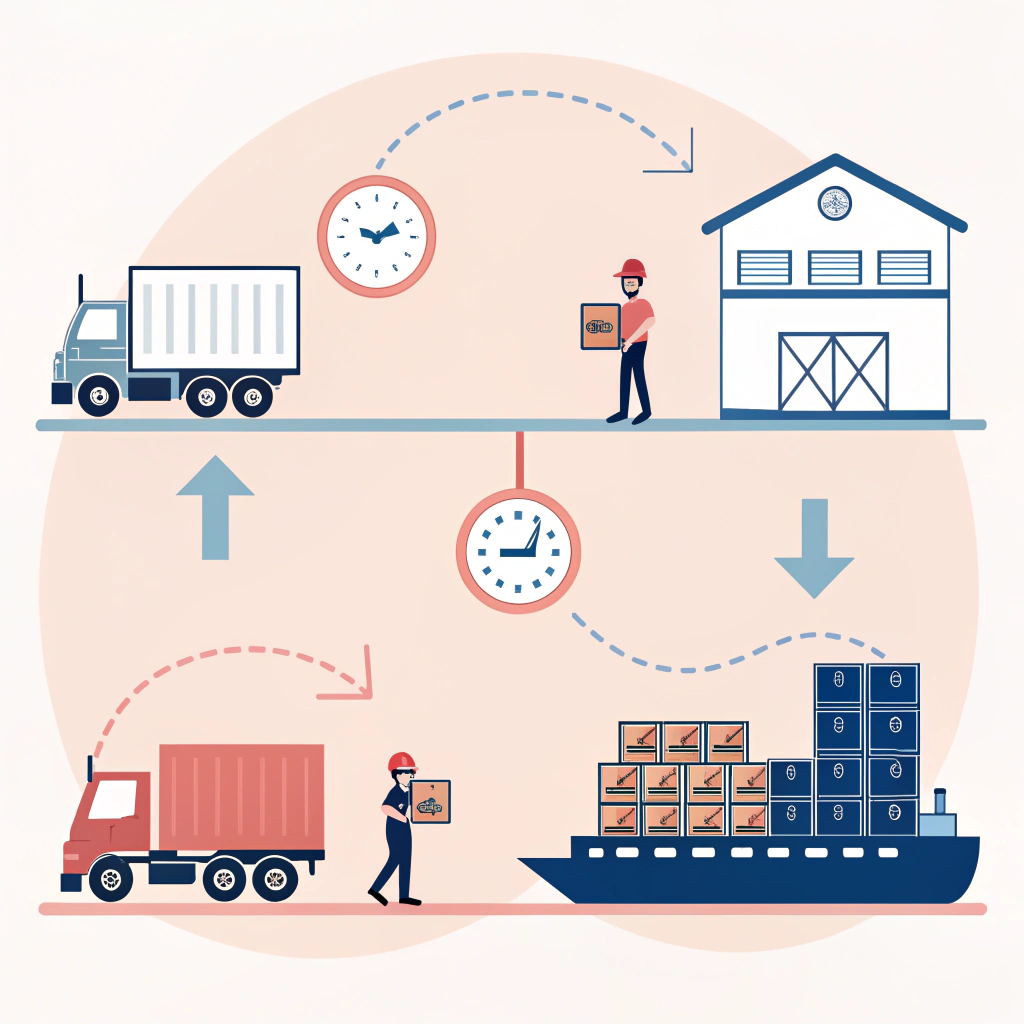
The key difference is “wait and handle.” LCL freight sits and is touched multiple times by CFS operators before sailing and after arrival. Each additional step has its own cutoff, staffing, compliance, and scheduling constraints. If anything slips—a late truck arrival, a misdeclared dimension, a rolled vessel—your cargo waits for the next window.
Origin operations: why consolidation adds days
At origin, CFS operators build shared containers by destination, service level, and route. That process includes:
- Receiving and measurement: freight arrives at CFS, is weighed, measured (to confirm chargeable volume3), and matched to bookings.
- Documentation validation: HBL draft, AMS/ACI data (or equivalent), VGM confirmation for the container, and export customs checks.
- Freight pooling: cargo must reach minimum utilization before the box closes; operators balance cost and schedule by pooling compatible freight.
- Stuffing and load planning: palletization or floor loading, blocking and bracing, dangerous goods checks (if any), and load sequence for container safety.
Even with weekly consoles, origin CFS typically adds 3–7 calendar days of buffer to align receipts, documentation, and stuffing plans. Miss the console cutoff by a few hours? You may add a full week.
Destination operations: deconsolidation adds variability
On arrival, destination CFS de‑group the shared container:
- Devanning and segregation: locate each HBL, check conditions, and stage for customs release.
- Customs and exams: LCL units can face higher examination frequency because many parties and HBLs are inside one box; if the container is selected for inspection, all freight inside waits.
- Scheduling and delivery: pickups must match CFS free time rules and slot availability; accessorials (re‑palletizing, labeling) can add time.
Where FCL consignees clear and out‑gate a whole container, LCL consignees are one of many, queued behind container devanning and any holds.

The operational drivers of LCL delay (and how much time they add)
Below is a practical summary of common LCL delay drivers and typical impact ranges from China to US/EU routes.
| Delay driver (first occurrence bolded) | What happens | Typical added time |
|---|---|---|
| Consolidation windows | Wait for weekly/bi‑weekly CFS console close; miss cutoff = next week | 3–7 days |
| Extra handling at CFS | Receive, measure, sort, stuff/destuff, rework packaging | 1–3 days origin + 1–3 days destination |
| Transshipment4 | Hub routing via Busan/Singapore/Yantian for network balance | 3–10 days depending on hub |
| Vessel rollover risk | Shared containers may be deprioritized on overbooked sailings | 2–7 days |
| Documentation and manifesting | HBL drafts, AMS/ISF filing, export license checks | 1–2 days (more if corrections needed) |
| Customs clearance and exams | Container or HBL holds; CET exams delay entire box | 2–7 days (varies) |
| Port congestion | Terminal delay, yard backlog, labor constraints | 3–10 days seasonally |
| Weight/dimension mismatches | Re‑measuring, re‑packing, surcharge disputes | 1–2 days |
| DG or special cargo | Extra validations and segregation rules | 2–5 days |
FCL faces some of these risks too (congestion, documentation), but the absence of CFS pooling, stuffing/destuffing, and multi‑shipper dependencies reduces variability.
Realistic lead times: China to US/EU, LCL vs FCL
- China → US West Coast:
- FCL port‑to‑port: ~12–16 days sailing; door‑to‑door often ~18–25 days.
- LCL door‑to‑door: typically ~25–40 days, with more spread due to CFS and exams.
- China → US East Coast:
- FCL port‑to‑port: ~25–35 days (via Panama or intermodal); door‑to‑door ~32–45 days.
- LCL door‑to‑door: ~38–55 days.
- China → North Europe:
- FCL port‑to‑port: ~28–35 days; door‑to‑door ~35–45 days.
- LCL door‑to‑door: ~42–60 days.
Note the wider LCL bands. Variability is the hidden cost—harder to plan inventory turns and promotions when the standard deviation is high.
Day-by-day example: Shenzhen to Los Angeles
Consider two bookings made on the same Monday.
-
FCL timeline:
- Day 0–1: Container pickup, factory stuffing.
- Day 2: Drayage to Yantian; terminal in‑gate.
- Day 4: Vessel departure.
- Day 17: Vessel arrival at LA/LB.
- Day 18–20: Customs clearance, out‑gate.
- Day 21–22: Final delivery.
- Total: ~22 days.
-
LCL timeline:
- Day 0–1: Pickup to Shenzhen CFS.
- Day 2–4: Receiving, measurement, documentation.
- Day 5–7: Wait for weekly console close (miss cutoff extends to Day 12–14).
- Day 8: Stuffing and drayage to port.
- Day 10: Vessel departure.
- Day 23: Arrival.
- Day 24–26: Move to destination CFS; destuffing and segregation.
- Day 27–29: Customs release; scheduling.
- Day 30–32: Final delivery.
- Total: ~30–32 days (more if rollover or exam).
This gap can be wider during peak seasons or when hub routing adds a stop.
Cost versus speed tradeoffs: when to choose LCL or step up to FCL
For mid‑market importers, the question isn’t just transit time—it’s cash flow, stockout risk, and per‑unit economics.
-
Choose LCL when:
- Shipment size is small (e.g., 1–12 CBM) and weekly cadence works.
- Products tolerate lead time variability (no hard launch dates).
- You benefit from lower total spend than booking an under‑utilized FCL.
-
Step up to FCL when:
- You consistently ship >12–18 CBM on the same lane.
- Inventory holding cost from delays exceeds the extra FCL cost.
- You need reliable replenishment for high‑velocity SKUs.
Decision cue: if you are routinely shipping 15–20 CBM LCL and experiencing stockouts due to variability, model a monthly FCL with cycle stock and use express or air for gap coverage.
Mitigation checklist: how to compress LCL lead times
LCL does not have to be unpredictable. Most delays can be reduced with better scheduling, documentation, and forwarder selection.
| Action | Owner | Lead time impact | Cost tradeoff |
|---|---|---|---|
| Book on fixed weekly consoles with published cutoffs | Forwarder/Buyer | Reduces variability by 3–5 days | Neutral |
| Pre‑advise dims/weights with photos, pack lists | Supplier/Buyer | Avoids re‑measure disputes and re‑packing | Neutral |
| Align factory completion to CFS cutoff (not vessel ETD) | Supplier/Buyer | Prevents 7‑day miss | Neutral |
| Choose direct consol lanes (no transshipment hubs) | Forwarder/Buyer | Saves 3–10 days | May pay slight premium |
| Pre‑file customs data (AMS/ISF) accurately | Supplier/Forwarder | Avoids manifest corrections and holds | Neutral |
| Use standard pallets and consistent outer cartons | Supplier | Speeds stuffing/destuffing at CFS | Possible minor packaging cost |
| Separate DG or odd‑size cargo into its own booking | Buyer | Prevents whole console delay | Neutral |
| Pick destination CFS with strong devanning SLA | Forwarder/Buyer | Cuts 1–3 days | Slight local fee variation |
| Ask for “priority LCL” (fast devanning service) | Buyer | Improves last‑mile speed | Accessorial surcharge |
| Avoid peak‑week bookings (Golden Week, year‑end) | Buyer | Reduces rollover risk | Schedule planning required |
| Consider threshold FCL for ≥15 CBM | Buyer | Eliminates CFS handling | Higher total, lower per‑unit |
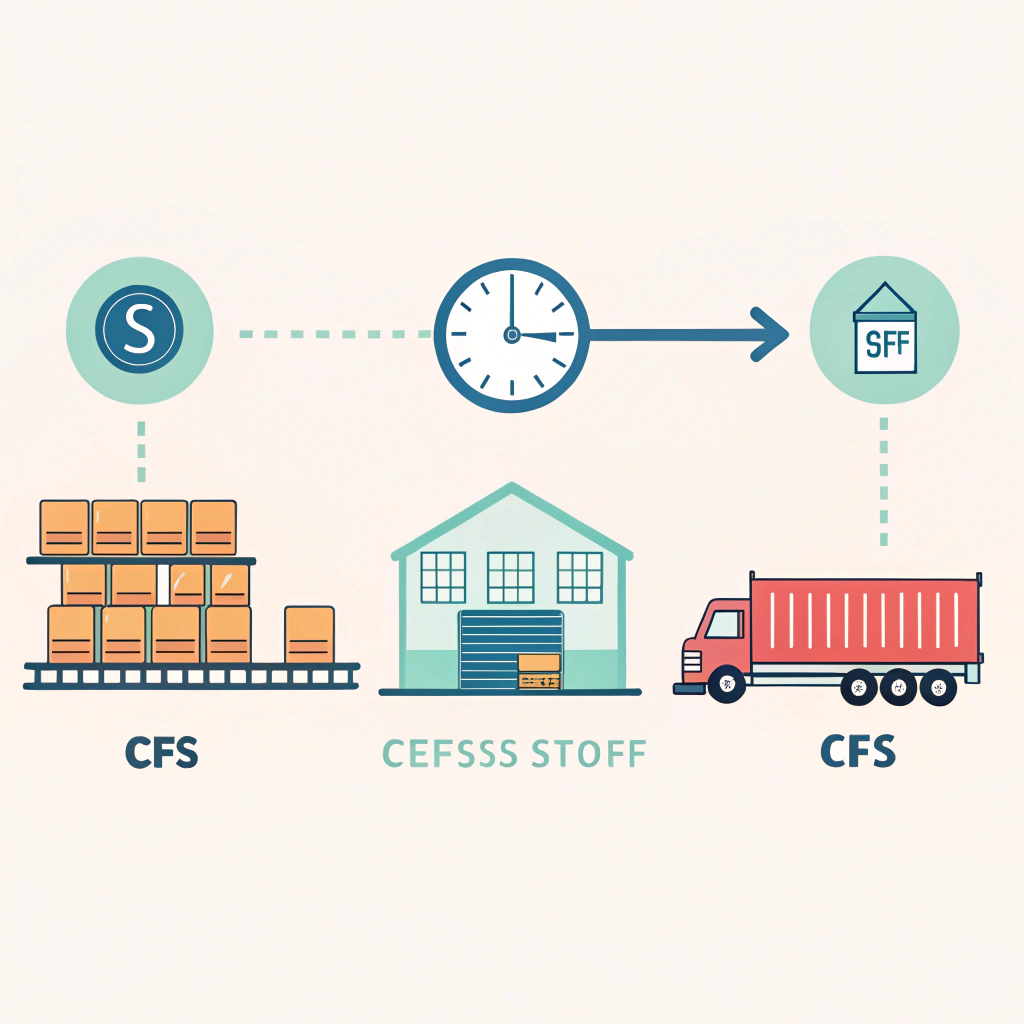
Practical tip: treat the CFS cutoff as your true ship window. Share production calendars with your forwarder two weeks out. If you miss the window, decide same day whether to split the shipment (air/express for urgent SKUs) or roll the whole lot to the next console.
Documentation and compliance levers
Small paperwork issues create outsized delays in LCL:
- Accurate manifesting: product description, HS codes, and marks must match the physical cargo to avoid holds.
- Timely filings: ensure AMS/ISF data hits before the vessel departure to avoid penalties or scrutiny.
- Correct VGM at origin: while container VGM is the forwarder’s responsibility, wrong cargo weights cause re‑planning.
- Clear consignee info: multiple HBLs in one box increase the chance of mismatched references; validate PO, SKU, and pallet count on the HBL.
Implement a pre‑shipment checklist with the supplier and forwarder. Ten minutes of validation saves days of rework at the CFS.
Inventory planning with LCL variability
For operations leaders, the question is how to plan around variability:
- Model transit time as a range, not a single number (e.g., 30–40 days door‑to‑door).
- Carry safety stock equivalent to the longest realistic LCL lead time percentile (e.g., 85th percentile).
- Use “merge‑in‑transit5” where possible to sync inbound LCL from multiple suppliers into a single outbound fulfillment cycle.
- If you must hit retail dates, schedule LCL consoles two cycles earlier than FCL, or mix a small air uplift for launch SKUs.
What to ask your forwarder before you book LCL
Ask these questions to reduce risk and clarify expectations:
- Which week‑day is the origin CFS cutoff for my lane? What is the latest truck in‑gate time?
- Do you operate direct LCL consoles to my destination or route via hubs?
- What’s the published devanning SLA at destination CFS and typical free time?
- How do you handle rolled vessels for LCL? Do you provide proactive re‑booking?
- What is your process to validate dimensions/weights to avoid re‑measure surcharges?
- Can you pre‑file AMS/ISF and share a documentation checklist?
- What is your average door‑to‑door lead time band for this lane in peak vs off‑peak seasons?
- Do you offer priority LCL or dedicated partial container options?
- How do you manage customs exams on shared boxes and communicate holds?
- Can you provide weekly visibility milestones: received at origin CFS, stuffed, on‑board, arrived, devanned, ready for pickup?
With clear SOPs and dates tied to CFS cutoffs, LCL can be planned almost as predictably as FCL—just with a wider band.
Summary and action plan
LCL usually takes longer than FCL because consolidation and deconsolidation introduce extra steps, more parties, and more schedule dependencies. The biggest contributors are CFS windows, additional handling, transshipment, and documentation accuracy. To mitigate, lock in weekly direct consoles, align production to CFS cutoffs, pre‑file clean documentation, and choose destination CFS with strong devanning SLAs. For steady lanes, define a CBM threshold to switch to FCL and use air/express to buffer peaks. Treat lead time as a range, and operationalize decisions around console timing and inventory policy.
People Also Ask
Why are LCL lead times longer than FCL lead times?
LCL takes longer because freight must wait for consolidation at origin CFS, be stuffed into shared containers, and later be destuffed and sorted at destination CFS. These extra steps, plus stricter cutoffs, transshipment routing, and multi‑party documentation, add days of variability compared to direct FCL moves.
How long does an LCL shipment take?
Typical LCL door‑to‑door times run 4–8 weeks depending on lane, season, and CFS performance. For China to the US, expect about 25–40 days to the West Coast and 38–55 days to the East Coast; Europe lanes often run 42–60 days. Peak season, hub routing, and customs exams can extend these ranges.
What are the disadvantages of LCL shipping?
Main drawbacks include longer and more variable lead times, higher per‑unit cost than FCL due to added handling and administration, and increased risk of damage from multiple touches. Shared containers also face container‑level customs exams that can hold all HBLs inside, delaying release even when your paperwork is clean.
-
CFS (Container Freight Station): Learn how CFS operations, cutoff windows, and handling steps influence LCL lead times and fees, and how to select or coordinate with CFS providers to reduce delays. ↩
-
HBL (house bill of lading): Understand how HBLs differ from MBLs, the critical data elements, liability chain, and how accurate HBLs affect customs clearance speed and release timing. ↩
-
Chargeable volume: See how chargeable volume is calculated for LCL (W/M rules and dimensional factors) and how to optimize packaging to reduce billed volume and total landed cost. ↩
-
Transshipment: Explore how hub routing works, its impact on transit time and rollover risk, and how to request direct consoles or choose hubs to minimize variability. ↩
-
Merge‑in‑transit: Learn the MIT model for synchronizing multi‑supplier inbound shipments into one outbound fulfillment cycle, including process design, system integration, and inventory benefits. ↩