Skip to content
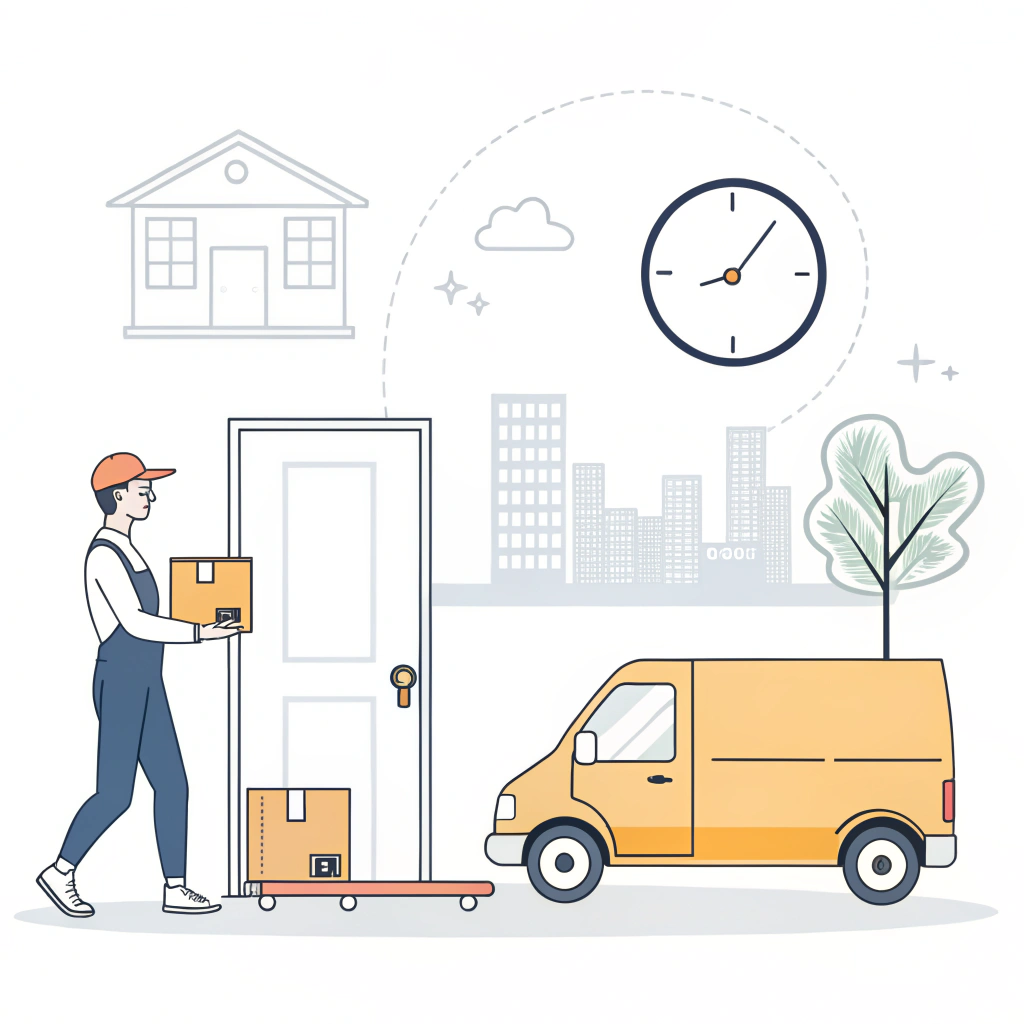
Premium final mile delivery matters because it directly lifts customer satisfaction (NPS), reduces returns and damages, and increases repeat purchases—often offsetting its higher per‑stop cost. Freight forwarders make it achievable by orchestrating end‑to‑end flows from origin: multi‑carrier coverage, customs and deconsolidation1, consolidation and transloading, delivery SLAs, track‑and‑trace, white‑glove options, and returns pickup. The result is reliable on‑time delivery and a branded doorstep experience at a controllable cost and risk level.
Why the final mile now decides your brand
For ecommerce and retail importers, the final mile delivery is the moment of truth. Customers don’t see your factory, your warehouse, or your customs clearances. They experience a driver, a time window, and the condition of a parcel or a sofa at their door. If that goes wrong, support tickets spike, returns climb, and buyers churn—no matter how strong the upstream logistics were.
Common symptoms we hear from mid‑to‑large importers:
- On‑time delivery under 92% in key metros, with first‑attempt delivery success hovering at 80–85%
- “Where is my order?” (WISMO) inquiries consuming 20–30% of support volume
- Damage rates above 4% on bulky items; high cost of re‑delivery and exchanges
- Poor visibility across cross‑border legs; data gaps between linehaul, deconsolidation, and local couriers
- Inconsistent doorstep experience across carriers and regions
Premium final mile solves these pain points by adding tighter delivery SLAs, defined time windows, proactive notifications, inside placement or white‑glove delivery, and integrated returns management2. The business case is straightforward: more orders arrive on time and intact, fewer tickets, higher NPS, and higher repeat purchase rate. The key to doing it profitably is partnering with a freight forwarder to engineer the entire door‑to‑door flow—not just the local courier handoff—so origin processes, consolidation, and transloading all serve the final mile promise.
Root causes you can actually fix
- Fragmented carrier network: Each city or service type (parcel vs bulky) has different strengths. A single‑carrier approach creates blind spots.
- Cross‑border handoffs: From China origin to US/EU/AU delivery, delays are often born at deconsolidation or customs, not at the van.
- Data gaps: Without unified track and trace, your team can’t intervene before a missed delivery window or address issue.
- Packaging and handling: Damage starts upstream; insufficient dunnage, wrong carton, or no palletization cascade into final mile failures.
- Returns friction: If customers can’t book pickup easily, they will file disputes, raising cost of returns and hurting LTV.
A forwarder who controls air/ocean linehaul, customs brokerage, warehousing, and multi‑carrier dispatch can eliminate many of these root causes before they reach the doorstep.
What “premium” looks like (and how it pays)
Think of premium final mile as a menu, not a single product. You can start lean and scale up by region or product line.
Service levels and features
| Dimension | Standard Delivery | Premium Delivery | White‑Glove Delivery |
|---|---|---|---|
| Promise | 3–7 business days | 2–4 business days or scheduled 2–3‑hour window | Scheduled 2–3‑hour window |
| Delivery attempt | 1–2 attempts | 2–3 attempts + proactive reschedule | Appointment with confirmation calls |
| Notifications | Basic tracking | SMS/email + day‑of ETA | Concierge calls + live tracking |
| Placement | Doorstep | Threshold/room‑of‑choice | Room‑of‑choice + unpack + light assembly |
| Packaging removal | No | Optional | Included |
| Returns | Drop‑off | Doorstep pickup booking | Full reverse logistics3 with removal |
| Visibility | Carrier portal | Unified portal + webhooks | Same + onsite proof of service |
| SLA | None/Best effort | On‑time % and first‑attempt % | On‑time %, damage %, service remediation |
Typical accessorial ranges (US urban/suburban benchmarks; varies by market)
| Feature | Incremental Cost Range |
|---|---|
| Time‑window delivery | $5–$15 per stop |
| Two‑person carry | $30–$60 per stop |
| Room‑of‑choice | $25–$45 per stop |
| Assembly (basic furniture/fitness) | $60–$120 per stop |
| Packaging removal | $10–$25 per stop |
| Returns pickup (parcel) | $8–$15 per stop |
Why it pays (illustrative economics)
- On‑time rate lift: +4–10 pts. Each point reduces WISMO tickets by ~3–5% and cancellations by ~1–2%.
- Damage rate reduction: −30–50% on bulky SKUs with improved packing + two‑person handling.
- First‑attempt success: +5–12 pts with scheduled windows; fewer re‑delivery costs.
- NPS lift: +8–20 pts, translating to 2–5% repeat‑purchase uplift within 90 days for many categories.
- Return rate reduction: −10–25% when assembly/placement and better instructions are provided.
Premium is not about luxury; it’s engineered reliability. Your forwarder makes it cost‑effective by consolidating volume, selecting the right local courier per postcode, and routing freight through the closest cross‑dock to cut miles and failure points.
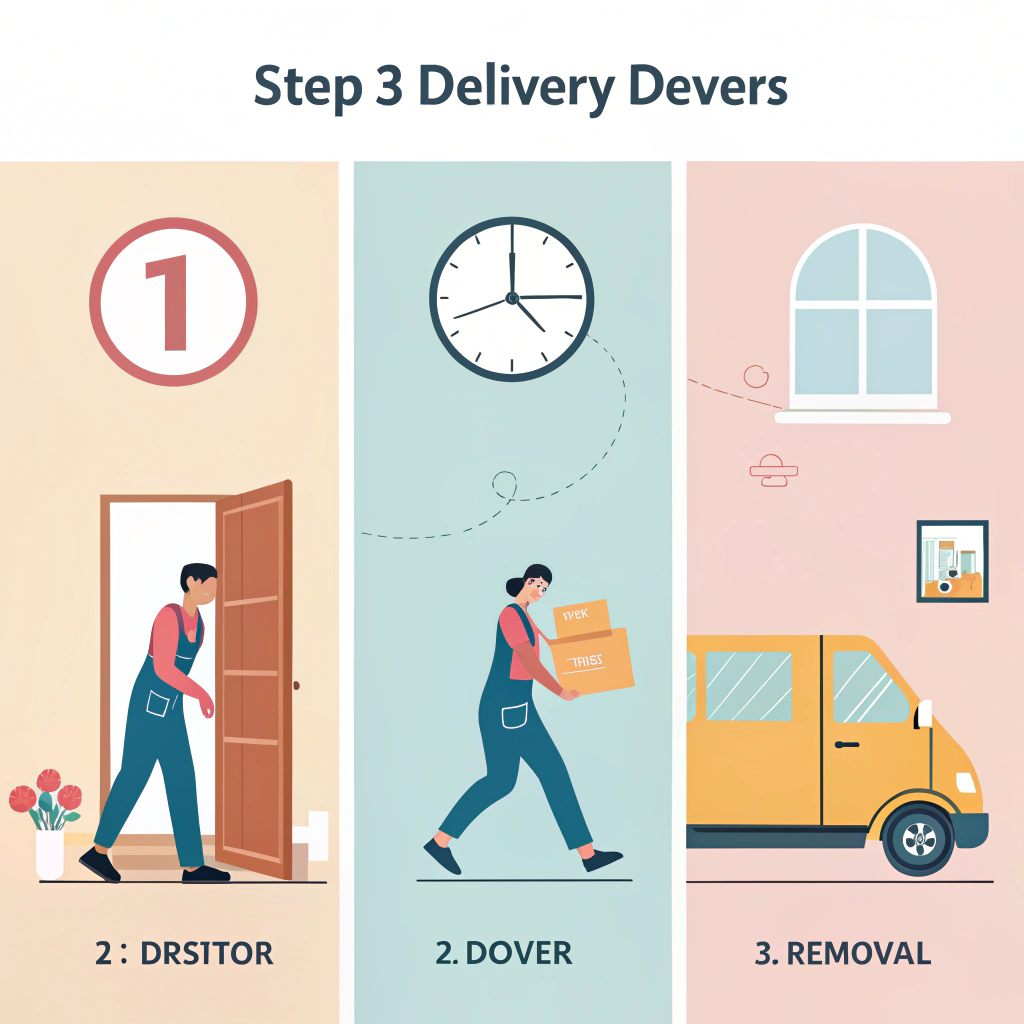
Freight forwarders’ role: from origin to the doorstep
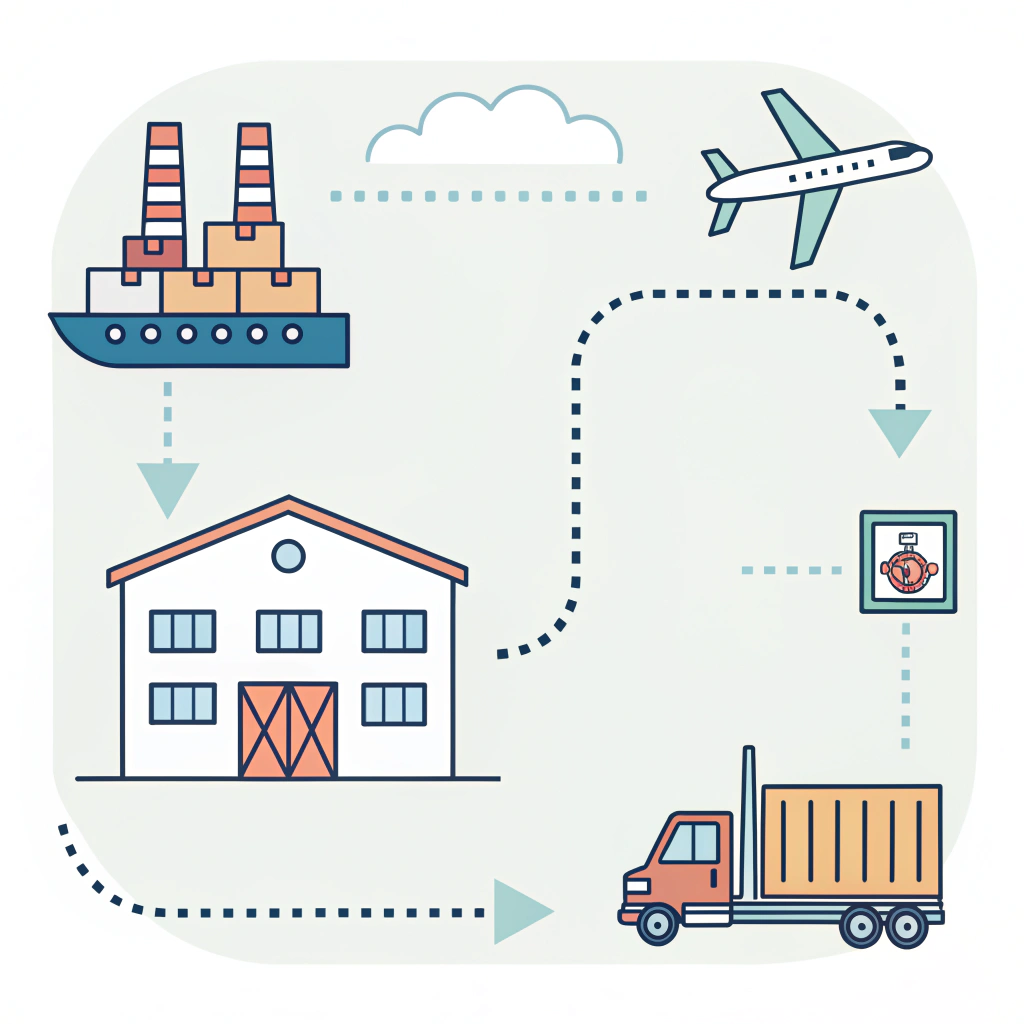
A modern forwarder is your final‑mile enabler, not just a linehaul arranger.
What we orchestrate
- Multi‑modal linehaul: Air freight for speed‑sensitive SKUs; ocean shipping for economy and FCL/LCL blends; fast‑ocean options to key US ports.
- Deconsolidation and cross‑dock: China export hubs to US/EU/AU DCs or direct to metro cross‑docks, using transloading to shorten lead time.
- Merge‑in‑transit4: Combine items from multiple suppliers into one final delivery to avoid split shipments and customer confusion.
- Multi‑carrier dispatch: Parcel, regional couriers, and specialized white‑glove networks matched by package size, weight, and service level.
- Customs brokerage: Aligned HS codes, pre‑clearance, and paperwork so freight arrives ready for last‑mile handoff without demurrage5.
- Address hygiene: Pre‑ship validation, geocoding, and delivery notes capture to increase first‑attempt success.
- Unified track and trace: Event standardization from pickup in China through local delivery; webhooks and API pushes to your OMS, WMS, and CX tools.
- Returns management: Return labels, doorstep pickup, triage rules (restock vs refurbishment), and reverse consolidation to reduce cost.
The outcome is a single SLA from origin to doorstep, backed by one operations team and coherent data.
KPIs to manage (and what “good” looks like)
| KPI | Why it matters | Baseline (many importers) | Target with premium |
|---|---|---|---|
| On‑time delivery % | Predictability drives NPS | 90–93% | 95–98% |
| First‑attempt success % | Avoids re‑delivery cost | 82–88% | 92–96% |
| Damage rate % (bulky) | Biggest driver of returns cost | 4–8% | 2–4% |
| WISMO tickets per 100 orders | Support load and CX | 8–12 | 4–6 |
| Return‑to‑origin rate % | Cost leakage | 1.0–1.5% | 0.4–0.8% |
| NPS | Loyalty indicator | 20–35 | 30–55 |
| Cost per successful delivery | True cost, not per‑stop | — | −5–12% vs baseline after 8–12 weeks due to fewer failures |
Use “cost per successful delivery” (including re‑delivery, damage, and support) as your north star cost metric.
A practical 90‑day playbook
0–30 days: Baseline and design
- Segment SKUs: parcel vs bulky, assembly needs, damage‑prone items.
- Map lanes: China origins, ports, deconsolidation points, and top delivery metros.
- Capture baseline KPIs and costs (include re‑deliveries, damages, support).
- Define premium bundles: time‑window + threshold for parcel; room‑of‑choice + packaging removal for bulky.
- Select pilot metros (2–3 cities) with dense order volume.
- Align with forwarder on SLAs and event data schema.
31–60 days: Build and pilot
- Enable address validation and delivery notes collection at checkout.
- Stand up multi‑carrier routing rules; integrate track and trace to your OMS/CX stack.
- Adjust packaging for pilot SKUs (corner protection, double‑wall cartons, palletization).
- Launch scheduled delivery windows; set reschedule flows and proactive ETA notifications.
- Train support on new promises and exceptions playbook.
- Start measuring daily: on‑time, first‑attempt, WISMO, damage.
61–90 days: Optimize and scale
- Tune routing by postcode and package profile; re‑bid low performers.
- Add white‑glove delivery for top‑value SKUs and high‑NPS segments.
- Turn on returns pickup and automated refunds on scan for selected products.
- Introduce merge‑in‑transit to reduce split shipments.
- Expand to more metros; harden SLAs with incentives and penalties.
- Publish a delivery promise page and service recovery policy.
How to price and control risk
- Tier your offering: Keep free standard delivery; charge modest fees for premium windows and white‑glove, or bundle with VIP/loyalty tiers.
- Cap accessorials: Negotiate not‑to‑exceed fees per service. Lock in weekend and evening coverage in dense metros.
- Protect margins: Tie bonuses/penalties to on‑time and damage SLAs with carriers. Use your forwarder as the single throat to choke.
- Service recovery budget: Pre‑set thresholds for credits or re‑delivery to avoid ad‑hoc over‑compensation.
- Seasonal capacity: Secure peak capacity allocations via your forwarder’s network; plan overflow carriers by region.

ROI model you can explain to finance
Start simple. Compare incremental gross profit from better retention and reduced failures to the added cost of premium services.
Inputs
- Orders in pilot period
- Average order value (AOV) and gross margin
- Baseline vs premium: on‑time %, first‑attempt %, damage %, return rate, WISMO tickets
- Premium accessorial cost per order (weighted)
- Cost of re‑delivery, damage/return, support contact
Illustrative calculation (bulky home goods, 10,000 orders)
- Premium cost uplift: $14 per order weighted
- On‑time improves from 91% to 97% → WISMO down 40% → save $1.20/order in support
- First‑attempt +8 pts → re‑delivery saves $1.10/order
- Damage down from 6% to 3.5% → save $5.40/order net of refurbishment
- Repeat purchase within 90 days +3% → at $180 AOV and 45% margin → +$2.43/order
- Net: −$14 + $1.20 + $1.10 + $5.40 + $2.43 = −$3.87 before further gains
- Add returns pickup convenience reducing returns by 12% on eligible SKUs → +$2.10/order
- Add assembly upsell + attachment rate lift → +$2.50/order contribution
- Net after full bundle: +$0.73/order during pilot; often improves further with density and routing optimization
The lesson: Break even or win in 1–2 quarters is realistic when you combine cost avoidance (damage, re‑delivery, support) with revenue lift (retention, upsells). Your freight forwarder accelerates the path by densifying routes, refining cross‑docks, and eliminating upstream failure causes.
Case snapshot: Three‑metro pilot
Context: US importer of flat‑pack furniture shipping from China. Baseline on bulky SKUs: on‑time 92%, first‑attempt 84%, damage 5.8%, NPS 28.
Actions with forwarder
- Shifted ocean + fast transload to West Coast, cross‑docked near target metros.
- Switched to two‑person delivery network with room‑of‑choice + packaging removal.
- Upgraded cartons; added corner protection and in‑box instructions.
- Enabled scheduled 2–3‑hour windows and SMS ETAs; turned on returns pickup.
90‑day results
- On‑time 96.8% (+4.8 pts), first‑attempt 93.1% (+9.1 pts)
- Damage 3.4% (−41%), WISMO −37%
- NPS 41 (+13), repeat purchase +3.6% in 60 days
- Net delivery cost per successful order −6% after re‑delivery and damage savings
Execution details that separate winners from average
- Data standardization: Use a single event taxonomy from pickup at China origin through delivery (milestones like “Out for delivery,” “Delay—customer requested,” “Completed with POD”).
- Address intelligence: Validate, enrich with building type, floor, elevator presence; capture gate codes. It lifts first‑attempt success dramatically.
- Packaging design: Engineer for final mile (handles, weight distribution under 70 lbs when possible, carton markings for team lift).
- Delivery notes: Collect at checkout and surface to the driver. Simple notes reduce failed attempts.
- Exceptions playbook: Auto‑trigger reschedule links and support workflows when ETAs slip; don’t wait for the customer to complain.
- Carrier specialization: Assign parcel vs bulky vs white‑glove to different networks. One‑size‑fits‑all is where failures hide.
- Near‑customer inventory: Use forwarder‑run warehouses in both origin and destination markets to buffer demand and support faster windows.
How a China‑to‑world forwarder specifically helps
- Origin control in China: Vendor coordination, consolidation and transloading, export packing, and schedule discipline across main ports.
- D2D coverage: Door‑to‑door to US, Canada, Europe, and Australia with unified SLAs.
- Warehousing footprint: Origin consolidation in Shenzhen/HK; destination cross‑dock and storage in Greater LA to support fast US distribution.
- Mode flexibility: Switch between air and ocean by SKU and season without breaking the final‑mile promise.
- Returns loop: Collect, grade, and consolidate returns for refurbishment or restock to reduce reverse‑logistics cost.
The net effect is a single partner who can align upstream logistics to the downstream promise.
Summary and next steps
Premium final mile delivery isn’t a luxury upsell; it’s an operational strategy to raise NPS, cut hidden costs, and protect revenue. Freight forwarders turn it from a patchwork of carriers into a coherent, measurable service—complete with SLAs, visibility, and returns. Start with a 90‑day pilot in 2–3 metros, focus on address quality and scheduled windows, and insist on unified data. As density builds and processes tighten, the economics grow steadily more attractive.
People Also Ask
Q: What is premium final mile delivery?
A: Premium final mile delivery adds scheduled time windows, proactive notifications, higher first‑attempt success, and options like threshold, room‑of‑choice, assembly, and packaging removal. It aims to improve on‑time performance, cut damages and re‑deliveries, and raise customer satisfaction with clear SLAs and visibility.
Q: Is white‑glove delivery worth it for ecommerce brands?
A: It is when items are bulky, high‑value, or complex to set up. White‑glove reduces damage and returns, prevents failed attempts through appointments, and boosts NPS. For smaller parcels, a lighter premium bundle (time window + threshold) delivers most of the benefit at lower cost.
Q: How do freight forwarders support final mile services?
A: Forwarders connect origin and destination: they consolidate shipments, manage air/ocean linehaul and customs, run cross‑dock and transloading, select the right local carriers per postcode, standardize track‑and‑trace events, and offer returns pickup. This end‑to‑end control enables consistent SLAs and a unified customer experience.
-
deconsolidation: Read to learn how destination deconsolidation impacts dwell time, customs release, and last‑mile reliability, plus how to choose DCs/cross‑docks to reduce delays. ↩
-
returns management: Explore end‑to‑end returns workflows—pickup, labeling, triage, and policies—to cut costs, speed refunds, and protect LTV. ↩
-
reverse logistics: Understand how to collect, grade, refurbish, or restock returns, design the reverse network, and track KPIs to lower total returns cost. ↩
-
Merge‑in‑transit: See how MIT combines multi‑supplier items into one delivery, the data/labeling prerequisites, and its impact on split shipments and CX. ↩
-
demurrage: Learn what demurrage/detention fees are, how they’re calculated, and tactics to avoid them via pre‑clearance, free‑time management, and scheduling. ↩