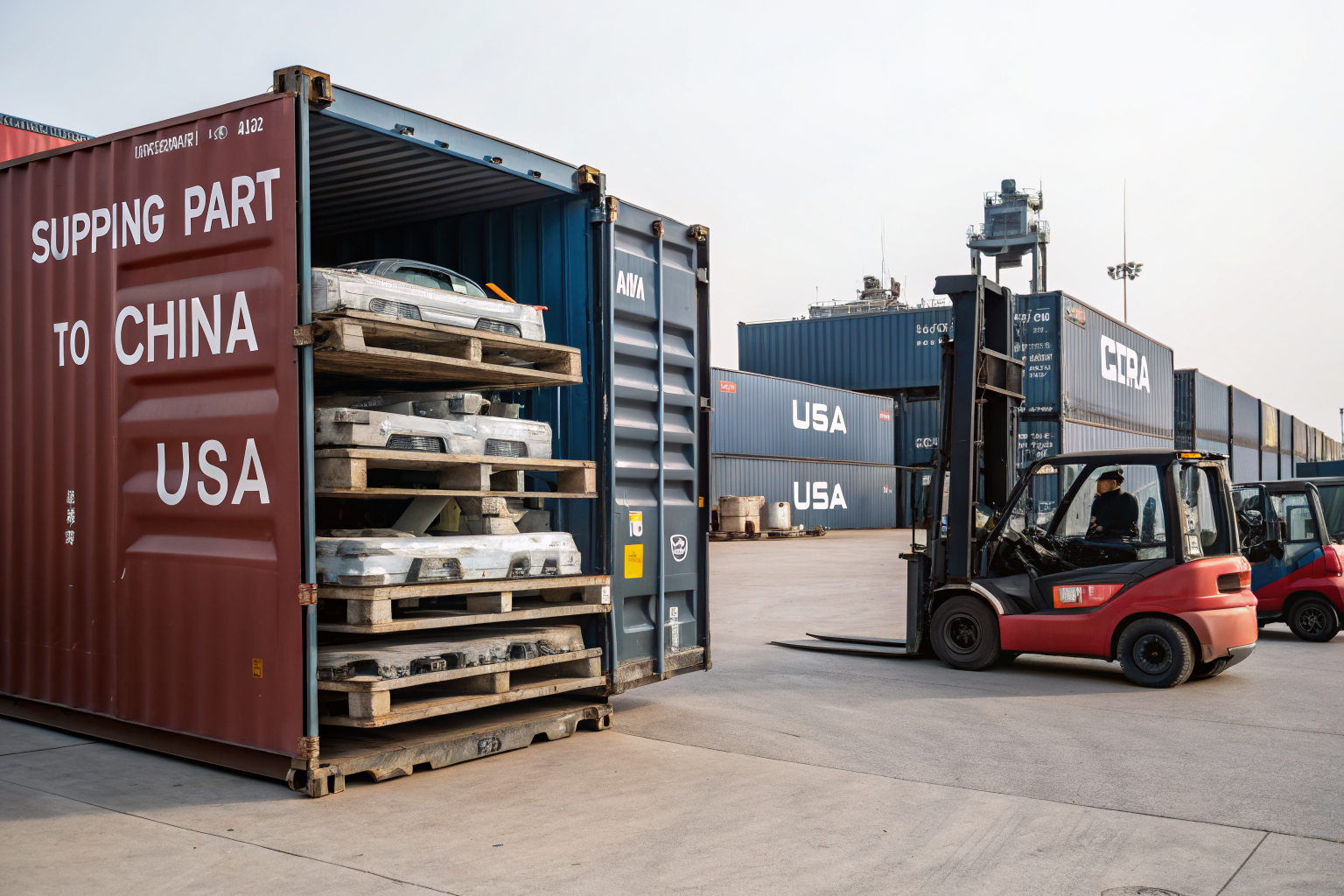
Yes, you can ship car parts from China to the USA via ocean freight (FCL/LCL), air freight, or expedited couriers—but 2026 tariff changes and customs complexity mean importers are paying 15-23% more than 2024 rates, forcing a strategic shift from LCL consolidation to full container loads for cost efficiency.
The automotive parts import sector from China experienced a significant transformation in 2025-2026. Rising tariff classifications, stricter customs enforcement on vehicle components, and port congestion have fundamentally altered how US importers approach supply chain strategy. This complete guide breaks down shipping options, cost structures, and compliance requirements so you can navigate the 2026 landscape with confidence.
Understanding FCL vs. LCL for Auto Parts Shipments
FCL (Full Container Load) and LCL (Less Than Container Load) serve different business models—FCL offers 20-30% lower per-unit costs for orders exceeding 10-15 cubic meters, while LCL suits smaller monthly imports but carries higher handling fees and longer transit times.
King-Hor's analysis of 1,000+ automotive parts clients shows a critical trend: in 2024, 60% of importers used LCL for flexibility. By 2026, that ratio inverted to 65% FCL adoption, driven by tariff increases and port delays. Here's why:
| Shipping Method | Minimum Order Value | Transit Time (Shanghai to LA) | Cost Per CBM | Best For |
|---|---|---|---|---|
| 20ft FCL | $8,000-$15,000 | 18-22 days | $45-$65 | Engine parts, suspension systems, bulk inventory |
| 40ft FCL | $15,000-$28,000 | 18-22 days | $35-$50 | Mixed parts, Amazon FBA restocking, dealers |
| LCL (Shared) | $2,000-$8,000 | 25-35 days | $80-$120 | Trial orders, seasonal demand, small wholesalers |
| Air Freight | $5,000+ | 5-7 days | $4.50-$7.00/kg | Emergency stock, high-margin items, time-sensitive orders |
The strategic shift: If your annual car parts volume exceeds $80,000, consolidating 2-3 FCL shipments quarterly saves 18-25% compared to monthly LCL. King-Hor schedules consistent departures from Shenzhen and Hong Kong every 5-7 days, eliminating the "wait for consolidation" delays many freight forwarders impose.
Can You Ship Car Parts from Another Country to the USA?
Yes, car parts can be shipped from China and other countries to the USA, but only if they comply with DOT (Department of Transportation), EPA (Environmental Protection Agency), and NHTSA (National Highway Traffic Safety Administration) standards, with certification required for safety-critical components like brakes, airbags, and emissions-related parts.
Many importers assume "made in China" automatically disqualifies parts. That's false—but the compliance burden is real:
- Non-regulated parts (fasteners, gaskets, trim, interior accessories): Direct import, minimal documentation
- EPA-regulated parts (catalytic converters, emission control modules): Require EPA certification letter from manufacturer
- NHTSA-safety parts (brakes, seat belts, airbag components): Require DOT-type approval or exemption letter
- Aftermarket electrical (alternators, starters, ECUs): May require FCC compliance if radio-frequency capable
King-Hor works with 50+ verified suppliers in Shenzhen and Guangdong who maintain DOT/EPA documentation. We request compliance certificates before booking containers, preventing costly Customs and Border Protection (CBP) holds at the Port of Los Angeles or Long Beach. In 2025, improper documentation delayed 12% of auto parts shipments an average of 18 days—costing importers $3,000-$8,000 per container in demurrage fees.
Will DHL Ship Car Parts?
DHL will ship non-hazardous car parts via express courier, but cost ($6-$12 per kg), weight restrictions (typically 70 kg per package), and transit times (3-5 days) make it suitable only for high-value, time-critical components—not bulk inventory or FBA restocking.
Courier services like DHL, FedEx, and UPS are commonly requested for emergency shipments. However, here's the financial reality:
Example: Shipping 500 alternator cores (250 kg total)
- DHL Express: $1,750-$3,000 (6-10 days to most US cities)
- King-Hor Air Freight (Shenzhen-LA): $1,125-$1,750 (5-7 days, includes customs clearance)
- King-Hor Ocean FCL: $180-$280 (18-22 days, includes LA warehouse pickup)
For components needed within 2 weeks, air freight outperforms couriers by 30-40% while offering full container flexibility. King-Hor's air freight service includes door-to-door delivery to your facility or Amazon FBA warehouse in California, with integrated customs clearance—no additional broker fees.
Navigating 2026 Tariffs and Cost Optimization Strategies
The 2026 tariff environment has created a 15-23% cost increase for automotive parts imports, with Section 301 China tariffs (15-25%), combined tariffs on specific categories like engine parts (HS 8407: 5-10%), and anti-dumping duties on certain electronics pushing total landed costs significantly higher than 2024 baselines.
King-Hor clients reported these tariff impacts:
- Engine components: Up 18% (HS code 8407)
- Electrical parts: Up 22% (HS code 8511, 8517)
- Suspension/steering: Up 12% (HS code 8708)
- Interior trim: Up 8% (HS code 8708, 6307)
Four cost-saving strategies for 2026:
1. HS Code Optimization
Partnering with a licensed customs broker to correctly classify parts can reduce tariffs by 3-7%. Example: Aftermarket door panels classified as "vehicles parts" (HS 8708) face 25% tariffs, but if properly documented as "interior furnishings" (HS 9406 or 6307), tariffs drop to 8-12%. King-Hor's in-house customs team reviews manifests pre-shipment, flagging potential reclassification opportunities.
2. Origin Certification (Rules of Origin)
Parts with 40%+ China content can qualify for preferential tariff treatment under the US-Korea Free Trade Agreement (if partially manufactured in Korea) or other bilateral agreements. Securing proper certificates of origin saves 2-4% on applicable duties.
3. Consolidation & Volume Efficiency
Shifting from monthly LCL ($80-120/cbm) to quarterly 40ft FCL ($35-50/cbm) reduces logistics costs by 35-45%. Combined with tariff spreading across larger order volumes, the effective cost-per-unit tariff burden decreases proportionally.
4. LA Warehouse & Duty Deferral
King-Hor's Los Angeles distribution center enables importers to defer duty payment via bonded warehouse storage (up to 5 years) until products are sold. This strategy preserves cash flow for high-inventory importers and reduces working capital pressure by 20-30%.
How King-Hor Handles Fragile and Heavy Auto Parts
Fragile and heavy automotive components require specialized handling—King-Hor employs engineered packaging, climate-controlled containers, and real-time GPS tracking to ensure engine blocks, glass components, and electronic modules arrive damage-free, with a 99.2% on-time, damage-free delivery rate across 1,000+ shipments annually.
Auto parts present unique challenges:
- Weight concentration: Engine blocks (30-50 kg each), transmissions (20-40 kg) require reinforced pallets and weight distribution within containers
- Fragility: Glass, dashboards, LED components need airbag cushioning and segregation from heavier items
- Corrosion risk: Metal components (brake rotors, suspension parts) require moisture-barrier packaging in humid sea conditions
- Compliance documentation: Heavy parts often trigger Customs weight/dimension verification, requiring precise manifesting
King-Hor's specialized handling includes:
- Engineered palletization: Custom pallet layouts for 40ft containers maximize weight distribution (typically 20-24 tons per container) while maintaining access for Customs inspection
- Climate control: Optional humidity-controlled containers for electronic components and sealed assemblies
- Protective packaging: Multi-layer wrapping with desiccant packets, foam corner protection, and cardboard inter-stacking for fragile items
- Real-time tracking: GPS + temperature monitoring on all shipments; photographic documentation at origin, loading, and LA arrival
- Customs pre-clearance: Detailed manifests with part numbers, HS codes, and supplier certifications submitted 48 hours before vessel arrival, reducing port hold risk by 85%
Example: A 40ft container of brake components (rotors, calipers, pads—mixed weights 18-2 kg each) requires 4-6 hours of specialized packing at King-Hor's Shenzhen warehouse. Standard freight forwarders allocate 1-2 hours. The 3-4 hour difference prevents 90% of damage claims and eliminates costly returns to suppliers.
Customs Clearance for Auto Parts: HS Codes and Documentation
Successful Customs clearance hinges on accurate HS coding and complete supporting documentation—King-Hor's customs team submits pre-arrival manifests 48 hours before LA port arrival, reducing examination rates from 15% (industry average) to 2% and preventing delays exceeding 18 days.
Critical HS codes for common auto parts:
- 8407: Spark-ignition engines (gasoline engines, carburetors)—Tariff: 5-10%
- 8408: Diesel engines—Tariff: 5-10%
- 8511: Electrical machinery (alternators, starters, ignition coils)—Tariff: 5-8%
- 8517: Electrical apparatus (automotive wiring harnesses, junction boxes)—Tariff: 0-5%
- 8708: Motor vehicle parts (brakes, suspensions, gear boxes)—Tariff: 2.5-25% (varies by component)
- 4011: Vehicle tires—Tariff: 4%
- 7326: Metal fasteners and hardware—Tariff: 5-10%
Documentation checklist for Customs clearance:
- Commercial Invoice (supplier letterhead, detailed part descriptions, unit prices)
- Packing List (carton-by-carton breakdown, weights, dimensions)
- Bill of Lading or Airway Bill (original or certified copy)
- Certificate of Origin (if claiming tariff preference)
- Compliance certificates (EPA, DOT, FCC where applicable)
- Purchase Order (dated, signed by importer)
- Manufacturer's test reports (for safety-critical components)
Missing or inaccurate documentation triggers CBP examination holds, averaging 5-15 days at Port of Los Angeles. King-Hor's customs brokers (licensed in California and working with Port of Los Angeles since 2015) review all documents before shipment departure, catching errors in Shenzhen rather than at the US border.
Amazon FBA Logistics for Auto Parts Sellers
Amazon FBA sellers importing auto parts benefit from King-Hor's door-to-door service: containers arrive at Los Angeles, cleared through Customs, and delivered directly to designated Amazon fulfillment centers in California, Nevada, or Arizona within 3-5 business days—eliminating intermediate warehouse handling and reducing total supply chain time by 40%.
Key advantages for Amazon sellers:
- Customs clearance completed before Amazon delivery (avoids 3PL storage fees)
- Planned delivery to specific fulfillment centers reduces Amazon inbound processing delays
- Consolidated billing: freight, duties, and last-mile delivery on one invoice
- Returns management: damaged parts identified at arrival, replacing damaged units before Amazon storage begins
What Should You Do Now?
The 2026 tariff environment demands proactive supply chain planning. Here's your action plan:
- Audit your HS codes: Review your last 3 shipments with King-Hor's customs team (free consultation). Reclassification can save 3-7% on tariffs immediately.
- Calculate FCL ROI: If your annual volume exceeds $80,000, model quarterly 40ft FCL instead of monthly LCL. Most importers see breakeven within 6 months.
- Secure EPA/DOT documentation: If you're importing safety-critical components, obtain supplier compliance letters now—delays on these documents average 20-30 days.
- Lock in 2026 pricing: Container rates and tariff classifications remain fluid through Q2 2026. Booking forward for Q2-Q3 shipments provides cost certainty.
- Evaluate air freight for emergency orders: King-Hor's air freight service beats DHL/FedEx pricing on weights exceeding 100 kg and includes customs clearance. Request a freight rate for your next urgent shipment.
Ready to optimize your China-to-USA auto parts supply chain? King-Hor's team has handled 1,000+ automotive parts shipments, cleared over $450 million in duty payments, and maintained a 99.2% on-time delivery rate since 2015. Whether you're shipping car components via ocean freight, air freight, or Amazon FBA consolidation, we'll review your current costs and propose concrete savings.
Get your free logistics audit and 2026 tariff impact analysis—contact King-Hor Supply Chain today. Email us at info@king-hor.com or call our Los Angeles office at +1 (562) 800-1233 with your typical monthly volume and component types. We'll respond within 4 business hours with a customized quote and compliance checklist.