Skip to content
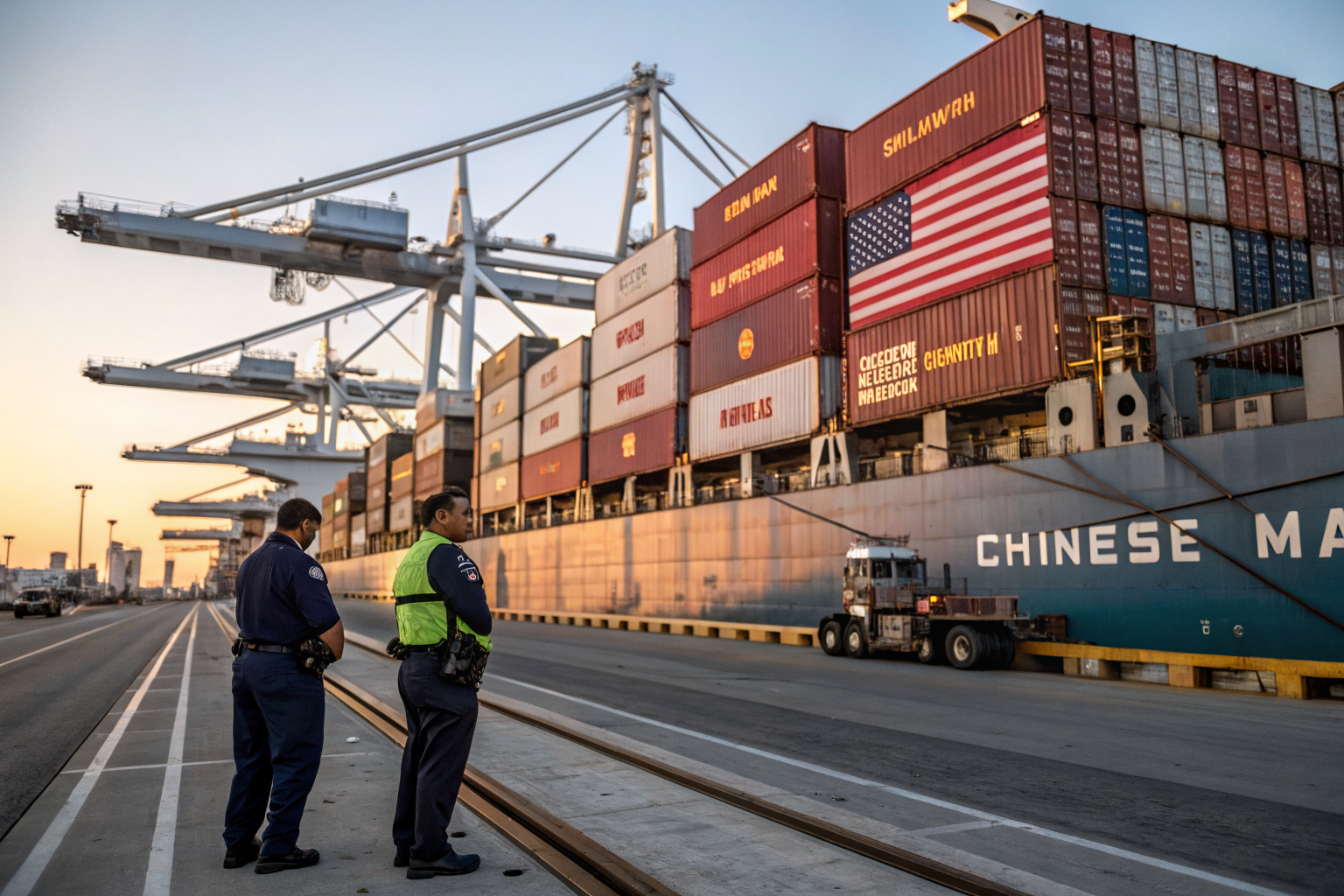
Section 301 tariffs on Chinese imports will remain at 25% for most goods through 2026, with certain products facing additional duties up to 100%, requiring importers to reassess sourcing strategies, HTS classifications, and total landed costs. The Biden administration has maintained Trump-era tariffs while expanding coverage to strategic sectors including electric vehicles, batteries, and semiconductors.
Here's what changed: US Customs and Border Protection data shows Section 301 duties collected reached $136 billion through 2024, with average effective tariff rates on Chinese goods now 19.3% compared to 3.1% pre-2018. For importers, this isn't temporary—it's the new baseline.
What Are Section 301 Tariffs in 2026?
Section 301 tariffs are trade penalties imposed by the Office of the United States Trade Representative (USTR) on Chinese imports deemed to involve unfair trade practices, intellectual property theft, or technology transfer concerns. As of 2026, these tariffs cover approximately $370 billion in annual imports across four tranches (List 1-4), with rates ranging from 7.5% to 100% depending on product classification.
The tariff structure operates through specific Harmonized Tariff Schedule (HTS) subheadings. List 1 and 2 items face 25% duties. List 3 covers 25% on most consumer and industrial goods. List 4A imposes 7.5%, while List 4B (currently suspended) targeted additional consumer products. Recent expansions under the Biden administration added 25-100% tariffs on EVs, lithium batteries, solar cells, and legacy semiconductors effective 2024-2026.
Critical for importers: tariffs are paid by the US importer of record, not the Chinese supplier. This fundamentally changes unit economics and has driven significant supply chain restructuring since 2018.
Which Products Face the Highest Tariff Burden in 2026?
Electric vehicles and related clean energy components face the steepest Section 301 rates in 2026, with some categories reaching 100% total duty when combined with existing tariffs. Strategic technology products, medical supplies from earlier COVID-era expansions, and certain steel and aluminum derivatives also carry elevated rates.
| Product Category | HTS Coverage | 2026 Tariff Rate | Effective Date |
|---|---|---|---|
| Electric Vehicles (completed) | 8703.80.00 | 100% | September 2024 |
| EV Lithium Batteries | 8507.60.00 | 25% | 2026 (phased) |
| Solar Cells & Modules | 8541.43.00 | 50% | 2024-2026 |
| Legacy Semiconductors | 8542.31/8542.32 | 50% | 2025-2026 |
| Steel/Aluminum Derivatives | Various 72/76 chapters | 25% | Ongoing |
| Consumer Electronics (List 3) | 8517, 8471, 8528 | 25% | September 2018 |
| Textiles/Apparel (List 4A) | 61/62 chapters | 7.5% | February 2020 |
Notably, Section 301 tariffs stack with antidumping/countervailing duties (AD/CVD) and standard MFN rates. A solar panel importer might pay 50% Section 301 plus existing AD/CVD margins of 20-250% depending on manufacturer.
How Should Importers Calculate True Landed Costs?
Importers must calculate landed cost as: (FOB price + international freight + insurance + duties + tariffs + customs fees + inland transport + warehousing) / unit count. Omitting Section 301 tariffs from this calculation creates 7.5-100% cost underestimation, eroding margins on already-competitive products.
Consider a practical example: A $10,000 FOB shipment of consumer electronics (List 3, 25% tariff) via ocean freight from Shenzhen to Los Angeles:
- FOB Value: $10,000
- Ocean Freight (40' container share): $1,200
- Insurance (110% of CIF × 0.3%): $37
- Dutiable Value: $11,237
- Standard Duty (assume 0% MFN): $0
- Section 301 Tariff (25%): $2,809
- Customs Broker & MPF: $185
- Inland to Fulfillment Center: $450
- Total Landed Cost: $14,681 (46.8% above FOB)
Without tariff planning, importers price products at $12,500 landed and lose $2,181 per shipment. King-Hor's customs brokerage team provides pre-shipment HTS analysis and binding ruling support to confirm classifications before goods sail—avoiding surprise duty bills at Port of LA.
What Exclusion and Mitigation Options Exist?
USTR has concluded most product-specific exclusion processes, with only limited reinstatement opportunities for COVID-related medical goods and certain solar manufacturing equipment. However, importers retain several viable mitigation strategies: tariff engineering through valid HTS reclassification, first-sale valuation for multi-tier transactions, foreign trade zone (FTZ) utilization, and strategic country-of-origin transformation.
Effective approaches in 2026 include:
- Tariff Engineering: Product redesign to shift HTS classification. A bluetooth speaker (25%) reconfigured as hearing aid (0%) requires substantial transformation evidence and FDA compliance—legitimate but documentation-intensive.
- First-Sale Valuation: For factory-to-trading company-to-US transactions, dutiable value may be based on factory-to-trading company price rather than trading company-to-US price. Average savings: 15-30% on applicable shipments.
- Foreign Trade Zones: FTZ warehousing at Port of LA defers duty payment until withdrawal for consumption. For goods re-exported to Mexico/Canada under USMCA, duties may be eliminated entirely.
- Country of Origin Transformation: Substantial transformation in Vietnam, Mexico, or other jurisdictions—meeting 35% value-add thresholds—can shift origin away from China. King-Hor's multi-country consolidation services support clients evaluating Southeast Asian manufacturing alternatives.
Warning: Misclassification or false origin claims trigger CBP penalties under 19 USC 1592, including loss of import privileges. King-Hor's 9+ years of China-US customs experience ensures compliant optimization, not risky shortcuts.
How Are Amazon FBA Sellers Specifically Impacted?
Amazon FBA sellers face compounded pressure from Section 301 tariffs due to thin margins, inventory velocity requirements, and Amazon's automated pricing algorithms. A 25% tariff on a $15 landed-cost product requiring $19.99 retail pricing eliminates profitability when Amazon referral fees (15%), FBA fulfillment ($5.68), and advertising (15% ACOS) are applied.
FBA-specific considerations:
- Inventory Timing: Tariffs apply to entry date, not sale date. Goods entering before rate increases lock in lower rates. King-Hor's LA warehousing and cross-dock facility enables strategic inventory positioning ahead of announced changes.
- HTS Consistency: Amazon's compliance team increasingly flags listings with tariff-related pricing anomalies. Consistent classification across 7501 entries and product listings reduces account health risks.
- Direct vs. Indirect Import: Sellers using Amazon's Global Logistics (AGL) or third-party IOR services often lack visibility into actual duty payments. Direct IOR status with King-Hor's FBA door-to-door service provides transparent cost allocation and exclusion filing rights.
Our 1000+ client portfolio includes 400+ Amazon sellers who reduced effective tariff exposure by 12-18% through combined FTZ utilization, first-sale structuring, and Southeast Asian supplier development.
What Documentation Changes Should Importers Implement?
Importers must enhance documentation to support potential CBP audits, exclusion claims, and AD/CVD scope inquiries. Enhanced requirements include detailed bills of materials, cost breakdowns showing value-add at each production stage, and supplier affidavits confirming non-subject merchandise status.
Essential 2026 documentation upgrades:
| Document Type | Purpose | Retention Period |
|---|---|---|
| Manufacturer's Affidavit | Confirm non-Chinese origin or exclusion eligibility | 5 years post-entry |
| Cost Accounting Records | Support first-sale or related-party valuation | 5 years + audit period |
| Engineering Change Orders | Substantiate tariff engineering validity | Product lifecycle + 5 years |
| FTZ Admission/Withdrawal | Zone status and duty deferral evidence | 5 years post-withdrawal |
| Supplier Qualification Files | Forced labor prevention (UFLPA compliance) | Ongoing + 5 years |
King-Hor's customs clearance team manages complete entry documentation packages, with digital archiving exceeding CBP's 5-year requirement. Our Shenzhen-LA-Hong Kong office network enables real-time document verification before shipment.
Action Steps: Your 90-Day Section 301 Response Plan
Importers should immediately audit HTS classifications, quantify true tariff exposure by SKU, evaluate exclusion reinstatement eligibility, and model alternative sourcing scenarios. This 90-day sprint determines whether 2026 profitability targets remain achievable.
Week-by-week implementation:
- Days 1-14: Complete HTS audit of top 80% of import volume. Identify misclassifications and potential reclassification opportunities.
- Days 15-30: Calculate SKU-level tariff exposure. Model margin impact at current rates vs. potential increases.
- Days 31-60: Evaluate FTZ feasibility, first-sale applicability, and alternative supplier samples from Vietnam, India, or Mexico.
- Days 61-90: Implement documentation upgrades. File binding ruling requests for uncertain classifications. Lock in ocean freight rates—King-Hor's ocean freight contracts with COSCO, MSC, and CMA CGM provide rate stability through volatile markets.
For air freight-dependent products, our air freight division offers China-US transit times of 3-5 days with customs pre-clearance, minimizing inventory carrying costs that compound tariff burdens.
Navigate Section 301 Complexity with King-Hor
Section 301 tariffs are structural, not cyclical. Importers treating them as temporary headwinds have already exited the market. Those building systematic tariff management into supply chain operations—supported by experienced freight forwarders with integrated customs and warehousing capabilities—maintain competitive positioning.
King-Hor Supply Chain has specialized in China-to-USA freight forwarding since 2015, with offices in Shenzhen, Los Angeles, and Hong Kong. Our services include ocean freight FCL/LCL, air freight, FBA door-to-door solutions, customs brokerage, and Los Angeles warehousing with FTZ capabilities. We've guided 1000+ clients through tariff implementation, exclusion processes, and supply chain restructuring.
Get your free Section 301 impact assessment and freight quote today. Our team will analyze your HTS classifications, estimate current tariff exposure, and identify optimization opportunities—no obligation, 48-hour turnaround.