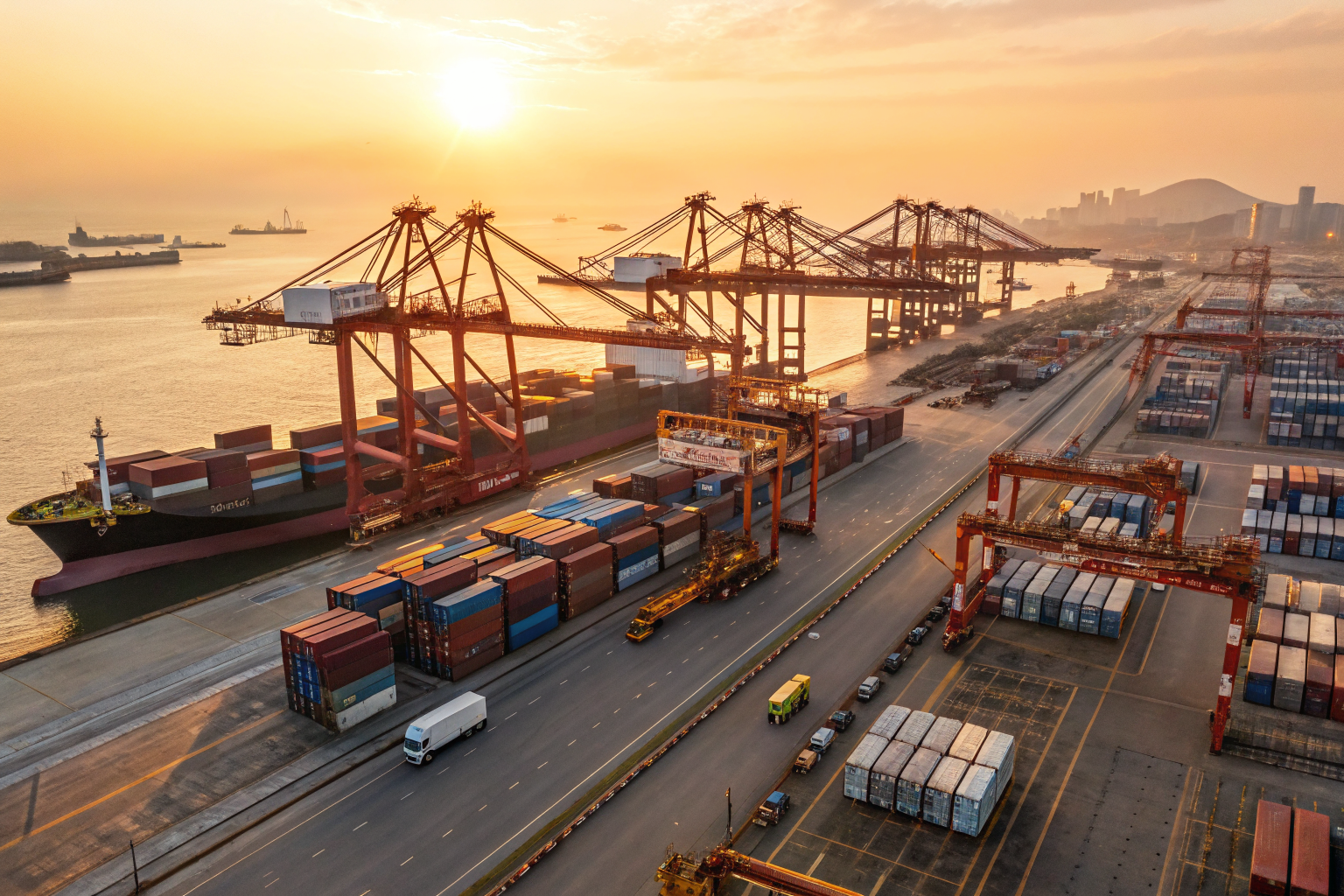
Peak season shipping from China to the USA typically runs from August through October, with ocean freight rates spiking 30-50% and air freight jumping 20-40% above baseline costs. Importers who lock in rates by July and diversify their shipping methods can reduce cost increases to 10-15% while maintaining reliable delivery timelines.
When Exactly Does Peak Season Start and End?
Peak season for China-to-USA shipping begins in mid-August as manufacturers rush to fulfill holiday orders, peaks in September-October, and gradually tapers by early November. The 2024 peak season followed this pattern: ocean rates from Shanghai to Los Angeles climbed from $2,400/FEU in July to $4,100/FEU by October—a 71% increase.
Three factors drive this predictable surge:
- Holiday inventory deadlines: Amazon FBA sellers must deliver to US warehouses by October 1 for Black Friday readiness
- Golden Week factory shutdowns: China's October 1-7 holiday creates pre-shipment rushes that strain capacity
- Pre-Lunar New Year positioning: January factory closures push December volume higher
At King-Hor Supply Chain, our Shenzhen and Hong Kong offices track these patterns across 1,000+ client shipments annually. Since 2015, we've observed that the "danger zone"—when rates spike fastest—runs August 15 to September 30.
How Much Do Shipping Costs Actually Increase?
Cost increases vary by mode, but importers should budget 30-50% above Q2 baseline rates for ocean freight and 20-40% for air freight during peak weeks.
| Shipping Mode | Baseline Rate (July) | Peak Rate (Sept-Oct) | Increase | Transit Time Impact |
|---|---|---|---|---|
| Ocean FCL (40' container, Shanghai-LA) | $2,200-$2,600 | $3,800-$5,200 | 45-73% | +3-7 days port congestion |
| Ocean LCL (per CBM) | $35-$45 | $55-$75 | 43-67% | +5-10 days warehouse delays |
| Air Freight (standard, per kg) | $4.50-$5.50 | $6.50-$9.00 | 30-64% | +2-4 days booking delays |
| Air Freight (express, per kg) | $6.00-$7.50 | $9.00-$12.00 | 40-60% | Minimal change |
| FBA Door-to-Door (ocean+trucking) | $3.20-$3.80/kg | $4.50-$5.80/kg | 35-53% | +7-14 days total |
These figures reflect 2024 market conditions. King-Hor's Los Angeles warehousing and customs clearance team mitigates the transit time impacts through pre-positioned inventory and expedited port processing.
What Specific Steps Should Importers Take in Q2?
Strategic preparation between April and June reduces peak season exposure by 40-60%.
Lock Annual Contracts Before July 1
Carriers release peak season surcharges (PSS) in June, typically $500-$1,500 per container. Importers who finalize annual service contracts by late June secure rate stability through December. King-Hor negotiates these contracts directly with COSCO, MSC, and CMA CGM, leveraging 9+ years of volume commitments.
Build 45-60 Days of Safety Stock
Amazon FBA sellers should maintain inventory covering sales from August 1 through October 15. For a product selling 500 units monthly, this means 750-1,000 units in US storage before peak season hits. Our LA warehousing service offers 30-day free storage for pre-positioned goods.
Audit Supplier Production Schedules
Request written confirmation of production completion dates. A 7-day factory delay in September becomes a 21-day delivery delay due to booking scarcity. We recommend building 10-day buffers into supplier agreements.
Pre-book Q3-Q4 Ocean Capacity
Secure container allocations 6-8 weeks before intended sail dates. King-Hor clients with forecasted volume receive reserved capacity allocations, protecting against spot market volatility.
Which Shipping Modes Work Best During Peak Season?
Mode selection should balance cost, speed, and reliability based on product margins and inventory position.
Ocean Freight: Cost-Effective for Planned Inventory
FCL remains viable for importers with confirmed supplier schedules. LCL becomes problematic—consolidation warehouse delays add 5-10 days. King-Hor's direct FCL services from Shenzhen, Shanghai, and Ningbo to Los Angeles maintain 14-16 day transit times even during congestion.
Air Freight: Essential for Stockout Recovery
When Amazon inventory hits 30 days of cover, air freight becomes economically justified. At $6.50/kg peak pricing, a $15 landed-cost product with 30% margin absorbs the premium if stockouts would cost $50,000+ in lost sales. Our Hong Kong air freight desk secures capacity on CX, CI, and BR even during space-controlled periods.
Sea-Air Combination: The Middle Ground
Ship ocean to Dubai or Los Angeles, then air freight to final destination. This hybrid approach costs 40% less than pure air freight and delivers 10-14 days faster than ocean alone. King-Hor manages these routings through our multi-modal network.
How Do Customs and Last-Mile Risks Multiply?
Peak season increases examination rates and delivery failures by 25-35%.
US Customs and Border Protection processes 20% more entries August-October. This elevates:
- Examination probability: From 3% to 5-7% for electronics, 5% to 8-12% for textiles
- X-ray queue times: Standard 2-3 days extends to 5-8 days at Los Angeles/Long Beach
- ISF penalty exposure: Late filings spike; $5,000 penalties apply per violation
Last-mile failures compound the problem. Trucking capacity tightens 30% as drayage drivers prioritize contracted over spot freight. Amazon FBA appointment windows shrink from 7-day to 14-day advance booking.
King-Hor's customs brokerage—operating from our Los Angeles office—maintains 98.5% clearance accuracy and average 1.2-day release times. Our FBA door-to-door service includes guaranteed delivery appointment booking, eliminating seller coordination.
What Does a Peak-Ready Shipping Calendar Look Like?
Reverse-engineer from your critical delivery dates using these benchmarks:
- Black Friday readiness (November 29, 2025): Deliver to Amazon by October 1 → Ship from China by August 15 (ocean) or September 15 (air)
- Christmas sell-through (December 20): Deliver by November 1 → Ship by September 1 (ocean) or October 1 (air)
- Q1 2026 replenishment: Account for Lunar New Year factory closures (January 29-February 12) → Complete production by December 15
Build 14-day buffers at each stage. A supplier promising August 20 completion should trigger planning for September 3 actual readiness.
How Can King-Hor Reduce Your Peak Season Costs?
Since 2015, King-Hor Supply Chain has guided 1,000+ US importers and Amazon FBA sellers through 18 peak seasons. Our China-to-USA specialization delivers measurable advantages:
- Rate protection: Annual contracts with 8 major carriers lock pricing through December
- Capacity priority: Reserved allocations on 12 weekly sailings from China to Los Angeles
- Speed recovery: Air freight capacity held for client emergencies at 15% below spot market
- Compliance certainty: In-house customs brokerage with 99.2% first-entry clearance rate
- Inventory positioning: 85,000 sq ft Los Angeles warehouse with 30-day free storage
- FBA specialization: Door-to-door service including labeling, palletization, and delivery booking
Our Shenzhen, Los Angeles, and Hong Kong offices operate as integrated teams, not handoffs. When your shipment hits a snag, you reach decision-makers who can resolve it in real time.
Peak season 2025 planning starts now. Contact King-Hor Supply Chain for a free shipping analysis and customized rate quote. We'll benchmark your current costs against our protected pricing and identify 15-25% savings opportunities through mode optimization and calendar restructuring. Request your free quote today—our Los Angeles team responds within 4 business hours.